Key takeaways
- Count and spacing: Two pendants suit islands up to about 7 feet; three works better past 8 feet. Leave roughly 24 to 30 inches between shades and at least 6 inches inside each end of the counter so the run reads deliberate.
- Drop height: Aim for 30 to 36 inches between the countertop and the bottom of the shade. Anything lower blocks sightlines across the island; anything higher pushes the light out of the task zone.
- Shade diameter: Keep individual shades in the 5 to 10 inch range for most islands. Oversized drums crowd a standard 3-foot-deep counter and make a galley kitchen feel top-heavy.
- Glass and glare control: Clear glass disappears against a backsplash but exposes the bulb, so pair it with a low-lumen filament or frosted-inner shade. Seeded and colored glass hides the source while adding texture.
- Ceiling type and dimming: Confirm the fixture ships with adjustable rods and a sloped-ceiling-capable canopy if your ceiling is vaulted, and verify dimmer compatibility before you commit to an integrated LED.
What's inside
Kitchen island lighting is the one fixture decision that gets second-guessed the most, and for good reason. An island sits at eye level in the middle of an open floor plan, so the pendants above it are read as furniture long before they’re read as lighting. Hang them too high and the island feels unanchored; too low and you’ve built a visual wall between the kitchen and the room next to it. Add glare bouncing off a quartz countertop, mismatched metal finishes, and shades sized for a photo shoot rather than a real 7-foot island, and it’s easy to see why so many otherwise finished kitchens still feel unresolved overhead.
This guide narrows the field to fixtures that solve those problems rather than decorate around them: clear and seeded glass that stays visually light, hand-blown shades with enough character to carry a neutral kitchen, adjustable rods and cords that let you dial in drop height on flat or sloped ceilings, and multi-packs that keep spacing consistent across a longer run. Below you’ll find quick specs on each pick, a short buying framework, honest notes on where each fixture works best, and answers to the sizing and installation questions that come up most often.
As an Amazon Associate we earn from qualifying purchases.



🛒 Best Price Today on Amazon
Prime members get fast, free shipping on everything above, plus member-only deals. New members get a 30-day free trial — cancel anytime.
How to Choose a Pendant Lights For Kitchen Island (2026)
- Count and spacing: Two pendants suit islands up to about 7 feet; three works better past 8 feet. Leave roughly 24 to 30 inches between shades and at least 6 inches inside each end of the counter so the run reads deliberate.
- Drop height: Aim for 30 to 36 inches between the countertop and the bottom of the shade. Anything lower blocks sightlines across the island; anything higher pushes the light out of the task zone.
- Shade diameter: Keep individual shades in the 5 to 10 inch range for most islands. Oversized drums crowd a standard 3-foot-deep counter and make a galley kitchen feel top-heavy.
- Glass and glare control: Clear glass disappears against a backsplash but exposes the bulb, so pair it with a low-lumen filament or frosted-inner shade. Seeded and colored glass hides the source while adding texture.
- Ceiling type and dimming: Confirm the fixture ships with adjustable rods and a sloped-ceiling-capable canopy if your ceiling is vaulted, and verify dimmer compatibility before you commit to an integrated LED.
The Best Pendant Lights For Kitchen Island (2026)s Reviewed
AKEZON Brushed Nickel Pendants, 2-Pack
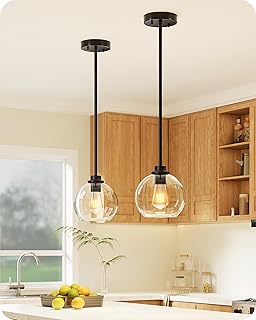
A genuinely versatile workhorse: the clear outer glass keeps the fixture visually quiet while the frosted inner shade softens glare on polished counters, and the adjustable rods handle flat or sloped ceilings without an add-on kit. ETL listing and a standard E26 socket mean you can swap bulbs as your color-temperature preferences change.
EDISHINE Clear Glass Globe Pendants, 2-Pack
The matte black rod and unadorned globe make this the most architecturally neutral pick here, which is exactly why it works in kitchens that already have a lot going on. Use a low-wattage vintage-style bulb; the clear globe leaves the filament fully visible, so the bulb becomes part of the design.
Crystal Bubble Glass LED Pendant, 3-Pack
Best suited to islands over 8 feet where three fixtures balance the counter properly. The integrated LED and bubble-textured glass throw a subtle sparkle across a backsplash, though the fixed light source means you’ll want to confirm dimmer compatibility rather than plan on changing bulbs later.
EDISHINE Blue Art Glass Pendant
Hand-blown teal glass with gold detailing, and the rare island pendant that functions as the room’s color story instead of a supporting player. A single unit over a sink or a pair over a white-oak island reads intentional; more than two in a small kitchen starts to compete.
INK+IVY Auburn Bell Pendant
The 9-inch hand-blown bell has a slightly industrial line that grounds warmer kitchens, and the generous 95.5-inch maximum drop makes it one of the few picks here that suits genuinely tall or vaulted ceilings. Expect small variations between shades, which is the nature of hand-blown glass rather than a flaw.
Frequently Asked Questions
How many pendants do I need over my island?
Measure the island length in inches and divide by roughly 30 to get a starting count, then round to an odd or even number that centers cleanly. Two pendants cover most 6 to 7 foot islands; three suit 8 feet and up.
What bulb color temperature works best in a kitchen?
2700K to 3000K keeps the space warm and flattering for wood and brass tones. Push to 3500K if you do detailed prep work at the island and want crisper task light without going clinical.
Do pendant finishes need to match my cabinet hardware?
No, and a perfect match often flattens the room. Aim for finishes in the same temperature family instead, such as brushed nickel with chrome, or matte black with aged brass.
Can I install these myself?
If a junction box already exists at the right location, most hardwired pendants are a straightforward swap for anyone comfortable working with the power off at the breaker. Adding or relocating a box, or running a new circuit, is licensed electrician territory.
Final Thoughts
For most kitchens, the AKEZON brushed nickel 2-pack is the safest high-performing choice thanks to its frosted inner glass and sloped-ceiling flexibility, while the EDISHINE clear glass globes are the pick if you want the fixtures to recede and let the cabinetry lead. If your island needs a focal point rather than a background player, the EDISHINE blue art glass pendant delivers real hand-blown character without overwhelming a neutral palette.