Key takeaways
- Battery ecosystem: If you already own DEWALT 20V or Makita 18V packs, buy into that platform and skip the redundant charger. Self-contained units with a built-in cell are simpler but leave you waiting when the charge runs out mid-job.
- PSI versus volume: High PSI numbers sell inflators; air volume does the actual work. A 150–160 PSI unit handles truck and SUV tires, while low-pressure, high-volume tasks like air mattresses and pool floats need a wide-bore nozzle to move air at all.
- Duty cycle and cooling: A 100% duty cycle with dual cylinders means the pump can top up all four tires without a cool-down pause. Single-cylinder units get hot fast — fine for a bicycle, frustrating on a loaded RV.
- Tank or tankless: Tankless inflators are for pressure top-ups only. If you plan to shoot finish nails into baseboards or built-ins, you need a real tank with stored air and a regulator.
- Noise and storage: Anything used indoors should sit near 60dB, and the whole kit should live in a drawer or on a shelf without a fight. Look for integrated hose storage and a genuine LED work light rather than a token indicator.
What's inside
Air is the one utility a well-kept home never plans for. You furnish the living room, source the right rug pad, hang the art at 57 inches — and then a guest bed needs inflating at 11pm, the patio lounger cushions have gone slack, and the tire pressure light glows on a car you were about to load with a new console table. Corded inflators solve this badly: they demand an outlet, a cigarette lighter socket, and a length of orange cable coiled somewhere you’d rather not look at.
Cordless air compressors have quietly become one of the more useful pieces of household infrastructure, and the 2026 field splits into two distinct shapes: pocketable inflators built around a lithium pack, and small-tank compressors that can actually drive a brad nailer for trim and cabinetry work. This guide covers both, with notes on duty cycle, noise, and which battery ecosystem is worth committing to.
As an Amazon Associate we earn from qualifying purchases.




How to Choose a Cordless Air Compressor (2026)
- Battery ecosystem: If you already own DEWALT 20V or Makita 18V packs, buy into that platform and skip the redundant charger. Self-contained units with a built-in cell are simpler but leave you waiting when the charge runs out mid-job.
- PSI versus volume: High PSI numbers sell inflators; air volume does the actual work. A 150–160 PSI unit handles truck and SUV tires, while low-pressure, high-volume tasks like air mattresses and pool floats need a wide-bore nozzle to move air at all.
- Duty cycle and cooling: A 100% duty cycle with dual cylinders means the pump can top up all four tires without a cool-down pause. Single-cylinder units get hot fast — fine for a bicycle, frustrating on a loaded RV.
- Tank or tankless: Tankless inflators are for pressure top-ups only. If you plan to shoot finish nails into baseboards or built-ins, you need a real tank with stored air and a regulator.
- Noise and storage: Anything used indoors should sit near 60dB, and the whole kit should live in a drawer or on a shelf without a fight. Look for integrated hose storage and a genuine LED work light rather than a token indicator.
The Best Cordless Air Compressors (2026), Reviewed
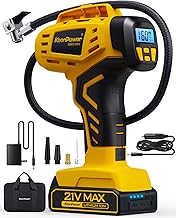
ETENWOLF VORTEX S6
The 19200mAh pack and dual-cylinder pump make this the most capable standalone inflator here — it will take a full set of light truck tires from low to spec without stopping to cool off. The 100% duty cycle and LED backlight are the real reasons to pick it, though the orange finish is more garage than entryway.
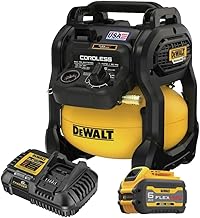
DEWALT DCC2520T1 (2.5-Gallon Kit)
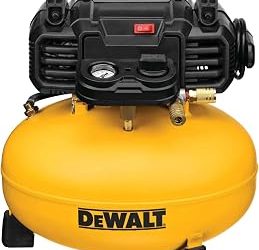
A brushless, 140 PSI compressor with an actual 2.5-gallon tank, which puts it in a different category from the inflators: this runs finish nailers for trim, casing, and cabinet installs with no cord and no gas. It ships with a battery and charger, so it works as a first entry into DEWALT 20V rather than an accessory to it.
OlarHike 12000mAh Heavy Duty Inflator
Dual power is the argument here — run it cordless around the house, or plug into 12V for longer sessions like an RV or a trailer with several tires. The digital gauge is legible and the 150 PSI ceiling covers everything short of commercial equipment.
Ultra Quiet Makita-Compatible Compressor
Oil-free, roughly 60dB, and built to run off 18V Makita-style packs, which makes it the sane choice for indoor woodworking and pneumatic tools in a finished space. Confirm your specific battery model fits before ordering, since universal claims vary by unit.
DEWALT DCC020IB
Sold as a bare tool, this is the pragmatic pick if 20V MAX batteries are already in your drawer. Automatic shut-off at your target pressure is the feature that matters most day to day: set it, walk away, and the tire is correct when you return.
Frequently Asked Questions
Can a cordless inflator fill an air mattress?
Yes, if it includes a low-pressure adapter. Tires need pressure; mattresses and floats need volume, so check that a wide nozzle is in the box rather than assuming the tire hose will do.
How much PSI do I actually need?
Most passenger cars sit between 30 and 36 PSI, and light trucks rarely exceed 80. A 150 PSI rating is headroom, not a requirement.
Will a tankless inflator run a nail gun?
No. Nailers draw a burst of stored air that only a tank can supply — that’s the case for a small-tank kit like the DCC2520T1.
Do these work in cold weather?
Lithium packs lose capacity below freezing, so store the unit indoors rather than in an unheated trunk, and expect slower inflation on a cold morning.
Final Thoughts
For most households, the ETENWOLF VORTEX S6 is the one to keep in the hall closet — self-contained, fast, and unfazed by a full set of tires. Choose the DEWALT DCC2520T1 if your projects involve trim, molding, or built-ins and you need real stored air, and the DEWALT DCC020IB if you simply want a reliable inflator that shares batteries with tools you already own.