Key takeaways
- Ceiling height first: Measure from finished floor to the ceiling opening, not to the attic joists. Most aluminum units cover a 7’8″ to 10’3″ range, and installing one short of your actual height leaves an unsafe last step you cannot correct later.
- Rough opening dimensions: The 22.5″ x 54″ footprint is the de facto standard because it drops between joists on 24-inch centers. Confirm your existing hatch before ordering; reframing an opening is a drywall-and-paint project, not a weekend swap.
- Load rating with margin: Rated capacity covers you plus what you’re carrying, so a 300 lb figure disappears fast with a loaded tote. Ratings from 350 lb to 660 lb are available now, and the higher numbers translate directly into less flex underfoot.
- Handrails and tread depth: Deep, ribbed treads and at least one handrail change the experience more than any spec sheet suggests. If anyone in the household is carrying items down one-handed, treat dual handrails as a requirement.
- How it reads when closed: Hidden and ceiling-mount designs sit flush with a clean panel line, which matters in a finished hallway or a garage you’ve bothered to paint. Exposed hinge hardware is fine in unfinished space and usually cheaper.
What's inside
An attic is the only square footage in most homes that gets treated like a crawlspace. The bones are usually there — decent headroom, framing on 24-inch centers, a floor waiting to be decked — but access is the bottleneck. A wobbly step stool and a plywood hatch turn a useful storage level into a place you avoid, and the fear of that first rung is what keeps holiday bins stacked in the garage instead.
A pull-down attic ladder solves it permanently, and the current generation is genuinely better designed: aluminum rails that don’t warp with seasonal humidity, damped hinges instead of spring-loaded surprises, and ceiling-mount units that vanish into the drywall line when folded. This guide covers six models built for standard 22.5″ x 54″ rough openings, what separates a ladder you’ll actually climb from one you’ll dread, and which pick fits your ceiling height and load needs.
As an Amazon Associate we earn from qualifying purchases.


How to Choose a Pull Down Attic Ladder (2026)
- Ceiling height first: Measure from finished floor to the ceiling opening, not to the attic joists. Most aluminum units cover a 7’8″ to 10’3″ range, and installing one short of your actual height leaves an unsafe last step you cannot correct later.
- Rough opening dimensions: The 22.5″ x 54″ footprint is the de facto standard because it drops between joists on 24-inch centers. Confirm your existing hatch before ordering; reframing an opening is a drywall-and-paint project, not a weekend swap.
- Load rating with margin: Rated capacity covers you plus what you’re carrying, so a 300 lb figure disappears fast with a loaded tote. Ratings from 350 lb to 660 lb are available now, and the higher numbers translate directly into less flex underfoot.
- Handrails and tread depth: Deep, ribbed treads and at least one handrail change the experience more than any spec sheet suggests. If anyone in the household is carrying items down one-handed, treat dual handrails as a requirement.
- How it reads when closed: Hidden and ceiling-mount designs sit flush with a clean panel line, which matters in a finished hallway or a garage you’ve bothered to paint. Exposed hinge hardware is fine in unfinished space and usually cheaper.
The Best Pull Down Attic Ladders (2026) Reviewed
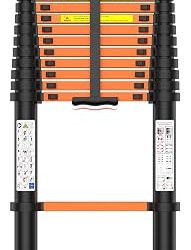
10 Ft Aluminum Attic Ladder Pull Down System
A clean baseline choice for 7.6 to 10.25 ft ceilings with a 350 lb rating and the standard 22.5″ x 54″ fit, which keeps installation to a single afternoon. The aluminum sections stay light enough to position solo overhead — the part of the job most people underestimate.
Aluminum Attic Ladder, 380 lbs Capacity
The highest load rating in the standard-opening group here, and the extra margin shows up as noticeably less bounce mid-span. Worth the small premium if your attic does real storage duty rather than housing a few bins.
Aluminum Pull Down Loft Stairs, Manual Lifting
Manual lift keeps the mechanism simple, with fewer springs and pivots to fatigue over a decade of daily-ish use. At 375 lb across a 7’8″–10’3″ range it covers the vast majority of American ceiling heights without modification.
Ceiling Mount Retractable Attic Ladder, 12 Steps, Black
The design-forward option: a hidden ceiling mount in black that reads as an intentional panel rather than an afterthought, with 12 steps and armrests for a shallower, more confident climb. Best suited to garages and finished spaces where the ceiling is part of the visual field.
11 Steps Retractable Attic Ladder, 660 lb Wall Mounted
A 660 lb rating with extra-wide treads and two handrails puts this closest to a real staircase in feel, which is exactly what you want for frequent trips or heavy loads. The 9 ft wall-mounted format needs more planning than a drop-in unit, so verify your clearance and mounting surface before committing.
Frequently Asked Questions
Can I install a pull-down attic ladder myself?
Yes, if you’re comfortable working overhead with a helper and a level. The mechanical work is straightforward, but a second set of hands is essentially mandatory for holding the frame square while you fasten it.
What if my ceiling is higher than 10’3″?
Standard units won’t reach safely. Look for extension-kit compatibility from the manufacturer or move to a wall-mounted telescoping design rather than stacking anything under the bottom rung.
Do aluminum ladders feel less stable than wood?
Modern aluminum is stiffer per pound and immune to the seasonal swelling that makes older wooden units stick or squeak. Stability comes from the load rating and mounting quality, not the material.
How much attic clearance do I need above the opening?
Enough for the folded sections to swing clear, typically 30 to 40 inches, plus room to stand at the top. Check the swing arc before you deck the floor around the hatch.
Final Thoughts
For most homes, the 380 lb aluminum pull-down system hits the right balance of capacity, fit, and price. Choose the ceiling-mount 12-step model in black if the ladder lives in a finished space and needs to disappear, or the 660 lb wall-mounted unit with dual handrails if you’re hauling weight up and down often enough that the climb should feel like a staircase.