Key takeaways
- Swing and throat depth: The advertised size is double the distance from chuck center to column. A 10-inch press reaches five inches in from an edge; an 8-inch press reaches four. For cabinet sides and chair parts, that difference decides whether the tool is useful or merely present.
- Quill travel: Two inches is the common floor and it is genuinely limiting for through-drilling 1½-inch stock plus a backer board. Anything approaching 3¼ inches lets you bore deep dowel holes in one clean plunge instead of resetting.
- Speed control method: Stepped pulleys are reliable and cheap but require opening the head and moving a belt. Variable speed with a dial pays for itself the moment you alternate between a 1-inch Forstner in walnut and a small twist bit in aluminum.
- Table and fence quality: Look for a cast iron table that bevels to 45 degrees and, more importantly, locks solidly. A table that shifts under clamping pressure undoes every other virtue the machine has.
- Chuck and runout: A ½-inch keyed chuck is standard and preferable to keyless at this price. Spin a bit before you trust it; visible wobble means enlarged holes and burned Forstner rims, and it is the single most common failure in budget machines.
What's inside
Anyone who has drilled a shelf-pin row by hand knows the moment the illusion breaks: a hole wanders two degrees off square, the pin sits proud, and the whole cabinet reads slightly wrong even if nobody can say why. Furniture forgives a lot, but it does not forgive holes that aren’t perpendicular. That is the entire argument for a benchtop drill press — not power, but repeatability. The trouble is that the category has become crowded with near-identical castings wearing different badges, and spec sheets that quietly omit the numbers that actually matter, like runout, quill travel, and whether the table locks without drifting.
This guide is written from the perspective of small-shop furniture work: dowel and dominos-adjacent joinery, hardware mortises, lamp bases, drilled brass detail, the occasional metal bracket. Below are the benchtop presses worth bench space in 2026, with a short buying framework first so the reviews make sense in context. Everything here fits a standard 24-inch-deep bench, runs on household 115V, and can be lifted into place by two people without ceremony.
As an Amazon Associate we earn from qualifying purchases.


How to Choose a Benchtop Drill Press (2026)
- Swing and throat depth: The advertised size is double the distance from chuck center to column. A 10-inch press reaches five inches in from an edge; an 8-inch press reaches four. For cabinet sides and chair parts, that difference decides whether the tool is useful or merely present.
- Quill travel: Two inches is the common floor and it is genuinely limiting for through-drilling 1½-inch stock plus a backer board. Anything approaching 3¼ inches lets you bore deep dowel holes in one clean plunge instead of resetting.
- Speed control method: Stepped pulleys are reliable and cheap but require opening the head and moving a belt. Variable speed with a dial pays for itself the moment you alternate between a 1-inch Forstner in walnut and a small twist bit in aluminum.
- Table and fence quality: Look for a cast iron table that bevels to 45 degrees and, more importantly, locks solidly. A table that shifts under clamping pressure undoes every other virtue the machine has.
- Chuck and runout: A ½-inch keyed chuck is standard and preferable to keyless at this price. Spin a bit before you trust it; visible wobble means enlarged holes and burned Forstner rims, and it is the single most common failure in budget machines.
The Best Benchtop Drill Presses (2026), Reviewed
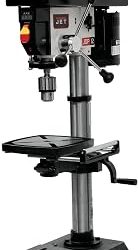
JET JWDP-12 12-Inch Variable Speed
The reference point for the category, and the one machine here that feels like shop equipment rather than a tool-shaped object: a ½ HP motor, genuine variable speed via a front-mounted dial, and a generous 12-inch swing with the rigidity to use it. If you build furniture regularly and want to stop thinking about the drill press entirely, this is the answer.
SKIL DP9505-00 10-Inch 5-Speed
A well-judged middle ground, with a 6.2-amp motor, five belt-driven speeds, and a laser plus work light that are actually positioned usefully rather than as marketing garnish. The 10-inch swing handles most casework, and the fit and finish are a clear step above generic imports at similar footprints.
VEVOR 12-Inch 1 HP Variable Speed
The spec-per-dollar pick: 1 HP, a continuously variable 530–3140 RPM range, a 12-inch swing, and a 0–45° tilting table with laser and LED lighting. Expect to spend an hour truing the table and checking chuck runout out of the box, but once dialed in it punches well above its price for mixed wood and metal work.
WEN 4206T 8-Inch 5-Speed
The compact cast iron standby that has earned its reputation through sheer consistency — modest 2.3-amp motor, five speeds, and a small footprint that suits a garage bench shared with other tools. Ideal for hardware boring, small-scale joinery, and anyone whose projects rarely exceed a chair’s dimensions.
WOODSKIL 8-Inch 5-Speed with Laser Guide
A close cousin to the WEN in size and output, distinguished by its ⅓ HP induction motor, quieter operation, and a laser guide that speeds up repetitive layout work. The 2-inch spindle stroke is the real constraint, so treat it as a precision small-parts machine rather than a general-purpose borer.
Frequently Asked Questions
Is an 8-inch press enough for furniture work?
For hardware, dowels, and small components, yes. Once you are drilling into the middle of a wide panel or a wide chair back, the four-inch throat becomes the bottleneck and a 10- or 12-inch model earns its extra bench space.
Do I need variable speed?
Not strictly, but it changes how often you use the tool. Belt changes are a small friction that quietly discourages switching bits, and switching bits is most of what a drill press is for.
Can these drill metal?
All of them can handle mild steel, aluminum, and brass at appropriate low speeds with cutting fluid. Use a proper clamp or drill press vise — metal grabs and spins stock far more aggressively than wood.
What accessories actually matter?
A drill press vise, a Forstner bit set, a sacrificial plywood auxiliary table with a fence, and a depth stop you trust. That combination does more for hole quality than upgrading the machine itself.
Final Thoughts
If the drill press will be a permanent fixture in a furniture shop, the JET JWDP-12 is the sound long-term investment and the only one here unlikely to be replaced. The SKIL DP9505-00 is the balanced everyday choice for most home builders, while the VEVOR 12-inch delivers the most capability per dollar for anyone willing to tune it on arrival.