Key takeaways
- Wood species and load rating: Solid beech is the benchmark for adult use — dense, tight-grained, and the reason some units publish figures near 880 lbs. Solid pine is lighter and warmer in tone but flexes more under dynamic loading, so check the stated capacity rather than assuming.
- Anchor count and wall substrate: Nine-anchor designs distribute shear force across multiple studs instead of concentrating it in two points. Confirm your wall type first: masonry and concrete are ideal, timber studs are fine with correct spacing, and plasterboard alone is not a mounting surface at any price.
- Rung diameter and finish: Adult hands want roughly 30–35mm of grip. Look for sanded, unvarnished or lightly oiled rungs — heavy lacquer turns slick the moment your palms get damp, and a natural finish ages into something far more attractive.
- Attachment ecosystem: Removable pull-up bars, dip handles, and suspension strap anchors are what turn a stretching ladder into a full-body station. Prioritize attachments that lock into the rungs positively rather than resting on friction.
- Footprint and visual weight: Wall-mounted means near-zero floor loss, but height matters. Measure ceiling clearance for overhead hangs, and consider tone: pale beech disappears against white plaster, while darker black-finished frames become a deliberate graphic element.
What's inside
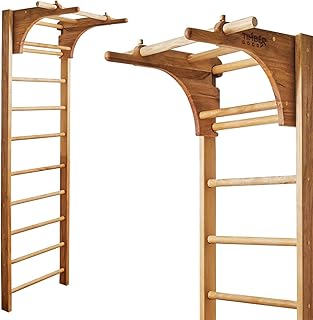
Home gym equipment has a habit of announcing itself. Black steel, foam grips, logos the size of license plates — the visual language of a commercial facility dropped into a living room that was carefully considered in every other respect. The Swedish ladder is one of the rare exceptions. A vertical run of turned hardwood rungs mounted flush to a wall, it reads closer to a piece of joinery than a training rig, which is exactly why it has migrated out of physiotherapy clinics and into apartments, converted attics, and the awkward wall behind the sofa that never quite worked for art.
The catch is that “wooden ladder on a wall” covers a wide quality range. Some units are genuinely load-rated hardwood with proper anchor plates; others are softwood with hardware that treats a 200-pound adult doing strict pull-ups as an edge case. This guide covers what actually matters for adult use — wood species, anchor count, rung diameter, and how attachments mount — then walks through the models worth your wall space, with a look at how each one behaves both structurally and visually.
As an Amazon Associate we earn from qualifying purchases.



How to Choose a Swedish Ladder For Adults (2026)
- Wood species and load rating: Solid beech is the benchmark for adult use — dense, tight-grained, and the reason some units publish figures near 880 lbs. Solid pine is lighter and warmer in tone but flexes more under dynamic loading, so check the stated capacity rather than assuming.
- Anchor count and wall substrate: Nine-anchor designs distribute shear force across multiple studs instead of concentrating it in two points. Confirm your wall type first: masonry and concrete are ideal, timber studs are fine with correct spacing, and plasterboard alone is not a mounting surface at any price.
- Rung diameter and finish: Adult hands want roughly 30–35mm of grip. Look for sanded, unvarnished or lightly oiled rungs — heavy lacquer turns slick the moment your palms get damp, and a natural finish ages into something far more attractive.
- Attachment ecosystem: Removable pull-up bars, dip handles, and suspension strap anchors are what turn a stretching ladder into a full-body station. Prioritize attachments that lock into the rungs positively rather than resting on friction.
- Footprint and visual weight: Wall-mounted means near-zero floor loss, but height matters. Measure ceiling clearance for overhead hangs, and consider tone: pale beech disappears against white plaster, while darker black-finished frames become a deliberate graphic element.
The Best Swedish Ladder For Adults (2026)s Reviewed
Solid Pine 9-Anchor Swedish Ladder with Pull-Up and Dip Station
The nine-anchor mounting pattern is the headline here, spreading load properly across the wall rather than trusting a pair of fixings. Pine keeps it light to install single-handed and gives you that pale Scandinavian warmth, though it suits bodyweight training and mobility work better than heavily loaded weighted hangs.
DHT Wood Stall Bar Suspension Trainer, Black
The black finish is the differentiator — instead of blending into the wall, this one behaves like architectural hardware, holding its own beside dark cabinetry or exposed brick. The nine strategically spaced rods are laid out with clinical rehab progressions in mind, which makes it a strong pick if mobility work is as important to you as strength.
Solid Beech Stall Bars with Removable Pull-Up and Dip Bar
Beech construction and a stated capacity around 880 lbs put this in a different structural category, with the stiffness you want for explosive pulls and loaded carries. The removable attachments mean you can strip it back to a clean vertical ladder when guests are over, which is a genuinely useful design feature rather than a marketing one.
GMWD Swedish Ladder Suspension Trainer
GMWD’s version leans into versatility, pairing the nine-rod frame with both pull-up and dip attachments plus suspension anchoring for a properly broad exercise catalogue. Fit and finish on the rungs is consistent, and the proportions are restrained enough that it doesn’t dominate a narrow wall.
Swedish Ladder Wall Gym with Straps and Dip Bars
This is the most complete out-of-the-box package, bundling pull-up bar, dip bars, and exercise straps so nothing needs sourcing separately. Best suited to a dedicated training wall or garage where you can leave the full setup mounted rather than reconfiguring around a living space.
Frequently Asked Questions
Can a Swedish ladder be mounted on a plasterboard wall?
Not into plasterboard alone. You need to anchor into structural studs behind it or into masonry, using fixings rated for the ladder’s stated load. If you can’t locate studs at the right spacing, a mounting board spanning multiple studs is the standard workaround.
What is the difference between pine and beech models?
Beech is denser and stiffer, which translates to higher load ratings and less flex during dynamic movements. Pine is lighter, easier to install, and typically less expensive, with a paler, softer grain that many people prefer visually.
How much ceiling height do I need?
For hanging and pull-up work, allow enough clearance above the top rung to fully extend your arms without touching the ceiling. Around 8 feet of wall height handles most adults comfortably; lower ceilings still work well for stretching, core, and horizontal pulling.
Is a Swedish ladder useful without the attachments?
Yes. The bare frame supports spinal decompression, hamstring and hip mobility, inverted hangs, and assisted squats. Attachments broaden the range into pressing and pulling, but the ladder earns its keep on mobility alone.
Final Thoughts
For serious adult loading, the solid beech stall bars with removable pull-up and dip attachments are the safest structural bet and the cleanest looking when stripped back. The GMWD Swedish ladder is the most balanced all-rounder for mixed strength and mobility training, while the black DHT stall bar is the one to choose if you want the piece to read as intentional design rather than fitness gear.