Key takeaways
- Motor Power: For hardwoods like oak or maple, look for at least 15 amps. Anything below that will bog down on thick stock and leave rough edges that demand extra sanding.
- Rip Capacity: If you plan to break down full 4×8 sheets of plywood, you need 30+ inches of rip capacity to the right of the blade. Smaller 18–25 inch capacities suit trim work and narrow boards.
- Portability vs. Stability: Foldable rolling stands save garage space but can introduce vibration. Stationary cabinet saws absorb it—but they live in one spot permanently.
- Blade Size and Bevel Range: A 10-inch blade with a 0–45° bevel covers the vast majority of home woodworking. Larger 12-inch saws exist but rarely justify the added cost for non-professional use.
- Safety Features: Riving knives, blade guards, and anti-kickback pawns aren’t optional extras. Prioritize models that include all three out of the box rather than selling them as add-ons.
What's inside
Shopping for a table saw on a home-improvement budget can feel like navigating a hardware aisle with no map. Between compact job-site models, full-size contractor options, and a flood of no-name imports promising workshop-grade power, most buyers end up overpaying for features they’ll never use—or worse, underspending on a tool that can’t handle a weekend project.
This guide cuts through that noise. We evaluated the top-rated table saws available on Amazon in 2026, comparing motor power, rip capacity, portability, and build quality so you can pick the right saw for your space and skill level without second-guessing the decision.
As an Amazon Associate we earn from qualifying purchases.



How to Choose a Table Saw For Home Use (2026)
- Motor Power: For hardwoods like oak or maple, look for at least 15 amps. Anything below that will bog down on thick stock and leave rough edges that demand extra sanding.
- Rip Capacity: If you plan to break down full 4×8 sheets of plywood, you need 30+ inches of rip capacity to the right of the blade. Smaller 18–25 inch capacities suit trim work and narrow boards.
- Portability vs. Stability: Foldable rolling stands save garage space but can introduce vibration. Stationary cabinet saws absorb it—but they live in one spot permanently.
- Blade Size and Bevel Range: A 10-inch blade with a 0–45° bevel covers the vast majority of home woodworking. Larger 12-inch saws exist but rarely justify the added cost for non-professional use.
- Safety Features: Riving knives, blade guards, and anti-kickback pawns aren’t optional extras. Prioritize models that include all three out of the box rather than selling them as add-ons.
The Best Table Saw For Home Use (2026) Reviewed
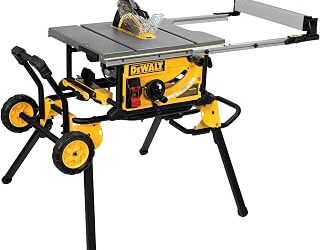
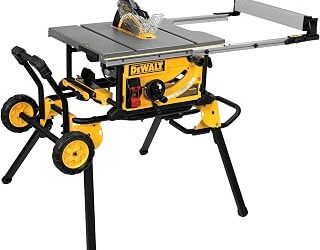
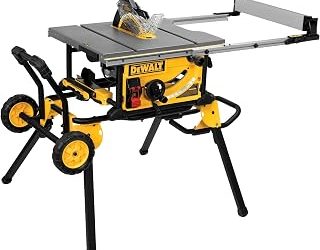
DEWALT DWE7491RS 10-Inch Table Saw
The DWE7491RS remains the gold standard for serious home woodworkers. Its 32½-inch rip capacity handles full plywood sheets, the 15-amp motor delivers consistent 4800 RPM torque, and the folding rolling stand transitions from garage storage to jobsite setup in seconds. If you only buy one table saw, this is it.
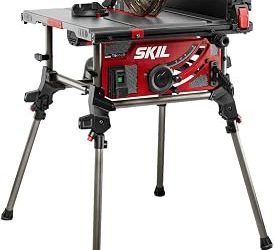
SKIL TS6307-00 10-Inch Portable Table Saw
SKIL’s portable offering punches well above its price bracket. The integrated folding stand keeps the footprint compact, while the rack-and-pinion fence system delivers surprisingly accurate rip cuts for a saw at this level. It’s an excellent entry point for DIYers who need reliability without overspending.
DEWALT DWE7485 Compact 8¼-Inch Table Saw
When garage square footage is non-negotiable, the DWE7485 earns its place. The smaller 8¼-inch blade sacrifices some cutting depth, but the 15-amp motor and solid fence system still handle dimensional lumber and sheet goods up to 24½ inches wide. It’s the smartest compact pick for apartment dwellers and weekend hobbyists.
DOVAMAN DTS10A 10-Inch Table Saw
The DOVAMAN DTS10A brings a copper motor spinning at 5300 RPM and a genuinely useful extendable table at a price that undercuts the major brands by a wide margin. The multifunctional design handles wood, acrylic, and light metal work—ideal for makers who work across materials but aren’t ready to invest in dedicated machines.
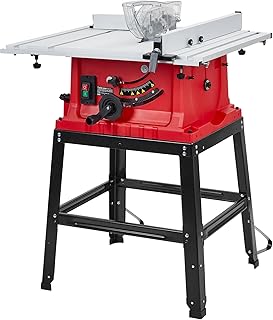
10-Inch 15 Amp 5000RPM Tablesaw with Stand
This no-frills 5000RPM unit includes a protective blade cover and offers both 90° crosscuts and 0–45° bevel adjustments across a 36 × 25-inch tabletop. It’s not a name-brand tool, but the adjustable depth stops and included stand make it a surprisingly competent budget option for first-time saw buyers tackling shelving or basic furniture builds.
Frequently Asked Questions
What size table saw do I need for home use?
A 10-inch blade is the most versatile choice for home workshops. It cuts boards up to 3½ inches thick at 90° and handles most hardwoods, plywood, and softwoods with ease. An 8¼-inch model works for lighter tasks if space is extremely limited.
Can a portable table saw cut plywood sheets?
Yes, but only if the rip capacity exceeds 30 inches. Models like the DEWALT DWE7491RS with 32½-inch capacity can rip a full 4×8 sheet in half. Portable saws with shorter rip fences will force you to guide sheet goods awkwardly, which is both inaccurate and unsafe.
How often should I replace or sharpen the blade?
Carbide-tipped blades typically last 20–40 hours of active cutting before quality degrades. If you notice burning, tear-out, or increased resistance feeding stock, swap the blade. Resharpening is possible but rarely worth the cost on a $20–$40 blade.
Is it worth buying a table saw with a rolling stand?
For garage workshops, absolutely. A rolling stand lets you tuck the saw against a wall between uses and roll it out when needed. The slight trade-off in rigidity compared to a stationary base is negligible for home woodworking at moderate feed rates.
Final Thoughts
For most home woodworkers, the DEWALT DWE7491RS is the best overall investment—its rip capacity, build quality, and portability check every box. Budget-conscious buyers should look closely at the SKIL TS6307-00, while anyone tight on space will appreciate the DEWALT DWE7485. All three deliver safe, accurate cuts that’ll last for years of weekend projects.