Key takeaways
- Tank size and portability: For home workshops, 20–30 gallon tanks strike the best balance between sustained output and floor-space economy. Larger tanks reduce motor cycling and deliver steadier pressure, but heavier units are harder to move between rooms. Look for models with large wheels and a vertical footprint if your shop doubles as a living space.
- Noise level: Indoor installations demand attention to decibels. Units rated at 60–70 dB operate at a conversational volume, making them viable in shared living environments. Oil-free designs tend to run louder, though some manufacturers have engineered acoustic dampening into newer frames. Always cross-reference the dB rating against your actual noise tolerance.
- Oil-lubricated versus oil-free pumps: Oil-lubricated pumps run cooler and last longer under heavy duty, but require routine oil changes and must stay level. Oil-free pumps offer lower maintenance at the cost of a shorter service life and higher operating noise. Match the pump type to your usage intensity rather than defaulting to one or the other.
- CFM at your target PSI: A compressor’s cubic-feet-per-minute output at 90 PSI determines which tools it can realistically power. Spray guns and HVLP systems demand higher CFM, while brad nailers and tire inflators are less hungry. Always size your compressor to the most demanding tool in your rotation, with a margin of roughly 20%.
- Oil grade and viscosity: Matching the correct synthetic lubricant to your compressor’s operating environment prevents premature wear. Multi-viscosity synthetic oils rated ISO 46 or ISO 100 handle temperature swings better than conventional mineral oils, especially in non-climate-controlled garages. Manufacturer-specific formulations, like those from Ingersoll Rand, are pre-tuned for OEM tolerances and simplify maintenance schedules.
What's inside
Setting up a home workshop or finishing a custom furniture piece always circles back to the same bottleneck: reliable compressed air. Buyers end up overwhelmed by a wall of specs—oil-lube versus oil-free, tank capacity, CFM ratings, viscosity grades—and walk away with equipment that doesn’t match their actual workflow. The stakes are real. Pick the wrong compressor and you’re fighting low pressure mid-spray. Choose the wrong oil and you’re rebuilding a pump inside eighteen months.
This guide cuts through the noise. We evaluated the strongest portable and shop-grade compressors on the market alongside the lubricants that keep them running at peak performance. Whether you’re inflating tires on a weekend, spraying lacquer on a dining table build, or running pneumatic nailers for built-in cabinetry, these picks cover the essentials for 2026.
As an Amazon Associate we earn from qualifying purchases.


How to Choose an Oil Air Compressor (2026)
- Tank size and portability: For home workshops, 20–30 gallon tanks strike the best balance between sustained output and floor-space economy. Larger tanks reduce motor cycling and deliver steadier pressure, but heavier units are harder to move between rooms. Look for models with large wheels and a vertical footprint if your shop doubles as a living space.
- Noise level: Indoor installations demand attention to decibels. Units rated at 60–70 dB operate at a conversational volume, making them viable in shared living environments. Oil-free designs tend to run louder, though some manufacturers have engineered acoustic dampening into newer frames. Always cross-reference the dB rating against your actual noise tolerance.
- Oil-lubricated versus oil-free pumps: Oil-lubricated pumps run cooler and last longer under heavy duty, but require routine oil changes and must stay level. Oil-free pumps offer lower maintenance at the cost of a shorter service life and higher operating noise. Match the pump type to your usage intensity rather than defaulting to one or the other.
- CFM at your target PSI: A compressor’s cubic-feet-per-minute output at 90 PSI determines which tools it can realistically power. Spray guns and HVLP systems demand higher CFM, while brad nailers and tire inflators are less hungry. Always size your compressor to the most demanding tool in your rotation, with a margin of roughly 20%.
- Oil grade and viscosity: Matching the correct synthetic lubricant to your compressor’s operating environment prevents premature wear. Multi-viscosity synthetic oils rated ISO 46 or ISO 100 handle temperature swings better than conventional mineral oils, especially in non-climate-controlled garages. Manufacturer-specific formulations, like those from Ingersoll Rand, are pre-tuned for OEM tolerances and simplify maintenance schedules.
The Best Oil Air Compressor (2026)s Reviewed
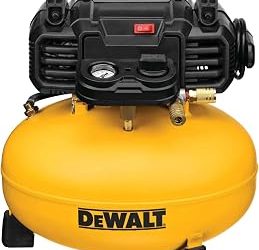
DEWALT 30 Gallon Portable Air Compressor
The DEWALT 30 Gallon vertical brings serious shop-grade muscle to a portable frame. With a 175 PSI maximum and an oil-lubricated pump, it delivers consistent CFM for extended spray sessions and framing work without the constant restarts that plague smaller tanks. Its vertical orientation keeps the garage floor clear—a detail that matters when your workshop shares space with everything else.
Klutch 29-Gallon Air Compressor
At 2.5 HP and 175 PSI, the Klutch punches above its price point while remaining genuinely maintenance-friendly. The oil-free vertical design eliminates lubrication chores entirely, and the oversized wheels make repositioning effortless across polished concrete or hardwood floors. Quick recovery times mean it won’t lag between trigger pulls on a cabinet nailing run.
Ultra Quiet Air Compressor (60 dB)
Where the Ultra Quiet 6.4-gallon unit earns its name—60 dB is barely louder than background music. The compact tank and oil-free 2 HP motor suit apartment workshops, rented studios, or late-night finishing sessions where noise discipline isn’t optional. It’s not built for all-day heavy use, but for targeted tasks like spot painting, trim work, and tire inflation it’s nearly ideal.
TRIAX Kompressor ISO 46 SAE 20 Synthetic Oil
This full-synthetic ISO 46 lubricant handles temperature swings that would thin out conventional compressor oil within a season. Its multi-viscosity formulation maintains consistent film strength across rotary, vane, and reciprocating pumps, making it a strong universal choice for home shops with seasonal temperature variation. One gallon covers multiple oil-change cycles, stretching the cost-per-maintenance visit well below manufacturer-branded alternatives.
Ingersoll Rand All-Season Select Synthetic Lubricant
Engineered specifically for Ingersoll Rand pneumatic systems, this OEM synthetic lubricant optimizes valve and piston life across the full calendar year. The 1L bottle format is modest for frequent users, but the quality of the formulation justifies the premium—less carbon buildup, fewer oil changes, and measurably cooler pump operation during sustained runs. For IR owners, it’s the no-brainer maintenance pick.
Frequently Asked Questions
How often should I change the oil in an oil-lubricated air compressor?
Most manufacturers recommend the first oil change after 10–20 hours of break-in use, then every 300–500 operating hours or at least once annually. Climates with extreme heat or dust exposure warrant shorter intervals. Using a high-quality synthetic oil like the TRIAX ISO 46 can extend the interval slightly by resisting thermal breakdown longer than mineral-based oils.
Can I use regular motor oil in my air compressor?
You can in a pinch, but standard motor oil contains detergent additives designed for combustion engines. These additives generate carbon deposits inside a compressor pump, clogging valves and reducing efficiency. Non-detergent compressor-specific oils or manufacturer-recommended synthetics are the safer choice for long-term pump health.
What’s the real difference between oil-lubricated and oil-free compressors?
Oil-lubricated pumps use a reservoir of oil to reduce friction and carry heat away from moving parts, resulting in quieter operation, cooler running temperatures, and longer service life. Oil-free pumps eliminate that maintenance layer using self-lubricating materials but run hotter, louder, and typically have a shorter overall lifespan. The trade-off is simplicity versus durability.
Is a 30-gallon compressor overkill for home furniture projects?
Not at all. The added capacity reduces motor cycling, which extends pump life and maintains steadier pressure during extended spray sessions. A 30-gallon tank also supports higher-demand tools like HVLP spray guns without struggling. For occasional trim nailing alone, a smaller unit suffices—but if you finish furniture regularly, the headroom pays off.
Final Thoughts
The DEWALT 30 Gallon stands out as the most versatile shop companion for serious home builders, while the Klutch 29-Gallon delivers impressive performance with zero oil maintenance. Pair either compressor with TRIAX Kompressor ISO 46 for reliable year-round lubrication, and you’ve got a compressed air setup that handles everything from cabinetry assembly to furniture finishing without compromises.