Key takeaways
- Durability: Choose a coating that can withstand frequent wiping, spills, heat exposure, and the abrasion of daily dining.
- Appearance: Satin and natural finishes usually flatter timber best, adding depth without creating a distracting plastic-like shine.
- Application: Consider drying time, odour, number of coats, and how much surface preparation the product requires.
- Wood character: Oil-based finishes tend to enrich grain, while clear water-based coatings preserve a lighter, cleaner colour.
- Maintenance: A good finish should allow simple cleaning and offer a practical way to refresh small scuffs or worn areas over time.
What's inside
A dining table does more than anchor a room: it absorbs coffee rings, dinner-party spills, warm plates, fingerprints, and the occasional hurried wipe-down. The right finish can preserve the character of the wood while making everyday maintenance far less stressful, but the choice is not always obvious. Sheen, durability, drying time, colour, and food-contact suitability all deserve consideration before you commit.
This guide takes a modern home-design curator’s view, pairing practical protection with the look and feel that make a table worth living with. We cover two dedicated wood finishes, plus a selection of contemporary dining tables and styling pieces that help you judge how a finish will perform in a real dining space.
As an Amazon Associate we earn from qualifying purchases.


🛒 Best Price Today on Amazon
Prime members get fast, free shipping on everything above, plus member-only deals. New members get a 30-day free trial — cancel anytime.
How to Choose a Finish For Dining Table (2026)
- Durability: Choose a coating that can withstand frequent wiping, spills, heat exposure, and the abrasion of daily dining.
- Appearance: Satin and natural finishes usually flatter timber best, adding depth without creating a distracting plastic-like shine.
- Application: Consider drying time, odour, number of coats, and how much surface preparation the product requires.
- Wood character: Oil-based finishes tend to enrich grain, while clear water-based coatings preserve a lighter, cleaner colour.
- Maintenance: A good finish should allow simple cleaning and offer a practical way to refresh small scuffs or worn areas over time.
The Best Finish For Dining Tables (2026) Reviewed
Gilboys Hard Wax Oil
Gilboys Hard Wax Oil is the most natural-looking option in this selection, giving timber a softly enhanced grain rather than a heavily coated appearance. Its water- and heat-resistant formulation makes it a compelling choice for dining tables, particularly when you want a tactile, low-sheen surface that suits contemporary and rustic interiors alike.
Minwax Polycrylic Protective Finish
For a clear protective layer with a refined satin appearance, Minwax Polycrylic is a practical all-rounder. It is well suited to homeowners who want to preserve a pale or painted table’s colour while adding resistance against everyday marks; apply it over a properly prepared surface and follow the manufacturer’s recoat guidance.
72-Inch Luxury Modern Dining Table
This solid-wood rectangular table makes the finish part of the design story, with a hand-pressed textured top that rewards a protective treatment capable of highlighting its surface detail. The champagne-gold hammered metal legs add polish, while the generous six-to-eight-person scale makes durable, easy-clean protection especially valuable.
47-Inch Round Farmhouse Dining Table
A round table with drawers, a storage shelf, and a walnut finish brings a warmer, more collected feel to compact dining areas. Its wood-strip base and sliding-door details benefit from a finish that protects against repeated handling and spills without masking the grain or making the farmhouse character feel overly glossy.
63–79-Inch Extendable Dining Table
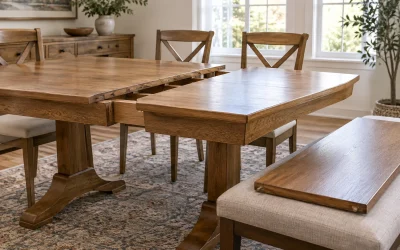
This extendable design is a strong fit for homes that shift between everyday meals and larger gatherings. The fluted double-pedestal base creates a sculptural foundation, while the brown-and-black palette pairs well with either a natural-looking hard-wax treatment or a clear satin protective coat selected to complement the existing surface.
Frequently Asked Questions
What is the best overall finish for a dining table?
There is no single winner for every table, but a hard-wax oil is an excellent choice when you want natural texture, visible grain, and straightforward maintenance. A clear satin water-based finish is often preferable when maximum clarity and a more uniform protective film are the priorities.
Is satin or gloss better for a dining table?
Satin is generally the more forgiving and versatile choice. It offers a subtle glow while disguising minor fingerprints and surface marks better than high gloss, making it especially effective in busy family kitchens and open-plan dining rooms.
How many coats should a dining table have?
The correct number depends on the product, timber, and intended use. Follow the label rather than applying extra coats by assumption, and allow each layer to dry fully. Proper sanding or surface preparation between coats can be just as important as the final number of layers.
Can I apply a new finish over an existing dining-table finish?
Only after confirming that the products are compatible and the existing coating is sound. Clean and lightly abrade the surface as directed, test the finish in an inconspicuous area, and avoid coating over wax, peeling varnish, grease, or damaged timber without first removing or repairing the problem.
Final Thoughts
For a natural, design-conscious result, Gilboys Hard Wax Oil is the standout pick, while Minwax Polycrylic is a dependable choice when clear satin protection matters most. Among the furniture options, the 72-Inch Luxury Modern Dining Table and 63–79-Inch Extendable Dining Table offer especially strong foundations for a beautifully protected dining space.