Key takeaways
- Slide versus fixed: A non-sliding compound saw crosscuts roughly 5 to 6 inches at 90 degrees, which covers trim, 2x4s, and narrow stock. If you plan to build tabletops, wide aprons, or shelving from 1×10 and 1×12 boards, a slider’s 12- to 13-inch capacity stops being a luxury.
- Single versus dual bevel: Single bevel tilts one direction, so you flip the workpiece for opposing angles. Dual bevel tilts both ways, which matters most for crown molding and mitered case corners where flipping long stock is impractical.
- Cut-line indication: Shadow-line systems cast the blade’s own silhouette onto your mark and stay accurate for the life of the saw. Lasers are bright and useful but need occasional recalibration and can drift out of alignment after a knock.
- Corded or MultiVolt: Corded 15-amp motors are the value baseline and never lose power mid-cut. Battery platforms earn their premium if you’re cutting on site, on a deck, or anywhere a cord becomes a tripping hazard around finished floors.
- Detents and fence height: Nine positive stops handle the common angles, but check that the detent override lets you dial in the 45.5-degree adjustments old walls demand. A taller sliding fence supports baseboard on edge without shimming.
What's inside
Anyone who has tried to fit a floating shelf into a room with hundred-year-old walls knows the truth: nothing in a house is actually square. A 10-inch miter saw is the tool that lets you work with that reality instead of fighting it, cutting the tight-tolerance angles that make a built-in bookcase read as architecture rather than an afterthought. The frustration for most buyers isn’t a shortage of options, it’s that the spec sheets all blur together. Amp ratings, bevel counts, and laser guides get top billing, while the details that actually determine whether your casing joints close cleanly go unmentioned.
This guide approaches the category from a furniture-and-interiors perspective rather than a jobsite one. We looked at crosscut capacity against real material widths, at detent accuracy for repeated miters, and at how much bench space each saw genuinely demands in a garage that doubles as a workshop. Below you’ll find our current picks for 2026, followed by a buying framework and answers to the questions that come up most often once the box is open.
As an Amazon Associate we earn from qualifying purchases.


How to Choose a Miter Saw 10 Inch (2026)
- Slide versus fixed: A non-sliding compound saw crosscuts roughly 5 to 6 inches at 90 degrees, which covers trim, 2x4s, and narrow stock. If you plan to build tabletops, wide aprons, or shelving from 1×10 and 1×12 boards, a slider’s 12- to 13-inch capacity stops being a luxury.
- Single versus dual bevel: Single bevel tilts one direction, so you flip the workpiece for opposing angles. Dual bevel tilts both ways, which matters most for crown molding and mitered case corners where flipping long stock is impractical.
- Cut-line indication: Shadow-line systems cast the blade’s own silhouette onto your mark and stay accurate for the life of the saw. Lasers are bright and useful but need occasional recalibration and can drift out of alignment after a knock.
- Corded or MultiVolt: Corded 15-amp motors are the value baseline and never lose power mid-cut. Battery platforms earn their premium if you’re cutting on site, on a deck, or anywhere a cord becomes a tripping hazard around finished floors.
- Detents and fence height: Nine positive stops handle the common angles, but check that the detent override lets you dial in the 45.5-degree adjustments old walls demand. A taller sliding fence supports baseboard on edge without shimming.
The Best Miter Saw 10 Inch (2026)s Reviewed
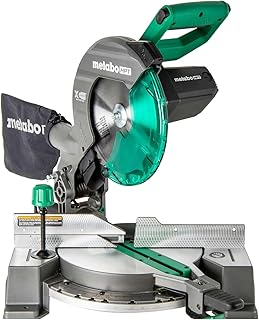
Metabo HPT MultiVolt 36V Sliding Miter Saw (C3610DRAQA)
This is the most capable saw here and the only cordless one, running on a 36V MultiVolt battery or an optional AC adapter, so it never becomes a paperweight when the pack dies. Dual bevel, a slide that handles wide boards, and brushless power make it the pick for anyone building furniture in a space where a cord is genuinely inconvenient.
DEWALT Single Bevel Compound Miter Saw (DWS713)
A fixed-head 15-amp saw with a tall fence and stainless detent plate, built for trim, framing, and case parts under about 6 inches wide. It’s the most predictable choice on the list: light enough to move, accurate out of the box, and supported by a parts and accessory ecosystem nothing else matches.
DOVAMAN Dual Bevel 10-Inch Sliding Miter Saw
Dual bevel and a 3.5 x 13.4-inch maximum cut at a price that typically undercuts name-brand sliders by a wide margin, with an LED shadow line instead of a laser. The two-speed motor (5000/3200 RPM) is the standout feature, letting you slow things down for aluminum extrusion or laminate without scorching.
Metabo HPT Single Bevel Compound Miter Saw (C10FCG2)
At around 24 pounds this is the lightest saw worth taking seriously, and the Xact Cut shadow line gives it cut-line accuracy usually reserved for pricier models. Capacity is modest, so treat it as a dedicated trim and small-parts saw rather than a panel cutter.
DOVAMAN Updated 10-Inch Sliding Miter Saw
The single-bevel sibling to the dual model, with the same generous 13.4-inch crosscut, three included TCT blades, and ambidextrous handle that left-handed users will appreciate. Choose it if you rarely cut crown and would rather put the savings toward a good stand.
Hoteche 10-Inch Sliding Compound Miter Saw
A 15-amp single-bevel slider with a laser guide, positioned as an entry point for occasional projects. Fit and finish are basic, so plan on checking fence squareness before your first cut, but the value is real for anyone cutting a dozen boards a year.
Frequently Asked Questions
Is a 10-inch saw enough for furniture work?
For almost everything, yes. A sliding 10-inch model crosscuts wider than a fixed 12-inch, and 10-inch blades cost less, cut faster, and deflect less. Reach for a 12-inch only when you routinely cut thick timber or tall crown.
Should I replace the included blade?
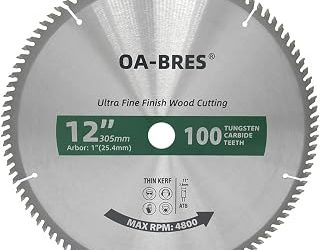
For finish cuts, yes. Stock blades typically run 24 to 40 teeth, which is fine for framing but leaves tearout on veneered plywood and hardwood. An 80-tooth fine-finish blade transforms the cut quality on any saw here.
Do I need a stand?
Any workpiece longer than about 3 feet needs support level with the saw table, or gravity will pull it out of alignment mid-cut. A folding stand with extension arms is the single best accessory purchase you can make.
How do these handle dust?
Honestly, poorly, as a category. Bundled bags capture maybe a third of the debris. Connecting the port to a shop vacuum makes a substantial difference, which matters if your saw lives near finished furniture.
Final Thoughts
If you’re building furniture and want one saw to cover the range, the Metabo HPT MultiVolt C3610DRAQA delivers dual-bevel sliding capacity with cordless freedom. The DEWALT DWS713 remains the smartest corded buy for trim and case work, and the DOVAMAN Dual Bevel slider offers the widest capability per dollar if you can accept a lesser-known brand.