Key takeaways
- Purpose first: Airbag suspension leveling needs a permanently mounted system with pressure switch and manifold. Tire inflation alone is better served by a cordless portable unit. Air horns and heavier tools require a tank.
- Duty cycle: This tells you how long the pump can run before it needs to cool. Anything under 50% will struggle with 33-inch tires. A 100% duty cycle rating means continuous operation without thermal shutdown.
- Maximum PSI vs. real output: A 150 PSI headline figure is meaningless if flow rate collapses above 40 PSI. Look for stated CFM or fill-time benchmarks on a tire size close to yours.
- Power source: Hardwired 12V systems draw from the vehicle and never run flat, but require installation. Battery units offer freedom at the cost of capacity, so check mAh if you plan to fill more than two tires per charge.
- Control and mounting: App or wireless remote control is genuinely useful when the compressor sits under the bed rail. Also confirm bracket hardware, hose length, and whether fittings match your existing airbag lines.
What's inside
Anyone who has hauled a flat-pack sectional home, towed a trailer of reclaimed timber, or leveled a truck bed loaded with pavers knows the quiet frustration of sagging suspension and soft tires. It rarely announces itself. You just notice the rear end squatting, the steering going vague, the ride turning harsh over every seam in the road. Reaching for a gas station air hose is a poor fix, and most cheap inflators wheeze out before they reach pressure on anything larger than a bicycle tube.
An onboard air compressor solves this permanently. It lives with the vehicle, feeds airbag suspension or an air horn tank, and tops off tires on demand. This guide breaks down the categories worth knowing in 2026: full onboard systems for airbag suspension, tank-fed kits for heavier duty work, and cordless portable units that handle everything from truck tires to inflatable furniture. Below are the specifications that actually matter and the models earning their keep.
As an Amazon Associate we earn from qualifying purchases.



How to Choose an Onboard Air Compressor (2026)
- Purpose first: Airbag suspension leveling needs a permanently mounted system with pressure switch and manifold. Tire inflation alone is better served by a cordless portable unit. Air horns and heavier tools require a tank.
- Duty cycle: This tells you how long the pump can run before it needs to cool. Anything under 50% will struggle with 33-inch tires. A 100% duty cycle rating means continuous operation without thermal shutdown.
- Maximum PSI vs. real output: A 150 PSI headline figure is meaningless if flow rate collapses above 40 PSI. Look for stated CFM or fill-time benchmarks on a tire size close to yours.
- Power source: Hardwired 12V systems draw from the vehicle and never run flat, but require installation. Battery units offer freedom at the cost of capacity, so check mAh if you plan to fill more than two tires per charge.
- Control and mounting: App or wireless remote control is genuinely useful when the compressor sits under the bed rail. Also confirm bracket hardware, hose length, and whether fittings match your existing airbag lines.
The Best Onboard Air Compressors (2026) Reviewed
RETRUE Onboard Air Compressor System for Airbag Suspension
This is the straightforward choice if your priority is keeping a loaded truck level, with a universal kit that covers F150 through F350, Silverado, Sierra, and Ram applications. The included pressure switch and gauge setup means you adjust ride height from the cab rather than crawling underneath with a hand pump.
Medium Duty Onboard Air System with 2.5 Gallon Tank
The 2.5 gallon reservoir is the differentiator here, storing 150 PSI so you get instant air rather than waiting on the pump. It is the sensible pick for anyone running a train horn alongside suspension duties, though you will need to plan mounting space for the tank.
maXpeedingrods 120 PSI System with App Control
Wireless app and remote control make this the most modern-feeling installation of the group, letting you adjust airbag pressure from your phone. At 120 PSI it targets suspension and trailer work rather than high-pressure tool use, and the wiring harness is well labeled for a DIY afternoon.
OlarHike 12000mAh Heavy Duty Tire Inflator
Dual power is the appeal: run it cordless for roadside work or plug into 12V for longer sessions without draining the pack. It reaches 150 PSI with a clear digital gauge and auto shutoff, making it a genuinely capable option for SUV, RV, and pickup tires.
ETENWOLF VORTEX S6 Cordless Inflator
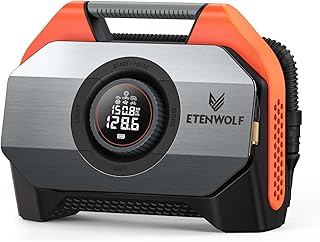
A 19200mAh battery paired with dual cylinders and a 100% duty cycle puts this at the top for sustained inflation without cooldown pauses. The LED backlight and orange housing are practical touches for dark shoulders, and it handles bike tires and inflatables with the same composure as truck tires.
Frequently Asked Questions
Do I need a tank with my onboard compressor?
Only if you want instant air delivery or plan to run an air horn. For airbag suspension adjustment alone, a tankless system fed directly to the bags works fine and saves considerable mounting space.
Can a portable compressor replace an onboard system?
Not for suspension. Portable units like the OlarHike Cordless model are excellent for tires and inflatables, but airbag leveling requires a fixed system plumbed to the bags with a pressure switch.
How long should filling a truck tire take?
A quality unit should take a light truck tire from 20 to 35 PSI in roughly two to three minutes. Anything dramatically slower usually points to a low flow rate rather than a low PSI rating.
Is installation something I can handle myself?
Most kits include brackets, wiring, and fittings for a bolt-on install with basic hand tools. Budget two to four hours, and use an inline fuse plus a relay on the power feed.
Final Thoughts
For airbag suspension on a work truck, the RETRUE system delivers the most complete plug-and-play package at a fair price. Choose the Medium Duty 2.5 Gallon kit if you want stored air for horns and faster response, and keep the ETENWOLF VORTEX S6 in the cab as a cordless backup for tires, sports gear, and anything inflatable that needs firming up.