Key takeaways
- Verify the stated rating: Look for a specific number in the listing, not adjectives like “sturdy” or “reinforced.” Commercial and contract-grade chairs publish load capacities because hospitality buyers demand them; residential-only lines often don’t publish anything at all.
- Frame gauge over frame material: Steel wins on paper, but wall thickness decides the outcome. An 18-gauge tube outperforms a thinner 20-gauge one in the same silhouette, and welded joints hold up far better than bolted brackets under repeated lateral stress.
- Seat width and depth: Capacity is meaningless if the seat pinches. Aim for at least 17 inches of usable width, and check whether the back tapers inward, since many X-back and ladder-back designs narrow noticeably above the seat.
- Cross-bracing and leg geometry: Floor-level stretchers or a full brace under the seat distribute load away from the leg welds. Slightly splayed rear legs add stability; perfectly vertical legs on a tall back concentrate stress at the top joint.
- Finish and floor contact: Powder coating resists chipping better than paint, and non-marring plastic floor glides protect hardwood while keeping the chair from wobbling. Replaceable glides are a small detail that extends usable life by years.
What's inside
Weight capacity is the spec most dining chairs quietly avoid. Scroll a furniture listing and you’ll find seat height, fabric type, leg finish, and assembly time long before you find a load rating, which tells you something about how manufacturers think about it. For anyone shopping above the 300-pound mark, that silence is the whole problem: a chair that flexes at the joints, splays at the legs, or creaks every time someone shifts their weight isn’t a design choice, it’s a countdown.
The good news is that the solution already exists, and it’s been sitting in restaurants and hotel banquet halls for decades. Commercial-grade seating is engineered for constant turnover and unpredictable loads, and much of it now comes in finishes that look at home in a residential dining room. This guide covers the chairs worth your attention in 2026, what separates a genuinely reinforced frame from a marketing claim, and how to match contract-grade durability to a room you actually want to eat in.
As an Amazon Associate we earn from qualifying purchases.


🛒 Best Price Today on Amazon
Prime members get fast, free shipping on everything above, plus member-only deals. New members get a 30-day free trial — cancel anytime.
How to Choose Heavy Duty Dining Chairs 500lbs (2026)
- Verify the stated rating: Look for a specific number in the listing, not adjectives like “sturdy” or “reinforced.” Commercial and contract-grade chairs publish load capacities because hospitality buyers demand them; residential-only lines often don’t publish anything at all.
- Frame gauge over frame material: Steel wins on paper, but wall thickness decides the outcome. An 18-gauge tube outperforms a thinner 20-gauge one in the same silhouette, and welded joints hold up far better than bolted brackets under repeated lateral stress.
- Seat width and depth: Capacity is meaningless if the seat pinches. Aim for at least 17 inches of usable width, and check whether the back tapers inward, since many X-back and ladder-back designs narrow noticeably above the seat.
- Cross-bracing and leg geometry: Floor-level stretchers or a full brace under the seat distribute load away from the leg welds. Slightly splayed rear legs add stability; perfectly vertical legs on a tall back concentrate stress at the top joint.
- Finish and floor contact: Powder coating resists chipping better than paint, and non-marring plastic floor glides protect hardwood while keeping the chair from wobbling. Replaceable glides are a small detail that extends usable life by years.
The Best Heavy Duty Dining Chairs 500lbs (2026) Reviewed
Flash Furniture HERCULES X-Back Metal Chair, Black Vinyl Seat (2-Pack)
This is the reference point for the category: a welded steel X-back frame with a thickly padded vinyl seat, built to survive restaurant service and priced for two. The vinyl wipes clean in a second, which makes it a rational pick for households with kids, and the clear protective coating on the frame resists the scuffing that ruins cheaper black finishes.
Flash Furniture HERCULES X-Back Chair, Walnut Wood Seat
Same contract-grade skeleton, warmer read. The solid walnut-finish wood seat softens the industrial frame enough to work under a farmhouse or mid-century table, and it sidesteps the vinyl-in-summer problem entirely. Worth noting the wood seat is contoured rather than flat, which makes long dinners more comfortable than the spec sheet suggests.
EMMA + OLIVER Ladder Back Metal Chair, Black/Cherry (2-Pack)
The ladder back is the quietest silhouette here, which is exactly why it suits open-plan rooms where six chairs shouldn’t dominate the sightline. The cherry-finish wood seat over a black metal frame is a classic bistro pairing, and the horizontal slats give the back real rigidity without visual bulk.
MECHYIN Farmhouse Dining Chairs, Black (Set of 4)
The most residential-looking option on this list, with a thickened steel frame and a slatted wood back that leans rustic rather than commercial. Buying in sets of four brings the per-seat cost down meaningfully, and the finish reads more considered in person than most budget farmhouse seating.
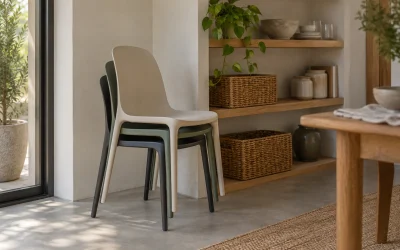
Flash Furniture Commercial Grade Silver Metal Indoor-Outdoor Chair
Built for patios and covered terraces, with a corrosion-resistant silver frame and a stackable profile that makes seasonal storage painless. If your dining area spills onto a deck or you host outdoors, this is the one that won’t punish you for leaving it out overnight.
Frequently Asked Questions
Are commercial chairs too industrial for a home dining room?
Not anymore. Wood-seat variants like the walnut HERCULES and the EMMA + OLIVER ladder back read as bistro rather than break room. If you want something overtly decorative, an upholstered option such as the ACEDÉCOR velvet set with mirrored gold accents brings the high-back drama, though upholstered chairs generally carry lower published load ratings than welded metal frames.
Does a 500-pound rating mean static or dynamic weight?
Most published figures are static capacity, measured with load applied evenly to a stationary chair. Real-world use involves leaning, rocking, and sitting down quickly, all of which multiply force at the joints, so treat the rating as a ceiling rather than a target.
Do these chairs require assembly?
Metal restaurant chairs typically arrive with the frame fully welded and the seat pre-attached or requiring a handful of bolts. Set-of-four residential options like the MECHYIN chairs involve more assembly, usually attaching legs and back to the seat.
Will they damage hardwood floors?
Factory plastic glides handle normal use, but they wear down. Replacing them with felt pads every year or two is cheap insurance, particularly under heavier chairs where contact pressure is higher.
Final Thoughts
For most dining rooms, the HERCULES X-Back with the walnut wood seat is the pick that balances contract-grade structure against furniture that looks intentional. Choose the vinyl-seat two-pack if easy cleanup ranks higher than warmth, and the MECHYIN set of four if you’re outfitting a full table at once and want a softer farmhouse read. Whichever direction you go, confirm the published capacity on the listing before you buy, since manufacturers do revise specs between production runs.