Key takeaways
- Weight and hand: Dining seats need a mid-to-heavyweight cloth that resists stretching over the foam. Anything with drapery-soft flop will sag at the corners within a season, so favor fabrics described as thickened, tightly woven, or upholstery-grade rather than general craft cotton.
- Cleanability: Be realistic about your household. Tight weaves and PU leather release food and liquid; open, nubby textures trap it. If you host often or feed small children, prioritize a wipeable surface or plan on a fabric protector spray before installation.
- Yardage math: Measure the seat’s widest points, add four to six inches on every side for pull-under, and multiply by the number of chairs. Most 57-inch-wide fabrics yield two standard drop-in seats per yard, but patterned goods need extra for repeat matching.
- Pattern scale: Small seats flatten large motifs. Keep repeats modest — tonal texture, fine damask, or a subtle weave reads as intentional, while an oversized print gets cropped into something unrecognizable once it’s wrapped.
- Color behavior in daylight: Dining rooms often sit near windows. Mid-tone greys, navies, and sands hide shadowing and crumbs better than either stark white or deep black, both of which show every mark and every stray thread.
What's inside
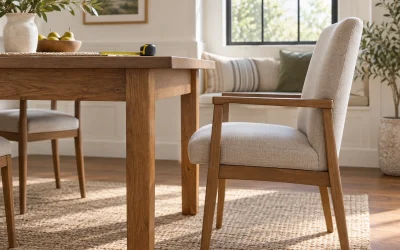
Dining chairs live a harder life than almost anything else in the house. They get dragged, straddled, splashed with vinaigrette, and wiped down more often than we admit — and the seat deck absorbs all of it. Most people discover this the hard way, after recovering a set in a fabric chosen purely on color, only to watch the weave pill along the front edge or hold a stain like a birthmark. The gap between a fabric that photographs beautifully and one that survives a Sunday roast is wider than the swatch card suggests.
This guide is built around that gap. Below are the upholstery fabrics worth considering in 2026 for dining seats specifically: faux linens with enough body to staple cleanly, chenille for rooms that lean soft and tactile, jacquard damask for formal dining, and grain-textured PU for anyone who wants to wipe rather than worry. There’s a short buying framework first, then honest notes on each option, including who it suits and who should skip it.
As an Amazon Associate we earn from qualifying purchases.


🛒 Best Price Today on Amazon
Prime members get fast, free shipping on everything above, plus member-only deals. New members get a 30-day free trial — cancel anytime.
How to Choose a Upholstery Fabric For Dining Room Chairs (2026)
- Weight and hand: Dining seats need a mid-to-heavyweight cloth that resists stretching over the foam. Anything with drapery-soft flop will sag at the corners within a season, so favor fabrics described as thickened, tightly woven, or upholstery-grade rather than general craft cotton.
- Cleanability: Be realistic about your household. Tight weaves and PU leather release food and liquid; open, nubby textures trap it. If you host often or feed small children, prioritize a wipeable surface or plan on a fabric protector spray before installation.
- Yardage math: Measure the seat’s widest points, add four to six inches on every side for pull-under, and multiply by the number of chairs. Most 57-inch-wide fabrics yield two standard drop-in seats per yard, but patterned goods need extra for repeat matching.
- Pattern scale: Small seats flatten large motifs. Keep repeats modest — tonal texture, fine damask, or a subtle weave reads as intentional, while an oversized print gets cropped into something unrecognizable once it’s wrapped.
- Color behavior in daylight: Dining rooms often sit near windows. Mid-tone greys, navies, and sands hide shadowing and crumbs better than either stark white or deep black, both of which show every mark and every stray thread.
The Best Upholstery Fabric For Dining Room Chairs (2026)s Reviewed
TinaKim Thick Upholstery Faux Linen (Grey Blue)
This is the safest all-rounder here: substantial enough to pull taut without warping, with a faux-linen slub that gives dining chairs a quiet, textural finish. The two-yard cut in grey blue covers roughly four standard drop-in seats, making it a sensible single purchase for a small set.
LaSilk Premium Thickened Faux Linen (Navy Blue)
Sold by the single yard at 57 inches wide, LaSilk is the pick for cautious buyers — order one yard, upholster a test chair, then commit. The navy has depth without going flat black, and the thickened body holds a crisp staple line on wooden frames.
Premium Upholstery Chenille (Linen)
Chenille brings a plush, light-catching pile that softens hard-edged modern dining sets beautifully. It’s the most comfortable option to actually sit on, though the raised texture asks for a stain treatment if your table sees regular red wine.
Damask Jacquard Upholstery and Drapery (Sand)
For traditional or transitional rooms, this woven jacquard delivers pattern through structure rather than print, so the motif won’t wear away at contact points. The sand colorway is forgiving in daylight and pairs naturally with walnut, oak, and warm brass hardware.
Wento Grain Faux Leather (Beige)
Genuinely the most practical fabric on this list — soft-grain PU that wipes clean in one pass and shrugs off spills entirely. Work slowly around curved corners, since vinyl doesn’t ease like woven cloth, and use a lighter staple pressure to avoid perforating the surface.
Frequently Asked Questions
How much fabric do I need for six dining chairs?
Plan on three to four yards of 57-inch goods for six standard drop-in seats. A larger cut such as the Faux Linen Needlework 3.3-yard bolt handles most six-chair sets with margin for a mistake, which is worth having.
Is faux leather too casual for a dining room?
Not anymore. A fine-grain beige or taupe PU reads closer to leather than to vinyl, and it’s become a standard choice in designed dining spaces precisely because it handles real use.
Do I need to remove the old fabric first?
On drop-in seats you can often staple over a single intact layer, but stripping back is better practice. Old fabric traps odor and adds bulk that can stop the seat from seating flush in the frame.
Will these fabrics fade near a window?
Any textile will lighten with sustained direct sun. Mid-tone and tonal fabrics disguise it far better than saturated navies or blacks, and rotating chairs seasonally evens out exposure.
Final Thoughts
If you want one fabric that flatters most dining rooms and forgives a beginner’s staple gun, start with the TinaKim thick faux linen. Households with young children or frequent guests will be happier long-term with the Wento grain faux leather, and anyone furnishing a formal room should look first at the sand damask jacquard for pattern that wears rather than fades.