Key takeaways
- Weave density: Hold the fabric to a window. If light passes through easily, it will thin out over the seat’s crown and show wear at the front edge first. Upholstery-weight faux linen or a heavy cotton blend gives you a surface that stays opaque and even.
- Yardage math: Budget roughly half a yard per standard drop-in seat, then add 15 percent for pattern alignment and mistakes. A four-chair set is comfortable at 2 to 3 yards; six chairs with a directional print push toward 5.
- Cleanability: Waterproof or coated backings are worth it for family tables and outdoor-adjacent spaces. Untreated linen looks better but wants a fabric protector spray before the chairs go back in service.
- Stretch behavior: A little give helps you pull clean corners; too much and the fabric relaxes into ripples. Non-stretch woven goods are more forgiving for beginners on flat or gently domed pads.
- Pattern scale: Seats are small canvases. Large motifs get cropped awkwardly, so favor tight repeats, textured solids, or small-scale geometrics unless you’re deliberately centering a single element.
What's inside
Dining chairs are the hardest-working seats in the house, and their seat covers are usually the first thing to give out. A worn seat pad, a wine-stained cushion, or a set of thrift-store chairs with good bones and terrible upholstery are all fixable in an afternoon, but only if you pick the right cloth. The trouble is that fabric listings rarely tell you what actually matters: how tightly the weave holds up under a staple gun, whether the surface repels a dropped fork of pasta, and how much yardage a set of four chairs really needs. Buy too thin, and the pad’s contours telegraph through within a month. Buy too stiff, and you’ll fight the corners.
This guide narrows the field to fabrics that behave well on dining seats specifically: dense faux linens for a quiet, architectural look, waterproof printed weaves for households where spills are a matter of when rather than if, and one ready-made chair for anyone who’d rather skip the project entirely. Below you’ll find the picks, a short buying framework, and answers to the questions that come up mid-project.
As an Amazon Associate we earn from qualifying purchases.



🛒 Best Price Today on Amazon
Prime members get fast, free shipping on everything above, plus member-only deals. New members get a 30-day free trial — cancel anytime.
How to Choose a Fabric To Reupholster Dining Chairs (2026)
- Weave density: Hold the fabric to a window. If light passes through easily, it will thin out over the seat’s crown and show wear at the front edge first. Upholstery-weight faux linen or a heavy cotton blend gives you a surface that stays opaque and even.
- Yardage math: Budget roughly half a yard per standard drop-in seat, then add 15 percent for pattern alignment and mistakes. A four-chair set is comfortable at 2 to 3 yards; six chairs with a directional print push toward 5.
- Cleanability: Waterproof or coated backings are worth it for family tables and outdoor-adjacent spaces. Untreated linen looks better but wants a fabric protector spray before the chairs go back in service.
- Stretch behavior: A little give helps you pull clean corners; too much and the fabric relaxes into ripples. Non-stretch woven goods are more forgiving for beginners on flat or gently domed pads.
- Pattern scale: Seats are small canvases. Large motifs get cropped awkwardly, so favor tight repeats, textured solids, or small-scale geometrics unless you’re deliberately centering a single element.
The Best Fabric To Reupholster Dining Chairs (2026)s Reviewed
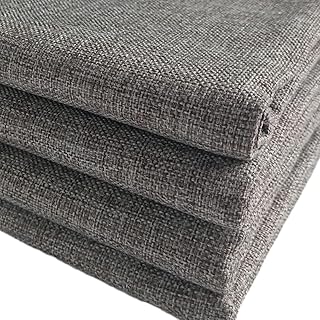
TinaKim Thick Chair Upholstery Fabric (Faux Linen)
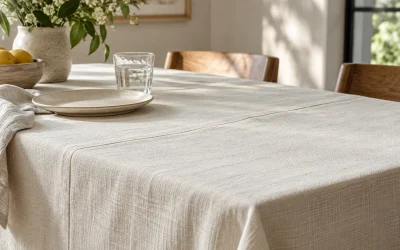
This is the safest first purchase for a set of four: the hand is genuinely thick, the flaxen tone reads like natural linen without the wrinkling, and the two-yard cut wraps standard seat pads with room to spare. It staples cleanly and holds a crisp corner fold, which is exactly what you want when you’re learning.
Faux Linen Needlework Fabric, 3.3 Yards
The grey-blue colorway is the quiet hero here, cool enough to sit beside oak or walnut without competing, and the 3.3-yard length covers six seats or leaves you extra for matching cushions. It’s a needlework-grade weave, so expect a slightly finer surface than the TinaKim, best paired with a protector spray.
Erosebridal Florals Flannel Fabric
A botanical print in black, red, and yellow that brings real personality to plain wooden chairs, sold by the single yard so you can test one seat before committing. The flannel surface is soft and non-stretchy, which means careful corner work but a very tidy finished face.
Erosebridal Cowboy Fabric (Western Horse Print)
At ten yards with a waterproof, indoor-outdoor construction, this is the volume buy for a full dining set plus a bench or banquette. The desert-and-denim palette suits ranch, southwestern, and casual farmhouse rooms, and the coating shrugs off the spills that ruin untreated goods.
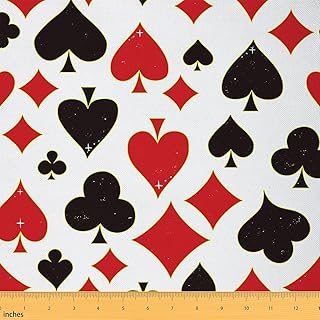
Poker Plaid Upholstery Fabric
Red-and-black lattice with a subtle heart motif, built for game rooms, basement bars, and kitchen nooks that don’t take themselves too seriously. Five yards is generous, it’s waterproof, and the tight plaid repeat aligns easily across multiple seats.
Frequently Asked Questions
How much fabric do I need for four dining chairs?
Two to two and a half yards of 57-inch goods covers four standard drop-in seats. Measure your pad’s width and depth, add four inches on every side for the wrap, and round up.
Do I have to remove the old fabric?
Not always. If the existing cover is smooth and not badly soiled, you can staple over it. Strip it if the padding is compressed, stained, or smells.
Is faux linen durable enough for daily use?
Upholstery-weight faux linen holds up well and resists the wrinkling of real linen. Treat it with a fabric protector and rotate chairs occasionally to even out wear.
What if I’d rather not DIY?
The HomePop Parsons Dining Chair in dark blue is a finished alternative, sold as a single so you can build a set at your own pace.
Final Thoughts
For most homes, the TinaKim thick faux linen is the pick: correct weight, neutral tone, beginner-friendly. Step up to the 3.3-yard grey-blue faux linen if you’re covering six seats, or the Erosebridal cowboy print if you need ten yards of waterproof coverage in one go.