Key takeaways
- Steel gauge and load rating: Lower gauge numbers mean thicker steel. A 16-gauge frame with a 1,500-plus pound total capacity will hold its geometry under a full socket inventory; thinner shells flex, and flex is what makes drawers bind.
- Drawer slides and liners: Ball-bearing slides rated per drawer are non-negotiable for heavy hand tools. Look for included EVA or rubber liners — they kill rattle, protect finishes, and keep loose parts from sliding on every roll.
- Worktop material: Solid hardwood tops absorb impact and take a beating gracefully, developing character rather than damage. Detachable steel or composite tops win on chemical resistance and portability. Choose based on whether you hammer or degrease more often.
- Mobility and footprint: Measure your bay before you fall for a 72-inch build. Confirm that at least two casters lock, and that the wheel diameter clears expansion joints and drain grates without stalling.
- Integrated power and security: An ETL-listed power strip turns the chest into a real work station for chargers and lights. A single-point locking system that secures every drawer at once is the difference between organized and merely stacked.
What's inside
Most garages evolve by accident. A wrench set lands on a shelf, a plastic bin absorbs the overflow, and within a few seasons the room that should feel like a workshop reads like a holding pen. The friction is real: sockets migrate, torque wrenches go missing under shop rags, and every job starts with ten minutes of searching. A proper tool chest solves the logistics problem, but the good ones do something more interesting — they give the space a spine, a piece of furniture with weight and intention that anchors everything around it.
This guide looks at rolling tool chests through both lenses: how they perform under a working mechanic’s demands, and how they sit in a garage you actually want to spend time in. We compared drawer construction, load ratings, slide quality, worktop materials, and the integrated extras that matter in 2026 — pegboards, power strips, locking systems, and casters that survive a concrete floor. Below are six chests worth your attention, followed by a buying framework and answers to the questions that come up most.
As an Amazon Associate we earn from qualifying purchases.




How to Choose a Tool Chest For Mechanics (2026)
- Steel gauge and load rating: Lower gauge numbers mean thicker steel. A 16-gauge frame with a 1,500-plus pound total capacity will hold its geometry under a full socket inventory; thinner shells flex, and flex is what makes drawers bind.
- Drawer slides and liners: Ball-bearing slides rated per drawer are non-negotiable for heavy hand tools. Look for included EVA or rubber liners — they kill rattle, protect finishes, and keep loose parts from sliding on every roll.
- Worktop material: Solid hardwood tops absorb impact and take a beating gracefully, developing character rather than damage. Detachable steel or composite tops win on chemical resistance and portability. Choose based on whether you hammer or degrease more often.
- Mobility and footprint: Measure your bay before you fall for a 72-inch build. Confirm that at least two casters lock, and that the wheel diameter clears expansion joints and drain grates without stalling.
- Integrated power and security: An ETL-listed power strip turns the chest into a real work station for chargers and lights. A single-point locking system that secures every drawer at once is the difference between organized and merely stacked.
The Best Tool Chest For Mechanics (2026)s Reviewed
HAUTMEC 72″ Rolling Tool Chest with Solid Oak Top
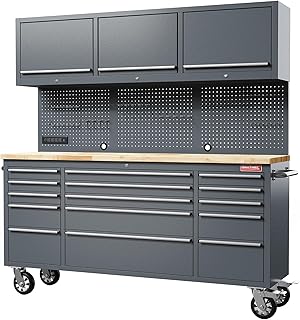
This is the flagship of the group: 16-gauge steel, fifteen lockable drawers, three upper cabinets, and a solid oak worktop that gives the whole assembly a furniture-grade presence rare in garage equipment. The ETL-certified power strip and 51-hook pegboard mean you can wire up a full diagnostic station without adding a second bench.
Garvee 60″ Rolling Tool Chest, 10 Drawers
A 1,750-pound load rating and a built-in charging station make this the most capable mid-size option here, and the 60-inch width fits bays where a 72-inch build would crowd the walkway. The pegboard back panel is a genuine workflow upgrade rather than a spec-sheet afterthought.
72″ Rolling Tool Chest with 15 Drawers & Solid Wood Top
The 1.2-inch solid wood surface and 18-inch drawer depth handle long-body tools and larger power equipment that shallower chests simply cannot accommodate. With an integrated outlet, pegboard, and full locking system, it delivers near-professional specification at a friendlier price point.
8-Drawer Rolling Tool Chest with Detachable Top
Arriving assembled is a meaningful advantage, and the detachable top box lets you carry the essentials to a job while the base stays put. Included tray dividers, liners, and side hooks cover the organizational details most chests leave you to source separately.
Metal Rolling Tool Cabinet with Dual Pegboards
Two pegboard panels and ten hooks turn vertical space into visible storage, which is exactly what a small workshop or basement bay needs most. Heavy-duty construction and an included bench liner make it a clean, restrained anchor piece for a compact setup.
Frequently Asked Questions
How many drawers do I actually need?
Eight to ten covers most home mechanics working on one or two vehicles. Fifteen makes sense once you are sorting by system — brakes, electrical, engine — rather than by tool type.
Is a wood top better than steel?
Wood is quieter, kinder to finished parts, and visually warmer. Steel handles solvents and heat better. For a garage that doubles as a living space, wood usually wins.
Can these chests handle a full socket set?
Yes, provided you respect the per-drawer rating. Distribute heavy sets across lower drawers to keep the center of gravity low, especially when rolling.
Do I need to bolt it down?
Not on level concrete with locking casters. On a sloped or uneven floor, lock the wheels and load the bottom drawers first for stability.
Final Thoughts
If you want one piece that settles the question for a decade, the HAUTMEC 72″ with the solid oak top is the most complete build here — real steel, real hardwood, real power. The Garvee 60″ is the smarter pick for tighter bays without giving up capacity, and the assembled 8-drawer chest with its detachable top box remains the most practical entry point for anyone still building out their space.