Key takeaways
- Tooth count: Blades with 80 to 100 teeth generally produce smoother crosscuts in hardwood, plywood, trim, and veneered panels, while 40-tooth blades remove material faster.
- Cutting role: A fine-finish blade is ideal for visible edges; a combination or lower-tooth blade is more useful when one blade must handle ripping and crosscutting.
- Kerf: Thin-kerf blades can reduce waste and place less demand on the saw, while full-kerf designs may feel more robust on powerful saws.
- Arbor compatibility: Confirm the blade diameter and arbor size before ordering. A 12-inch blade with a 1-inch arbor is common, but not universal across every saw.
- Material and coating: Carbide teeth hold an edge longer than basic steel, and polished or coated plates may help reduce friction, resin buildup, and heat during extended cuts.
What's inside
Choosing a miter saw blade can feel less like a simple upgrade and more like a materials decision: tooth count, kerf, arbor size, and the type of wood all affect whether a cut looks furniture-ready or needs substantial cleanup. The wrong blade may leave splintered veneer, burn marks, or a rough edge that undermines an otherwise thoughtful project.
This guide to Best 12 Miter Saw Blades (2026) focuses on blades suited to home workshops, built-ins, trim, cabinetry, and small furniture projects. We compare fine-finish specialists, versatile combination sets, and practical options for makers who want clean results without overcomplicating their tool kit.
As an Amazon Associate we earn from qualifying purchases.


How to Choose a/an 12 Miter Saw Blades (2026)
- Tooth count: Blades with 80 to 100 teeth generally produce smoother crosscuts in hardwood, plywood, trim, and veneered panels, while 40-tooth blades remove material faster.
- Cutting role: A fine-finish blade is ideal for visible edges; a combination or lower-tooth blade is more useful when one blade must handle ripping and crosscutting.
- Kerf: Thin-kerf blades can reduce waste and place less demand on the saw, while full-kerf designs may feel more robust on powerful saws.
- Arbor compatibility: Confirm the blade diameter and arbor size before ordering. A 12-inch blade with a 1-inch arbor is common, but not universal across every saw.
- Material and coating: Carbide teeth hold an edge longer than basic steel, and polished or coated plates may help reduce friction, resin buildup, and heat during extended cuts.
The Best 12 Miter Saw Blades (2026)s Reviewed
FOXBC 12-Inch 100-Tooth Ultimate Finish Blade
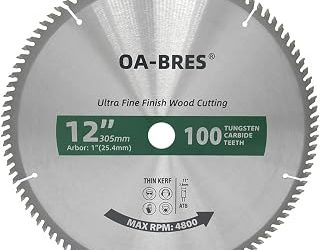
The FOXBC 100-tooth blade is aimed squarely at clean, presentation-quality crosscuts. Its high tooth count makes it a strong match for trim, hardwood edging, plywood, and furniture components where a refined edge matters more than maximum cutting speed.
DEWALT DWA112100 12-Inch 100-Tooth Fine Finish Blade
DEWALT’s DWA112100 is a polished choice for makers who want a dedicated finishing blade from an established tool brand. The ultra-sharp carbide profile is well suited to repeated crosscuts in molding, hardwood, and sheet goods, particularly when tear-out would be difficult to conceal.
WEN BL1280 12-Inch 80-Tooth Fine-Finish Blade
The WEN BL1280 takes a slightly more versatile approach than a 100-tooth specialist while still prioritizing smooth results. Its 80-tooth layout fits common miter-saw and table-saw work, making it a sensible workshop blade for furniture parts, shelving, and painted or clear-finished wood.
DEWALT DWA112CMB 12-Inch 40T & 60T Combo Pack
This DEWALT combo pack is practical for a home workshop that does not want every project tied to one tooth count. The 40-tooth blade handles faster general cutting, while the 60-tooth option steps up the finish for trim, joinery, and visible furniture edges.
ANGELSWORD 12-Inch 40T & 60T Two-Pack
ANGELSWORD’s two-pack covers both ripping and crosscutting needs in one purchase. It is a useful starter setup for DIY furniture builders who need a faster 40-tooth blade for rougher work and a 60-tooth blade for cleaner final cuts without jumping straight to an ultra-fine blade.
Frequently Asked Questions
Is a higher tooth count always better?
No. Higher tooth counts usually improve the appearance of crosscuts, but they cut more slowly and are not the best choice for ripping or rapid stock removal. Match the blade to the cut rather than choosing by tooth count alone.
What blade is best for furniture projects?
For visible hardwood, plywood, and trim, an 80- or 100-tooth fine-finish blade is often the most appropriate. A 40T/60T combination set is more flexible if your projects include both rough sizing and final joinery cuts.
Can a miter-saw blade be used on a table saw?
Some blades are designed for both tools, but compatibility still depends on arbor size, blade rating, kerf, and the manufacturer’s guidance. Always confirm that the blade is approved for the specific saw and cutting direction.
How can I reduce tear-out?
Use a sharp blade with an appropriate tooth count, support the workpiece firmly, and cut with the finished face positioned according to your saw’s tooth exit pattern. A zero-clearance insert or sacrificial backing board can also help on delicate sheet goods.
Final Thoughts
For the cleanest furniture-ready edges, the FOXBC 100-tooth and DEWALT DWA112100 are compelling dedicated finish blades. The WEN BL1280 offers a balanced middle ground, while the DEWALT DWA112CMB and ANGELSWORD two-packs are smart choices for workshops that value versatility across everyday cuts.