Key takeaways
- Load rating over looks: Anything under 500 lb is a hobby surface. Heavy assembly, engine work, or a bench-mounted vise wants a rated frame in the 1,000–2,000 lb range, since the top only performs as well as what’s underneath it.
- Thickness and species: Aim for 1.25 inches minimum. Rubberwood and birch resist denting and can be sanded flat again in a decade; particle board is flat, cheap, and disposable by design.
- Clamping strategy: Dog holes and T-tracks turn a table into a fixture. If you work with plywood, doors, or oddly shaped stock, a gridded top saves more time than any accessory you’ll buy later.
- Integrated power and light: Built-in ETL-listed outlets and an LED bar eliminate the extension cord snaking across the floor, which matters more in a shared or finished space.
- Footprint and mobility: Casters and folding legs are the difference between a workshop and a permanent obstruction. Measure the swing path of your door before committing to a fixed 60-inch slab.
What's inside
The garage stopped being a dumping ground somewhere around the time people started photographing it. Workshops have crept into basements, spare bedrooms, and the far wall of the laundry room, which means the humble work surface now has to do two jobs: absorb abuse and look intentional. Most buyers discover the tension the hard way, after a flimsy laminate top bows under a miter saw or a gorgeous slab of hardwood picks up a permanent oil halo three weeks in.
The fix is matching the material to the work, not to the mood board. A rolling steel-frame bench belongs in a different room than a 1.5-inch birch slab, and a dog-hole grid solves problems a smooth top never will. Below, six tops worth building around, plus the specs that actually predict how a surface ages: load rating, thickness, edge treatment, and whether the whole thing can move when your floor plan changes.
As an Amazon Associate we earn from qualifying purchases.




How to Choose a Workbench Top (2026)
- Load rating over looks: Anything under 500 lb is a hobby surface. Heavy assembly, engine work, or a bench-mounted vise wants a rated frame in the 1,000–2,000 lb range, since the top only performs as well as what’s underneath it.
- Thickness and species: Aim for 1.25 inches minimum. Rubberwood and birch resist denting and can be sanded flat again in a decade; particle board is flat, cheap, and disposable by design.
- Clamping strategy: Dog holes and T-tracks turn a table into a fixture. If you work with plywood, doors, or oddly shaped stock, a gridded top saves more time than any accessory you’ll buy later.
- Integrated power and light: Built-in ETL-listed outlets and an LED bar eliminate the extension cord snaking across the floor, which matters more in a shared or finished space.
- Footprint and mobility: Casters and folding legs are the difference between a workshop and a permanent obstruction. Measure the swing path of your door before committing to a fixed 60-inch slab.
The Best Workbench Tops (2026) Reviewed
CAMMOO 48×24 Garage Work Bench
This is the closest thing to a turnkey station: a 2,000 lb rubberwood top with adjustable height, a pegboard back, LED task light, and ETL-rated outlets already wired in. If you want one purchase to end the project, start here.
Unfinished Birch Butcher Block Countertop
A 60″ x 25″ x 1.5″ solid birch slab, smooth-sanded and deliberately bare, so you choose the finish—tung oil for warmth, hardwax for durability, or paint if it’s going into a laundry room. It’s the most design-flexible option on this list and doubles convincingly as a desk or island top.
BORA Centipede T-Track Workbench
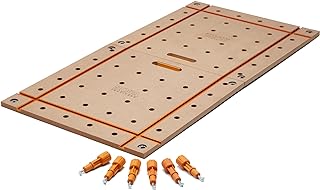
The 3/4″ dog-hole MFT grid makes this the natural choice for anyone cutting sheet goods or building jigs, and the collapsible Centipede base stores against a wall in seconds. Best in a garage that has to double as parking.
Seville Classics UltraGraphite Wood Top Bench
Graphite steel frame, solid wood top, locking casters, and a sliding drawer that keeps drivers and bits off the surface. At 48 inches it reads more like furniture than shop equipment, which is precisely why it works in a finished basement.
Smart Workstation Pro Vise Top
A portable 20-7/8″ x 14-3/8″ European beech clamping top with cushioned jaws, built for detail work—refinishing, instrument repair, small assembly. It’s a companion piece rather than a primary bench, and it earns its shelf space.
Frequently Asked Questions
Should I seal a butcher block workbench top?
Yes. Bare birch drinks up oil, solvent, and coffee equally. Two or three coats of tung or hardwax oil, reapplied annually, keeps stains at the surface where sandpaper can reach them.
Is particle board ever the right call?
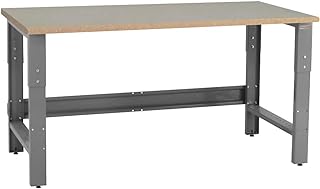
For light-duty benches and height-adjustable setups like the BenchPro 24″ x 48″, it’s flat, inexpensive, and easy to replace. Treat it as a sacrificial layer rather than a lifetime surface.
What height should a workbench be?
Roughly 34 to 36 inches for general assembly, lower for hand-tool work, higher for detail and electronics. Adjustable legs are worth the premium if more than one person uses the bench.
Can a workbench top handle a mounted vise?
Only if it’s at least 1.5 inches thick and bolted through into a rated frame. Thin tops split at the fastener under lateral load.
Final Thoughts
For most people, the CAMMOO 48×24 is the efficient answer—power, light, storage, and a 2,000 lb rubberwood top in one box. Choose the unfinished birch slab if the surface needs to look deliberate in a visible room, and add the BORA Centipede if your work involves sheet goods and a floor plan that refuses to sit still.