Key takeaways
- Match the tool to the pitch: Anything past roughly a 6/12 slope is where steep-assist wedges and hooked chicken ladders stop being optional. Under that, a well-stabilized extension ladder plus soft-soled footwear often handles routine work.
- Read the duty rating, not just the length: Type IAA (375 lb) and 500 lb ratings account for you plus tools plus material. Subtract 40 to 50 pounds from any published figure for a tool belt, replacement shingles, or a caulk kit and gauge your real margin.
- Check the anchoring method: Ridge hooks with wheels roll into place and then bite; rope-tethered wedges rely on a secure tie-off point on the opposite slope. Neither works without a genuine anchor, so confirm your ridge or structure can take the load before you commit.
- Weigh portability against rigidity: All-steel sets are rock solid and unpleasant to carry alone. Aluminum and compact modular wedges trade some stiffness for the ability to move them up a ladder one-handed, which matters more than most buyers expect.
- Protect the roof surface: Look for wide contact pads, rubberized feet, or spanning rails that distribute weight across multiple courses. Point loading on aging shingles or standing-seam metal creates repair bills that dwarf the ladder’s cost.
What's inside
Roof access is the one part of home maintenance where the gap between “I can handle this” and “I need a pro” gets uncomfortably narrow. A standard extension ladder gets you to the eave, but the moment you need to move across a pitched surface — resetting a satellite dish, clearing a valley packed with pine needles, chasing a leak above a dormer — the geometry stops working in your favor. Steep asphalt gets slick with morning dew, metal panels offer nothing to grip, and cedar shakes crack under concentrated weight. What buyers usually discover too late is that a roofing ladder is not just a taller ladder; it’s a different category of tool built around load distribution and anchoring rather than reach.
This guide looks at the equipment that actually solves the pitch problem: steep-assist wedges that create a level standing platform on a sloped plane, chicken ladder systems that lay flat across shingles and hook over the ridge, articulating stepladders for tall interior and stairwell work, and stabilizers that stop the whole assembly from tracking sideways. Below you’ll find our current picks, the specs worth scrutinizing before you buy, and honest notes on where each option earns its keep.
As an Amazon Associate we earn from qualifying purchases.


How to Choose a Roofing Ladder (2026)
- Match the tool to the pitch: Anything past roughly a 6/12 slope is where steep-assist wedges and hooked chicken ladders stop being optional. Under that, a well-stabilized extension ladder plus soft-soled footwear often handles routine work.
- Read the duty rating, not just the length: Type IAA (375 lb) and 500 lb ratings account for you plus tools plus material. Subtract 40 to 50 pounds from any published figure for a tool belt, replacement shingles, or a caulk kit and gauge your real margin.
- Check the anchoring method: Ridge hooks with wheels roll into place and then bite; rope-tethered wedges rely on a secure tie-off point on the opposite slope. Neither works without a genuine anchor, so confirm your ridge or structure can take the load before you commit.
- Weigh portability against rigidity: All-steel sets are rock solid and unpleasant to carry alone. Aluminum and compact modular wedges trade some stiffness for the ability to move them up a ladder one-handed, which matters more than most buyers expect.
- Protect the roof surface: Look for wide contact pads, rubberized feet, or spanning rails that distribute weight across multiple courses. Point loading on aging shingles or standing-seam metal creates repair bills that dwarf the ladder’s cost.
The Best Roofing Ladder (2026)s Reviewed
18 Ft 500 lb All-Metal Steep Assist Roof Ladder
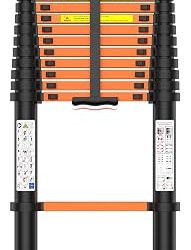
The heavyweight of the group, with a 500-pound rating and a 10-meter safety rope that lets you tether across the ridge for genuine steep-slope work. The all-metal construction feels reassuring underfoot and the black finish stays discreet against dark shingles, though you’ll want a second pair of hands to get it into position.
The Goat Steep Assist Roof Ladder (Compact)
A well-engineered wedge that converts a steep plane into a usable standing platform, and the compact format is the whole point — it stows in a truck bed and travels up the ladder without a wrestling match. Best suited to focused repairs rather than all-day roof coverage.
Little Giant Skyscraper 17 ft
Not a roof ladder in the strict sense, but the most versatile piece here: a Type IAA multi-position stepladder that self-supports at 17 feet for stairwells, vaulted entries, and two-story interior work. Non-slip feet and safety straps make it the ladder we’d reach for on anything indoors with awkward geometry.
ACRO Steel Chicken/Roof Ladder Set
Four six-foot steel sections plus a wheeled roof hook give you up to 24 feet of flat traverse across a pitched surface — the traditional professional approach and still the most confidence-inspiring for extended work. It’s heavy and it’s a commitment, which is exactly why roofers keep buying it.
Echo Ridge 18 Ft Steep Assist Roof Ladder
A sensible middle option that pairs the compact wedge concept with a 10-meter rope and a storage bag, so the whole kit stays together between jobs. Good value for homeowners who need real steep-slope capability a few times a year rather than every week.
Frequently Asked Questions
What is a steep assist roof ladder?
It’s a wedge-shaped platform that sits on a pitched roof and creates a level surface to stand or kneel on, typically secured with a rope tied off over the ridge. It solves the balance problem that ordinary ladders can’t address once you’re above the eave.
Do I still need a ladder stabilizer?
If your access ladder rests against a gutter or fascia, yes. A stabilizer like the Bighorn spreads the load, prevents sideways slide, and keeps the top rungs clear of the gutter lip so you can step off cleanly.
Steel or aluminum for roof work?
Steel for rigidity and longevity on frequent jobs; aluminum for one-person setups and easier transport. Both are fine structurally when the duty rating matches your total load.
Will these damage my shingles?
Properly seated systems distribute weight across several courses and rarely cause harm. Avoid roof work in high heat, when asphalt softens and scuffs easily, and never drag hardware across the surface.
Final Thoughts
For serious pitched-roof work, the ACRO Steel Chicken/Roof Ladder Set remains the most trustworthy platform on the market, while the 18 Ft 500 lb All-Metal Steep Assist Roof Ladder delivers the highest load capacity for homeowners who want maximum margin. If your work is mostly interior and awkwardly tall, the Little Giant Skyscraper 17 ft is the smarter single purchase.