Key takeaways
- Measure the parked footprint, not the room: A 7.5-foot width covers one bay generously; two bays usually need two rolls seamed down the middle. Add a foot of length beyond your bumper so door swing and foot traffic stay on the mat.
- Match thickness to the abuse: 2.2 mm PVC handles daily parking, snowmelt, and dropped tools. Step up to 3 mm rubber if you roll a jack across it, wheel a toolbox around, or run a home gym in the same space.
- PVC or rubber, pick by climate: PVC stays lighter, cleans faster, and brightens a dim garage. Rubber grips harder, absorbs impact, and shrugs off temperature swings in unheated spaces without curling.
- Check the surface texture: Diamond plate is the standard for a reason. Raised nubs channel water away from your tires and give wet boots something to bite, which matters more than looks in February.
- Plan the edges before you order: Double-sided tape holds seams and perimeters flat on clean, cured concrete. Interlocking tiles are the smarter call on uneven slabs or floors with drains and odd angles to work around.
What's inside
A garage floor is the last surface in the house anyone thinks about and the first one to show its age. Concrete drinks in oil, road salt etches pale scars into the slab, and dust keeps rising no matter how many times you sweep. By the time most people start shopping, the damage is cosmetic and structural at once, and the temptation is to reach for an epoxy kit that demands a weekend of grinding, a dry forecast, and a tolerance for fumes.
Rolled flooring skips all of that. You unroll it, let it relax, trim the edges, and the slab underneath is sealed off from everything you park on it. The trade-offs live in the details: PVC versus rubber, 2.2 mm versus 3 mm, single-bay coverage versus a full two-car footprint. This guide breaks down the specs that actually change how the floor performs, then reviews the rolls and tiles worth your money in 2026.
As an Amazon Associate we earn from qualifying purchases.



How to Choose a Garage Flooring Rolls (2026)
- Measure the parked footprint, not the room: A 7.5-foot width covers one bay generously; two bays usually need two rolls seamed down the middle. Add a foot of length beyond your bumper so door swing and foot traffic stay on the mat.
- Match thickness to the abuse: 2.2 mm PVC handles daily parking, snowmelt, and dropped tools. Step up to 3 mm rubber if you roll a jack across it, wheel a toolbox around, or run a home gym in the same space.
- PVC or rubber, pick by climate: PVC stays lighter, cleans faster, and brightens a dim garage. Rubber grips harder, absorbs impact, and shrugs off temperature swings in unheated spaces without curling.
- Check the surface texture: Diamond plate is the standard for a reason. Raised nubs channel water away from your tires and give wet boots something to bite, which matters more than looks in February.
- Plan the edges before you order: Double-sided tape holds seams and perimeters flat on clean, cured concrete. Interlocking tiles are the smarter call on uneven slabs or floors with drains and odd angles to work around.
The Best Garage Flooring Rolls (2026)s Reviewed
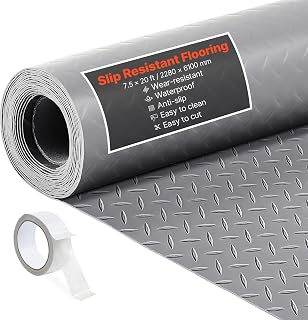
VEVOR 7.5 x 20 ft PVC Diamond Plate Roll, Silver Gray
This is the size most single-bay garages actually need, and the silver gray finish does something a black mat can’t: it bounces overhead light back up, turning a cave into a workspace. The 2.2 mm PVC wipes clean with a damp mop, and the included double-sided tape keeps the perimeter from creeping when you back a car in.
7.8 x 18 ft Rubber Garage Flooring Roll, 2.8 mm
At 140.4 square feet and nearly 3 mm thick, this is the pick for anyone parking something low, heavy, or expensive. The extra width gives you room to open a door and stand on the mat instead of on bare concrete, and the rubber body stays put without tape in most installs.
VEVOR 4 x 20 ft Rubber Diamond Plate Roll, 3 mm, Black
Think of this as a runner rather than a floor: it’s the right shape for a workbench aisle, a trailer bed, or a single strip of drip protection under a leaky project car. The 3 mm rubber is the toughest material in this roundup and holds up to jack stands and rolling casters.
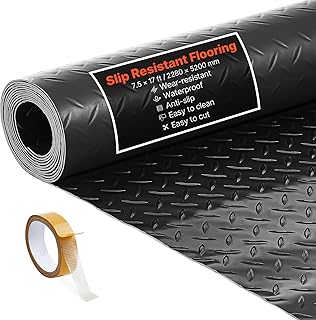
VEVOR 7.5 x 17 ft PVC Diamond Plate Roll, Black
Same proven PVC construction as the silver gray version in a slightly shorter cut, which suits compact bays and saves you from trimming three feet of waste. Black hides tire marks and grime between cleanings better than any light finish will.
VEVOR Interlocking Garage Floor Tiles, Red, 50-Pack
When your slab has cracks, a floor drain, or a pillar in the wrong place, tiles beat a roll outright. These polypropylene squares snap together without adhesive, lift individually for cleaning, and let you build a two-tone layout if you want defined work zones.
Frequently Asked Questions
Do I need to prep the concrete first?
Sweep thoroughly, scrub off loose oil, and let the slab dry completely. You don’t need to grind or etch it the way epoxy demands, but trapped grit will telegraph through thin PVC over time.
Will hot tires damage the mat?
Quality PVC and rubber rolls are built for it, unlike cheap vinyl sheeting that softens and sticks. Let a freshly parked car cool before you move it and you’ll avoid marking entirely.
How do I get rid of wrinkles after unrolling?
Let the material sit flat in a warm garage for 24 to 48 hours. Most creases relax on their own; stubborn ones respond to a weighted board or gentle sun exposure.
Can I use these mats outdoors or at an entryway?
Garage rolls are meant for covered spaces. For a doorway or high-traffic threshold, a purpose-built option like the Ottomanson Commercial Scrape Rib Entry Mat handles standing water and grit far better.
Final Thoughts
For most garages, the VEVOR 7.5 x 20 ft PVC roll in silver gray is the sensible default: full-bay coverage, easy upkeep, and a brighter room as a bonus. Choose the 7.8 x 18 ft rubber roll if you want maximum durability under a heavier vehicle, and go with the VEVOR interlocking tiles when your slab is too irregular for a single continuous sheet.