Key takeaways
- CFM at 90 PSI: This is the spec that matters most. A brad or finish nailer typically draws well under 1 CFM in normal use, so 2 CFM is comfortable. Framing and roofing nailers, or two guns running at once, want 4 CFM or more.
- Tank size versus recovery: A larger tank buys you longer stretches between motor cycles; a strong pump refills faster. For interior trim, a 1 to 2 gallon tank with quick recovery is often more pleasant to work beside than a bulky 6 gallon unit.
- Noise, measured honestly: Standard pancake compressors run 78 to 90 dB — loud enough to clear a room. Models rated 60 to 70 dB let you hold a conversation, which matters if you are working in a lived-in space or a shared building.
- Oil-free pump: Oil-free designs need no top-ups, tolerate cold starts, and will not mist oil onto raw wood or finished surfaces. For indoor furniture and trim work, treat this as a requirement.
- Portability and outlets: Weigh the unit and check the couplers. Under 30 pounds moves up a staircase easily. Dual quick couplers let a second person run a gun without splitters, and 200 PSI storage stretches the working window between cycles.
What's inside
Trim work is where a room finally comes together. Picture rail, shaker baseboard, a slatted headboard wall, floating shelves scribed to an uneven plaster corner — all of it hinges on driving fasteners cleanly, without the hammer marks and split ends that force you to fill, sand, and repaint. A nail gun makes that possible. But the gun is only the visible half of the system. The compressor behind it decides whether you sink 300 brads in a rhythm or spend the afternoon listening to a motor cycle while you wait for pressure to recover.
The tricky part is that compressor specs are written for job sites, not for people finishing a dining room on a Saturday. Tank size gets top billing, while CFM — the number that actually governs whether your nailer keeps up — hides in the fine print, and noise ratings are often left off entirely. This guide translates those numbers into practical terms and reviews six compressors that pair well with brad, finish, and framing nailers, from whisper-level units suited to occupied homes to pancake tanks built for structural work.
As an Amazon Associate we earn from qualifying purchases.



How to Choose a/an Air Compressor For Nail Gun (2026)
- CFM at 90 PSI: This is the spec that matters most. A brad or finish nailer typically draws well under 1 CFM in normal use, so 2 CFM is comfortable. Framing and roofing nailers, or two guns running at once, want 4 CFM or more.
- Tank size versus recovery: A larger tank buys you longer stretches between motor cycles; a strong pump refills faster. For interior trim, a 1 to 2 gallon tank with quick recovery is often more pleasant to work beside than a bulky 6 gallon unit.
- Noise, measured honestly: Standard pancake compressors run 78 to 90 dB — loud enough to clear a room. Models rated 60 to 70 dB let you hold a conversation, which matters if you are working in a lived-in space or a shared building.
- Oil-free pump: Oil-free designs need no top-ups, tolerate cold starts, and will not mist oil onto raw wood or finished surfaces. For indoor furniture and trim work, treat this as a requirement.
- Portability and outlets: Weigh the unit and check the couplers. Under 30 pounds moves up a staircase easily. Dual quick couplers let a second person run a gun without splitters, and 200 PSI storage stretches the working window between cycles.
The Best Air Compressor For Nail Gun (2026)s Reviewed
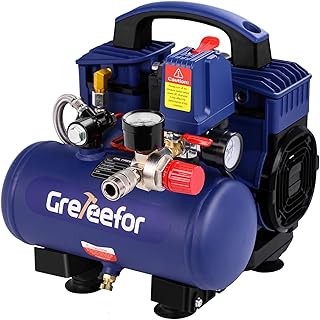
1 Gallon Ultra Quiet Portable 60 dB, 1.5HP (Violet)
At roughly 60 dB with a 13-second fill, this is the compressor for finishing a room you still live in — you can hear music, a phone call, or a helper across the space. The 1.5HP oil-free pump handles brad and finish nailers, staplers, and inflation duties, and the violet housing is genuinely pleasant to have parked in a hallway.
Metabo HPT EC914S Pancake, 6 Gallon 200 PSI
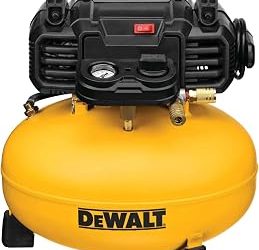
Four CFM and 200 PSI of stored air mean this pancake can drive two framing or roofing nailers at once without stalling, which is why it shows up on so many job sites. It is loud and heavier than the quiet units here, but for structural framing, subfloor, and exterior siding, it is the sensible workhorse.
FORNAX Ultra Quiet 1.3 Gallon, 1HP
A 65 dB oil-free unit with 125 PSI max and a slightly larger tank than most compact quiet models, giving you a little more headroom on long trim runs. Good pick for a garage workshop, bike maintenance, and cabinet installs where you want one machine covering several small jobs.
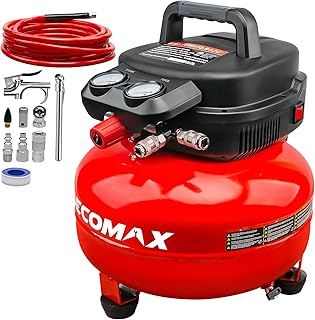
ECOMAX 6 Gallon Pancake, 175 PSI
Three CFM at 90 PSI is plenty for brad nailers and general air tools, and the dual quick couplers let two people work simultaneously. The bundled 10-piece accessory kit means you can unbox it and start nailing the same afternoon without a second trip to the hardware store.
13 Gallon Portable, 3.7HP, 6 CFM
Six CFM at 115 PSI puts this in a different class: it will run pneumatic nailers all day and still support a spray gun for finishing built-ins or refinishing a dresser. Choose it if your projects extend past trim into painting, auto work, or sustained high-draw tools.
Frequently Asked Questions
How much CFM does a nail gun actually need?
Brad and finish nailers fire intermittently and consume very little air, so 1 to 2 CFM at 90 PSI is sufficient. Framing and roofing nailers driving longer fasteners need closer to 4 CFM, and running two guns at once roughly doubles the requirement.
Is a 1 gallon tank too small for trim work?
No, provided the pump recovers quickly. Because finish nailing is intermittent, a compact tank with a fast fill keeps pace comfortably. Small tanks struggle only with continuous-draw tools like sanders, grinders, and spray guns.
Do I need an oil-free compressor indoors?
It is strongly advisable. Oil-lubricated pumps can carry trace oil in the air line, which shows up as blemishes on bare wood and interferes with paint and stain adhesion. Oil-free units also skip maintenance and start reliably in a cold garage.
What PSI should I set for a nail gun?
Most pneumatic nailers run between 70 and 120 PSI, with the specific range printed in the manual. Start at the low end on softwood and delicate trim, then raise pressure in small steps until fasteners seat flush without denting the surface.
Final Thoughts
For interior trim, built-ins, and furniture work in an occupied home, the 1 Gallon Ultra Quiet 60 dB unit is the one I would keep within reach — quiet enough to use without clearing the room. Step up to the Metabo HPT EC914S when the work turns structural and you need 4 CFM for framing nailers, and consider the 13 Gallon Portable if spray finishing is part of your workflow. The ECOMAX 6 Gallon sits neatly in between as a well-equipped first compressor.