Key takeaways
- CFM at 90 PSI: This is the number that decides whether a tool keeps up. Brad and finish nailers are happy around 0.5–1 CFM, framing nailers want 2 CFM or more, and running two guns at once means adding their demands together plus a margin.
- Tank size versus recovery: A 1-gallon tank fires plenty of brads before the motor kicks in, which is fine for trim. Framing, sheathing, or roofing calls for 4 to 6 gallons so the pump isn’t cycling constantly and heating up.
- Noise, measured honestly: Anything in the 59–70 dB range is conversation-level and genuinely usable indoors. Traditional pancake units often sit near 80 dB, which is fine in a detached garage and miserable in a hallway.
- Weight and how you’ll move it: Under 30 pounds means one hand and a staircase. Above 40, expect a two-hand carry. Aluminum tanks shave weight and skip the rust problem that plagues steel in humid basements.
- Oil-free versus cordless: Oil-free pumps need no maintenance and start reliably in cold weather. Battery-powered units drop the cord entirely, which matters for punch-list work, though runtime and airflow are more limited.
What's inside
The nailer usually gets all the attention. You pick the brad gun for the trim, the finish nailer for the built-ins, maybe a pin nailer for delicate beading, and then you realize none of it moves without air. That’s where most projects stall. A compressor that’s undersized starves the tool halfway through a run of baseboard, and one that’s oversized turns a quiet Saturday in a converted spare room into something your neighbors remember. Add in the fact that spec sheets bury the number that actually matters, and it’s easy to spend a few hundred dollars on the wrong machine.
This guide sorts the field by how these compressors behave in real interiors: apartments, finished basements, attached garages, and the occasional job site. We look at delivered airflow rather than headline PSI, how quickly a tank recovers between shots, how much noise you’ll live with, and whether you can carry the thing up a flight of stairs without resenting it. Below are the models worth your attention in 2026, followed by a short buying framework and answers to the questions that come up most.
As an Amazon Associate we earn from qualifying purchases.



How to Choose an Air Compressor For Nailers (2026)
- CFM at 90 PSI: This is the number that decides whether a tool keeps up. Brad and finish nailers are happy around 0.5–1 CFM, framing nailers want 2 CFM or more, and running two guns at once means adding their demands together plus a margin.
- Tank size versus recovery: A 1-gallon tank fires plenty of brads before the motor kicks in, which is fine for trim. Framing, sheathing, or roofing calls for 4 to 6 gallons so the pump isn’t cycling constantly and heating up.
- Noise, measured honestly: Anything in the 59–70 dB range is conversation-level and genuinely usable indoors. Traditional pancake units often sit near 80 dB, which is fine in a detached garage and miserable in a hallway.
- Weight and how you’ll move it: Under 30 pounds means one hand and a staircase. Above 40, expect a two-hand carry. Aluminum tanks shave weight and skip the rust problem that plagues steel in humid basements.
- Oil-free versus cordless: Oil-free pumps need no maintenance and start reliably in cold weather. Battery-powered units drop the cord entirely, which matters for punch-list work, though runtime and airflow are more limited.
The Best Air Compressor For Nailers (2026)s Reviewed
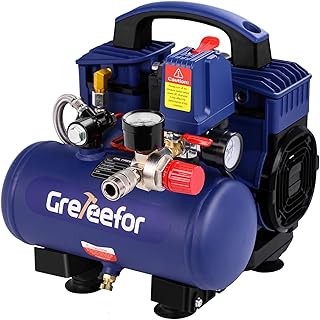
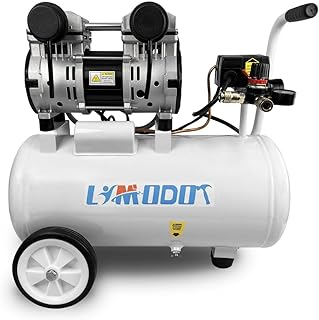
1-Gallon Ultra Quiet 60 dB Portable, 1.5HP
A 13-second fill on a 1-gallon tank is genuinely quick, and at 60 dB you can run trim work in a finished room without clearing the house. The violet housing is a small thing, but it’s the rare tool that doesn’t look out of place mid-renovation.
Metabo HPT 6-Gallon Pancake, EC914S
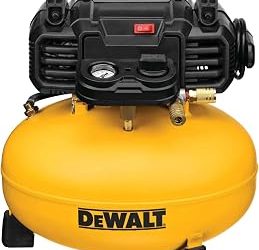
Four CFM and 200 PSI is real capacity, enough to drive framing, siding, and roofing nailers at the same time without waiting on the tank. This is the pick when the project is structural rather than decorative.
Craftsman 6-Gallon Pancake 4-Tool Combo Kit
You get the 16-gauge finish, 18-gauge brad, and 23-gauge pin nailers plus 25 feet of hose, which covers essentially every trim scenario in a house. For a first-time buyer, buying the set outright is usually cheaper than assembling the same lineup piecemeal.
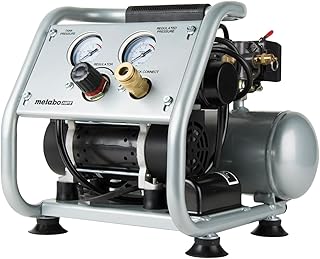
Metabo HPT Quiet 1-Gallon Oil-Free, EC28M
At 59 dB this is the quietest unit here, and the universal quick coupler makes swapping between a brad gun and a blowgun a two-second job. Ideal for cabinet installs, closet systems, and anything happening in an occupied home.
8-Gallon Aluminum Tank Portable Quiet, 68 dB
An 8-gallon tank at 37.5 pounds is an unusual combination, and the rustproof aluminum is a real advantage in damp garages or coastal climates. Dual air intakes help it recover faster than the tank size suggests.
Frequently Asked Questions
What size compressor do I need for a brad nailer?
One gallon is plenty. Brad nailers use very little air per shot, so tank capacity matters far less than how fast the pump refills between bursts.
Can I run a framing nailer off a small compressor?
Occasionally, yes, but you’ll spend more time waiting than nailing. For sustained framing, look for at least 4 gallons and 2 CFM or more at 90 PSI.
Are quiet compressors actually quieter, or is that marketing?
The difference is substantial. Decibels are logarithmic, so a 60 dB unit sounds roughly half as loud as an 80 dB one, and it’s the difference between shouting and talking normally.
Is a cordless compressor worth it?
For punch-list work, installs in occupied homes, and anywhere without convenient power, absolutely. Battery models like the Makita-compatible ultra-quiet unit trade some airflow for genuine freedom of movement.
Final Thoughts
For most home projects, the Metabo HPT EC28M is the one to beat: 59 dB, oil-free, and light enough to carry anywhere in the house. If you’re buying your first setup, the Craftsman 6-gallon combo kit gets you three nailers and a hose in one purchase, and for framing or anything structural, the Metabo HPT EC914S has the airflow to keep multiple guns running.