Key takeaways
- Cutting Capacity: Match rip capacity and blade size to the widest and thickest stock you regularly cut—a 10-inch blade with 30+ inches of rip capacity handles most home-furniture dimensions comfortably.
- Motor Power: Look for at least 15 amps if you work with hardwoods or thick sheet goods; anything under 10 amps suits softwood and lighter DIY tasks only.
- Slide Mechanism: A smooth, low-friction rail system delivers cleaner crosscuts and repeatable angles—test travel length and lock-down firmness before committing.
- Portability vs. Stability: Jobsite models with folding stands suit shared spaces and on-site work, while heavier benchtop units trade portability for vibration-free accuracy.
- Dust Management: Integrated dust ports and blade guards that don’t obstruct your cutline keep your shop cleaner and your visibility high—don’t overlook this in daily use.
What's inside
Choosing a sliding table saw for a home workshop or small furniture studio is one of those decisions that quietly shapes every project you’ll build for years. Buyers get stuck comparing rip capacities, motor amps, and blade sizes across dozens of listings that all start to blur together—and many end up overspending on features they’ll never use or settling for a underpowered unit that stalls on hardwood.
This guide cuts through the noise. We evaluated the most popular sliding table saws available on Amazon in 2026, weighing build quality, cutting precision, portability, and real-world value so you can match the right saw to your space and skill level without second-guessing.
As an Amazon Associate we earn from qualifying purchases.


How to Choose a Sliding Table Saw (2026)
- Cutting Capacity: Match rip capacity and blade size to the widest and thickest stock you regularly cut—a 10-inch blade with 30+ inches of rip capacity handles most home-furniture dimensions comfortably.
- Motor Power: Look for at least 15 amps if you work with hardwoods or thick sheet goods; anything under 10 amps suits softwood and lighter DIY tasks only.
- Slide Mechanism: A smooth, low-friction rail system delivers cleaner crosscuts and repeatable angles—test travel length and lock-down firmness before committing.
- Portability vs. Stability: Jobsite models with folding stands suit shared spaces and on-site work, while heavier benchtop units trade portability for vibration-free accuracy.
- Dust Management: Integrated dust ports and blade guards that don’t obstruct your cutline keep your shop cleaner and your visibility high—don’t overlook this in daily use.
The Best Sliding Table Saws (2026) Reviewed
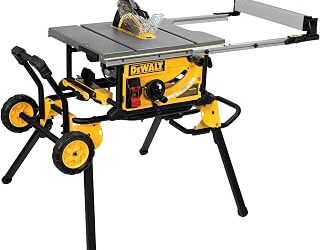
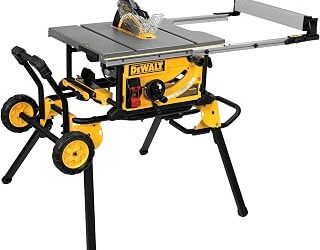
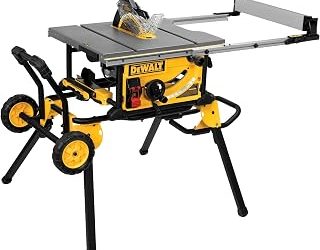
DEWALT DWE7491RS
The gold standard for home workshops that need serious rip capacity without a permanent footprint. Its 15-amp motor drives a 10-inch blade through plywood and hardwood with authority, and the rolling scissor stand makes teardown painless—ideal if your shop doubles as a garage.
8-Inch Multi-Function Sliding Table Saw
A surprisingly capable budget pick for hobbyists tackling small furniture pieces and cabinetry. The 1800W motor handles softwood and plywood cleanly, and the dust-extraction design keeps your workspace notably tidier than comparably priced models—just temper expectations on dense hardwoods.
ExploreHorizon 8-Inch Portable Table Saw
Compact enough for apartment workshops and light enough to stow after each session. The copper-wound motor pushes 3,576 RPM through dimensional lumber without bogging, and the included sliding miter gauge adds crosscut versatility that most budget saws skip entirely.
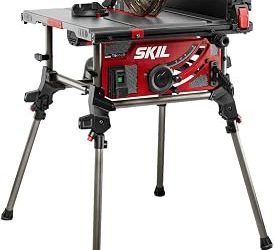
SKIL TS6307-00
SKIL delivers a well-balanced mid-range option with a rack-and-pinion fence that stays square—a feature usually reserved for pricier units. The folding stand locks solid, and the 15-amp motor gives you headroom for hardwoods, making this a strong choice for intermediate woodworkers leveling up.
DEWALT DWS715 Miter Saw
While technically a compound miter saw rather than a traditional table saw, the DWS715’s single-bevel sliding action excels at the angled trim and furniture-molding cuts that table saws handle awkwardly. It’s a smart complement—or alternative—for builders focused on joinery and casing work rather than sheet ripping.
Frequently Asked Questions
What’s the difference between a sliding table saw and a regular table saw?
A sliding table saw moves the cutting surface along a rail, letting you feed larger panels and make crosscuts with far less effort and more accuracy. Traditional table saws require you to push material past a fixed blade, which becomes cumbersome with wide sheet goods.
Can I use a sliding table saw for plywood and sheet goods?
Yes—this is precisely where sliding table saws shine. The rail system supports the weight of full sheets and keeps them level throughout the cut, dramatically reducing tear-out and binding compared to a standard cabinet saw without outfeed support.
How much space do I need for a sliding table saw?
Plan for at least 4–6 feet of clearance on the sliding side and several feet in front and behind the blade for material feed. Compact models like the ExploreHorizon require less floor space but still need room for safe material handling.
Are jobsite table saws accurate enough for furniture building?
Modern jobsite saws from brands like DEWALT and SKIL deliver surprisingly tight tolerances when properly tuned. For most home furniture projects—shelving, tables, chairs—a well-maintained jobsite saw produces joints and surfaces that rival those from larger contractor saws.
Final Thoughts
For most home furniture builders, the DEWALT DWE7491RS remains the most versatile single purchase thanks to its blend of power, capacity, and portability. If budget is the primary concern, the SKIL TS6307-00 punches well above its price with its accurate fence and solid construction. And for those working in tighter spaces or just getting started, the ExploreHorizon 8-Inch offers genuine capability without demanding a dedicated workshop.