Key takeaways
- Bevel Capacity: A single-bevel saw tilts one direction; a dual-bevel model mirrors cuts without flipping the workpiece. For crown molding, picture frames, or any repetitive angled trim, dual-bevel saves significant time and eliminates measurement errors from material repositioning.
- Sliding vs. Non-Sliding: Sliding rails extend the blade forward through wider boards — critical if you regularly cut 2×8 or wider stock. Non-sliding saws are lighter and more affordable but cap out around six inches of crosscut width at ninety degrees.
- Motor Power and Blade Quality: A 15-amp motor is the professional baseline for clean, consistent cuts through hardwoods and composites. Pay equal attention to the included blade — cheap 24-tooth blades leave rough kerfs, while quality 40-tooth TCT blades deliver finish-ready edges straight from the box.
- Dust Collection and Workpiece Support: Integrated dust ports paired with a shop vac keep your workspace visible and lungs protected. Extension tables and crown stops aren’t luxuries — they’re the difference between a jig-wrestling nightmare and repeatable precision on long stock.
- Weight and Portability: If the saw travels between a garage and job sites, every pound matters. Models under thirty-five pounds reduce setup fatigue but sometimes sacrifice fence rigidity, so balance portability against the structural mass needed for vibration-free cuts.
What's inside
Picking a 10-inch miter saw shouldn’t feel like decoding an engineering manual, yet most shoppers land on a product page drowning in amp ratings, bevel specifications, and blade tooth counts that all start to blur together. The wrong choice means burned edges, wobbly crosscuts, and a tool that sits idle while you call in a carpenter for jobs it should handle effortlessly.
This guide cuts through the noise. We evaluated the leading 10-inch miter saws available in 2026 for cut accuracy, motor stamina, build ergonomics, and real-world value — so you can match the right saw to your project scope without second-guessing.
As an Amazon Associate we earn from qualifying purchases.




How to Choose a 10 In Miter Saw (2026)
- Bevel Capacity: A single-bevel saw tilts one direction; a dual-bevel model mirrors cuts without flipping the workpiece. For crown molding, picture frames, or any repetitive angled trim, dual-bevel saves significant time and eliminates measurement errors from material repositioning.
- Sliding vs. Non-Sliding: Sliding rails extend the blade forward through wider boards — critical if you regularly cut 2×8 or wider stock. Non-sliding saws are lighter and more affordable but cap out around six inches of crosscut width at ninety degrees.
- Motor Power and Blade Quality: A 15-amp motor is the professional baseline for clean, consistent cuts through hardwoods and composites. Pay equal attention to the included blade — cheap 24-tooth blades leave rough kerfs, while quality 40-tooth TCT blades deliver finish-ready edges straight from the box.
- Dust Collection and Workpiece Support: Integrated dust ports paired with a shop vac keep your workspace visible and lungs protected. Extension tables and crown stops aren’t luxuries — they’re the difference between a jig-wrestling nightmare and repeatable precision on long stock.
- Weight and Portability: If the saw travels between a garage and job sites, every pound matters. Models under thirty-five pounds reduce setup fatigue but sometimes sacrifice fence rigidity, so balance portability against the structural mass needed for vibration-free cuts.
The Best 10 In Miter Saw (2026)s Reviewed
DEWALT DWS713
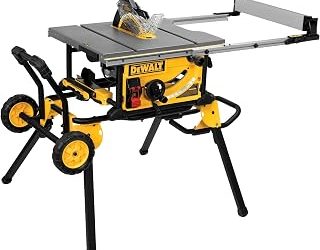
The DWS713 remains the benchmark for a reason: its stainless-steel miter detent plate locks into fourteen positive stops with zero slop, and the tall sliding fence accommodates nested crown up to five and a half inches. It is not flashy — it is relentlessly reliable, the kind of saw that disappears into the background and lets your cuts do the talking.
Makita LS1019L
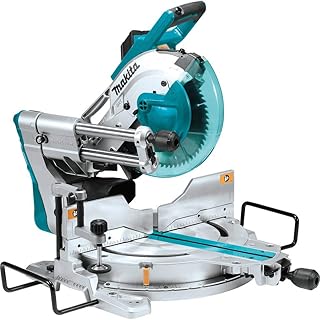
Makita’s direct-drive motor eliminates belt maintenance while the linear ball-bearing滑动 system delivers a stroke that feels almost hydraulic in its smoothness. The built-in laser is factory-calibrated out of the box, and the compact footprint means it dominates less bench space than most sliding competitors — a genuine win for cramped workshops.
SKIL MS6305-00
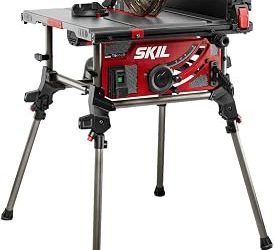
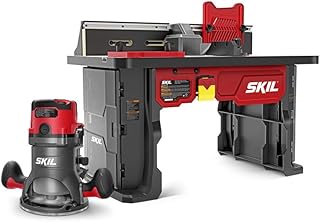
Dual-bevel capability at a price point that traditionally forces you into single-bevel territory makes the MS6305-00 a standout value play. The LED shadow cut line outperforms traditional lasers in bright shop lighting, casting a crisp indicator that never drifts out of alignment even after months of use.
Metabo HPT C10FCG2
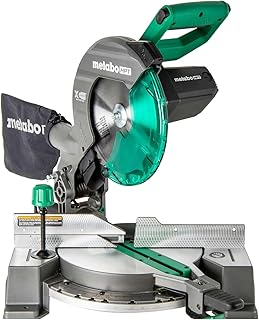
Formerly branded under Hitachi’s power tool line, the C10FCG2 earns its place through lightweight construction — just under twenty-seven pounds — without sacrificing the 15-amp backbone that powers through oak, maple, and engineered flooring. The Xact Cut shadow line system provides intuitive blade positioning that novice users pick up within minutes.
DOVAMAN 10-Inch Sliding Miter Saw
What separates the DOVAMAN from typical budget imports is thoughtful design at unexpected price points: three included TCT blades for wood, metal, and laminate, ambidextrous bevel adjustment, and a dual-speed motor that dials back to 3,200 RPM for materials prone to heat warping. It punches well above its weight class.
Frequently Asked Questions
Can a 10-inch miter saw handle 2×6 lumber?
Yes — most 10-inch sliding miter saws crosscut a 2×6 at ninety degrees comfortably. Non-sliding models may struggle at full depth, so verify the manufacturer’s maximum crosscut width before committing to wide-stock projects.
Do I need a dual-bevel saw?
For simple baseboard and door casing, a single-bevel saw works fine. If your work involves crown molding, chair rail, or any profile requiring mirrored angled cuts, dual-bevel saves substantial time and eliminates the compound-angle math that trips up even experienced DIYers.
What blade tooth count matters most?
For general-purpose crosscutting, 40-tooth carbide-tipped blades provide the best balance between cut quality and speed. Blades with 60+ teeth yield smoother finishes on hardwoods but cut slower and generate more heat; below 32 teeth is typically reserved for rough framing.
How important is dust collection on a miter saw?
Very — fine sawdust from hardwoods is an respiratory irritant and obscures your cut line during operation. A saw with a well-sealed dust port connected to a shop vacuum dramatically improves visibility and air quality. Models without ports can be supplemented with aftermarket dust bags, though results are less consistent.
Final Thoughts
For most homeowners and workshop enthusiasts, the Makita LS1019L delivers the best combination of cut quality, ergonomics, and long-term durability. Budget-conscious buyers should look closely at the SKIL MS6305-00 for its unmatched dual-bevel value, while the DEWALT DWS713 remains the no-compromise professional standard. Each of these three saws earned its spot through performance that outlasts the marketing cycle — not the other way around.