Key takeaways
- Fit before features: Confirm the fence matches your saw’s rail spacing, table thickness, and mounting pattern. Replacement assemblies like the 089040002702 are model-specific for a reason, and a near-fit is a no-fit.
- Rip capacity you will actually use: A 30-inch capacity handles most sheet goods and casework; wider systems make sense if you regularly break down full plywood on the saw rather than a track.
- Self-aligning geometry: T-square designs reference the front rail and stay square through their travel. Single-point clamping fences need constant checking, which slows every setup.
- T-track and accessory integration: Extruded fences with integrated tracks accept featherboards, stops, and hold-downs without drilling, and they carry over to router tables and band saws.
- Deflection under load: Push hard against the far end of the fence. Quality aluminum extrusion with a proper cam lock barely moves; thin stamped steel telegraphs every bit of pressure into your cut line.
What's inside
A table saw is only as accurate as the straight edge riding beside the blade. You can spend a decade collecting perfect hardwood, dial in a premium blade, and still end up with case sides that refuse to meet at the corner because the fence drifted a few thousandths of an inch under hand pressure. For anyone building furniture that has to look intentional in a finished room, that small deflection is the difference between a cabinet that reads as custom and one that reads as a weekend project.
This guide looks at fences worth upgrading to in 2026, from full T-square replacement systems for cabinet and contractor saws to extension fences that turn a portable jobsite saw into something far more capable. We have weighted the picks toward repeatable accuracy, honest lock-down pressure, and the kind of build quality that still measures true after a few hundred board feet.
As an Amazon Associate we earn from qualifying purchases.


How to Choose a Table Saw Fences (2026)
- Fit before features: Confirm the fence matches your saw’s rail spacing, table thickness, and mounting pattern. Replacement assemblies like the 089040002702 are model-specific for a reason, and a near-fit is a no-fit.
- Rip capacity you will actually use: A 30-inch capacity handles most sheet goods and casework; wider systems make sense if you regularly break down full plywood on the saw rather than a track.
- Self-aligning geometry: T-square designs reference the front rail and stay square through their travel. Single-point clamping fences need constant checking, which slows every setup.
- T-track and accessory integration: Extruded fences with integrated tracks accept featherboards, stops, and hold-downs without drilling, and they carry over to router tables and band saws.
- Deflection under load: Push hard against the far end of the fence. Quality aluminum extrusion with a proper cam lock barely moves; thin stamped steel telegraphs every bit of pressure into your cut line.
The Best Table Saw Fences (2026)s Reviewed
Delta 36-T30T3 T3 Fence System
Delta’s T3 is the reference point for a proper cabinet saw upgrade: a genuine T-square head, 30 inches of rip capacity, and a lock lever that seats with a reassuring, repeatable feel. If you want one change that immediately tightens every joint coming off your saw, this is it.
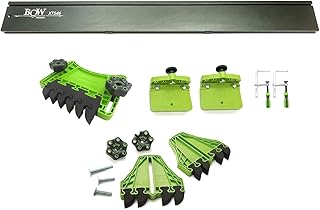
BOW Products Ultimate Table Saw XTENDER & Safety Kit
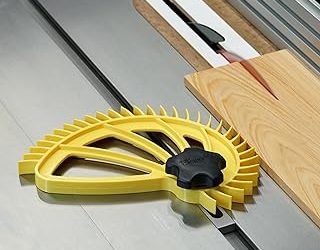
This kit pairs the 46-inch XT XTENDER fence with support feeds, T-track clamps, and both the FeatherPRO and FencePRO featherboards, so you are buying a complete workholding system rather than a bare extrusion. It is the most sensible route for someone who wants safer narrow rips and long-stock control in a single purchase.
BOW Products 46″ XT XTENDER Fence System
The standalone XTENDER mounts over an existing fence and adds a long, dead-flat T-track face with feed supports at both ends, which is transformative on a compact portable saw. It also migrates to router tables and band saws, making it one of the better value-per-shop-hour purchases on this list.
36″ Professional Advanced Table Saw Fence
A self-aligning T-square design with 36 inches of capacity, aimed at cabinet and contractor saws where the factory fence has become the weak link. The extra reach is genuinely useful for wide panel work, and the squaring mechanism holds through repeated resets.
089040002702 Rip Fence Assembly
A direct replacement for RTS10G and RTS10NS saws, and the right call when your fence is damaged rather than merely mediocre. Restoring factory function for a modest outlay beats improvising with a clamped straight edge.
Frequently Asked Questions
Will an aftermarket fence fit my saw?
Not universally. Check the distance between your front and rear rails, the table’s overhang, and the existing bolt pattern against the manufacturer’s specification. Model-specific assemblies and universal rip fence replacements each solve different problems.
How do I square a new fence to the blade?
Reference the miter slot, not the blade body. Measure from the slot to the fence at the front and back of the fence face, then adjust until both readings match. Some builders leave a few thousandths of relief at the rear to reduce burning.
Is a wider fence always better?
No. Wider rails add footprint and can crowd a small shop or a mobile base. Match capacity to your typical work; 30 inches covers most furniture-scale casework comfortably.
Do I still need featherboards with a good fence?
Yes. A fence controls the reference edge; featherboards keep stock pressed against it and reduce kickback risk. Fences with integrated T-track make adding them straightforward.
Final Thoughts
For a permanent accuracy upgrade on a cabinet or contractor saw, the Delta 36-T30T3 T3 remains the most dependable choice, with the 36-inch Professional Advanced fence a strong alternative when you need extra capacity. If you are working from a portable saw and want safety accessories included, the BOW Products Ultimate XTENDER Kit delivers the biggest jump in both precision and control.