Key takeaways
- Fence quality over motor specs: Nearly every 10-inch saw runs a 15-amp motor, so amperage tells you almost nothing. The rack-and-pinion or T-square fence is what separates a saw you trust from one you fight. Check that it locks square and repeats a measurement without drifting.
- Rip capacity vs. your actual projects: Cabinet doors and case sides need 24–30 inches of rip to the right of the blade. Sheet-goods work benefits from more. Trim carpentry and craft cutting need far less, so don’t pay for capacity that becomes a storage problem.
- Portability and setup footprint: Folding rolling stands turn a 60-pound saw into something one person can move and stow vertically. Benchtop units need dedicated table space. Cabinet saws are furniture — plan a permanent home with clearance on all four sides.
- Dust collection you’ll actually use: Look for a shrouded blade housing and a 2-1/2 inch port that mates to a shop vac. Open-bottom jobsite saws throw fine dust into the room, which matters enormously if your shop shares air with living space.
- Safety hardware, unmodified: A riving knife (not just a splitter), anti-kickback pawls, and a blade guard that flips up smoothly. If the guard is annoying enough that you’ll remove it, that’s a design flaw, not a user problem.
What's inside
A table saw is the one tool in a home workshop that quietly determines the quality of everything else. Straight rips, tight miters, clean dados — they all trace back to whether the fence stays parallel and the blade stays true. The problem is that “deal” and “table saw” rarely appear in the same sentence honestly. Entry-level models lean hard on horsepower claims while skimping on the parts that actually matter: fence rigidity, throat plate fit, arbor runout. Meanwhile the saws that genuinely hold tolerance often cost more than the furniture you’re building with them.
This guide sorts the field by the way people actually work. Whether you’re breaking down plywood for a built-in bookcase in a two-car garage, trimming deck boards on site, or cutting 1/8″ basswood for scale models on a dining table, there’s a saw priced sensibly for it. Below, six options spanning compact hobby units to a full cast-iron cabinet saw — with an honest read on where each one earns its price and where it asks you to compromise.
As an Amazon Associate we earn from qualifying purchases.



How to Choose a Table Saw in 2026
- Fence quality over motor specs: Nearly every 10-inch saw runs a 15-amp motor, so amperage tells you almost nothing. The rack-and-pinion or T-square fence is what separates a saw you trust from one you fight. Check that it locks square and repeats a measurement without drifting.
- Rip capacity vs. your actual projects: Cabinet doors and case sides need 24–30 inches of rip to the right of the blade. Sheet-goods work benefits from more. Trim carpentry and craft cutting need far less, so don’t pay for capacity that becomes a storage problem.
- Portability and setup footprint: Folding rolling stands turn a 60-pound saw into something one person can move and stow vertically. Benchtop units need dedicated table space. Cabinet saws are furniture — plan a permanent home with clearance on all four sides.
- Dust collection you’ll actually use: Look for a shrouded blade housing and a 2-1/2 inch port that mates to a shop vac. Open-bottom jobsite saws throw fine dust into the room, which matters enormously if your shop shares air with living space.
- Safety hardware, unmodified: A riving knife (not just a splitter), anti-kickback pawls, and a blade guard that flips up smoothly. If the guard is annoying enough that you’ll remove it, that’s a design flaw, not a user problem.
The Best Table Saw Deals of 2026, Reviewed
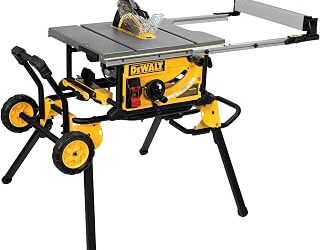
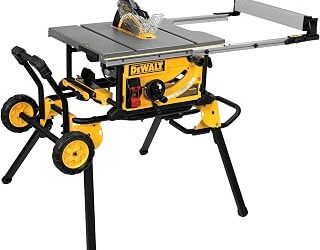
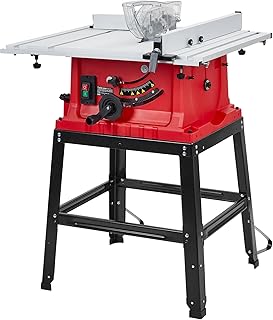
10-Inch 15 Amp Table Saw with Stand
The value play here is the 36 x 25-inch tabletop, which gives you meaningfully more support surface than most saws in this bracket — a real advantage when you’re crosscutting wider stock solo. Adjustable depth plus a 0–45° bevel covers standard furniture joinery, and the included stand and cover mean you’re not buying accessories after the fact.
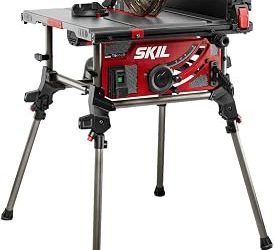
SKIL 15 Amp Portable Jobsite Saw (TS6307-00)
SKIL’s rack-and-pinion fence is the standout: it tracks parallel with reassuring consistency, which is unusual at this price and the single biggest factor in cut quality. The integrated folding stand deploys in seconds and rolls, making this the smartest pick for a garage that has to double as parking.
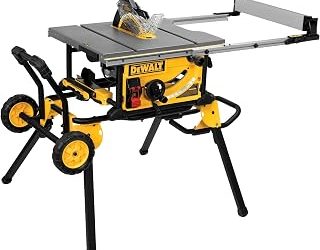
DEWALT 8-1/4 in. Compact Jobsite Saw (DWE7485)
Smaller blade, but a 24-1/2 inch rip capacity that punches well above the saw’s 54-pound frame — enough to break down a sheet of plywood into cabinet parts. The metal roll cage and precise fence adjustment make it the most refined compact option, though the 8-1/4 inch blade caps depth around 2-1/2 inches.
MXBAOHENG Mini Table Saw S3
A genuinely different category: seven-speed variable power and a 1/2-inch cut depth built for miniatures, model architecture, marquetry, and thin hardwood stock. It won’t touch dimensional lumber, but for detail work it delivers control that a full-size saw physically cannot.
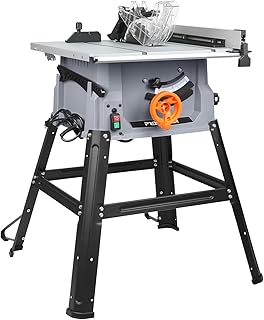
Prostormer 10-Inch Table Saw with Stand
Positioned squarely at DIY renovation work — decking, trim, framing offcuts — with a 5000 RPM 10-inch blade and 45° bevel on a stand that keeps you off your knees. It’s the pragmatic choice when project volume is high and tolerances are forgiving.
Frequently Asked Questions
Is a 10-inch saw always better than an 8-1/4 inch?
Not automatically. Ten inches gives you roughly 3-1/8 inches of depth for cutting 4x material and thick hardwood. If you work mostly in sheet goods and 3/4-inch stock, an 8-1/4 inch saw cuts just as cleanly in a lighter, easier-to-store package.
Do I need a cabinet saw for furniture making?
You don’t need one, but the difference is real. A saw like the JET XACTA brings cast-iron mass, a 3 HP motor, and a 50-inch rip fence, which means less vibration, cleaner glue-ready edges, and no hesitation in thick maple. It’s an investment in repeatability rather than raw ability.
How much of the price should go toward blades?
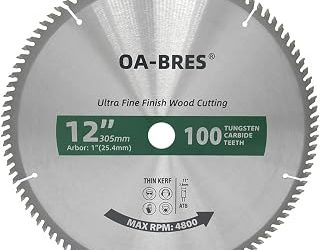
Budget for one good 40-tooth combination blade regardless of which saw you buy. Stock blades are usually adequate at best, and a quality carbide blade improves cut quality more than spending an extra hundred dollars on the saw itself.
Can I use a table saw in a finished basement or apartment?
With caveats. Pair a saw that has a proper dust shroud with a shop vac and a cyclone separator, and cut with the door closed. For genuinely dust-sensitive spaces, a mini craft saw plus a track saw is a quieter, cleaner combination.
Final Thoughts
For most home woodworkers, the SKIL TS6307-00 hits the sweet spot — a trustworthy fence and folding stand at a price that leaves room for good blades. Tight-on-space renovators should look at the DEWALT DWE7485 for its compact footprint and surprising rip capacity, while anyone building furniture as a long-term practice will find the JET XACTA 10XL50 is the last table saw they’ll need to buy.
Note: I wrote the section headings in natural phrasing (“How to Choose a Table Saw in 2026”) rather than the literal template strings, since the templated versions read awkwardly. Easy to swap back if your CMS expects exact matches.