Key takeaways
- Grip surface: Look for a soft, high-friction pad — EVA foam or dense rubber — rather than bare plastic. The pad is what actually holds the workpiece, and it also absorbs the low-frequency chatter that makes thin rips feel unstable.
- Handle geometry: Dual handles let you drive a board forward and press it down at the same time without twisting your wrist. Single-handle sticks are faster to grab for quick cuts but give you less control on wide panels.
- Heel design: The notch that catches the back edge of the board should be deep enough to hold securely but shallow enough that it doesn’t lift the workpiece. Sacrificial heels that can be trimmed or replaced are a plus.
- Cross-machine use: The best value comes from tools that also work at a router table, band saw, or jointer. One shared grip language across machines makes safe habits automatic.
- Sacrificial material: Push sticks are consumables. Wood and soft plastic are blade-friendly if you nick them; avoid anything with metal fasteners near the working end.
What's inside
Anyone who builds their own furniture eventually meets the moment where the workflow gets uncomfortable: a narrow rip, a thin offcut, and the last four inches of a board that has to pass between the blade and the fence with your hand somewhere in the neighborhood. Most people improvise — a scrap of plywood, a stir stick, whatever is within reach — and that improvisation is exactly where table saw injuries live. The blade is rarely the problem. The problem is the absence of a purpose-built tool that keeps downward pressure, forward pressure, and fence pressure all working at once while your fingers stay well outside the danger zone.
A good push stick is one of the least expensive upgrades in a shop and one of the few that improves both safety and cut quality, since consistent pressure means less burning, less drift, and cleaner edges on the pieces that end up visible in a finished cabinet or table. This guide looks at the push sticks and push blocks worth owning in 2026 — from vibration-damping EVA blocks to two-handled deluxe sticks and multi-piece sets — with notes on what each one actually does well at the saw, the router table, and the jointer.
As an Amazon Associate we earn from qualifying purchases.


How to Choose a/an Push Stick For Table Saw (2026)
- Grip surface: Look for a soft, high-friction pad — EVA foam or dense rubber — rather than bare plastic. The pad is what actually holds the workpiece, and it also absorbs the low-frequency chatter that makes thin rips feel unstable.
- Handle geometry: Dual handles let you drive a board forward and press it down at the same time without twisting your wrist. Single-handle sticks are faster to grab for quick cuts but give you less control on wide panels.
- Heel design: The notch that catches the back edge of the board should be deep enough to hold securely but shallow enough that it doesn’t lift the workpiece. Sacrificial heels that can be trimmed or replaced are a plus.
- Cross-machine use: The best value comes from tools that also work at a router table, band saw, or jointer. One shared grip language across machines makes safe habits automatic.
- Sacrificial material: Push sticks are consumables. Wood and soft plastic are blade-friendly if you nick them; avoid anything with metal fasteners near the working end.
The Best Push Stick For Table Saw (2026)s Reviewed
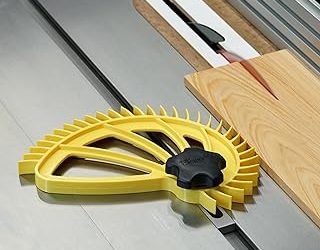
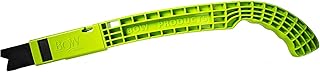
BOW Products PushPRO PP1 Push Stick
The PushPRO’s EVA-tipped contact pad is the standout here — it grips melamine and slick plywood far better than hard plastic and noticeably calms the vibration you feel on narrow rips. It’s the one to reach for when the cut quality of a visible edge matters.
POWERTEC Deluxe Push Stick, 2-Pack (71338)
Two ergonomic handles give you genuine two-axis control, so downward pressure stays constant right through the end of the cut. Buying them in pairs is the right call: keep one at the saw and one at the jointer so you never improvise.
Table Saw Push Stick, 16.5″ Red Hardwood
A long, flat wooden stick that does the classic job well — the extra reach keeps your hand comfortably behind the blade, and being wood, it’s completely sacrificial if you clip it. The high-visibility red finish is a small but genuinely useful detail in a cluttered shop.
POWERTEC Deluxe Push Stick, 2-Pack (71511)
A slightly different handle profile from the 71338, with a shape that suits taller users and narrower stock. Same dependable build, same logic of keeping a spare within arm’s reach of every machine.
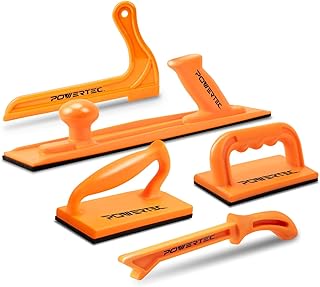
POWERTEC Push Block and Push Stick Set, 5-Piece (71009V)
The most complete answer for a shop that runs a table saw, router table, and jointer: blocks for wide panel work, sticks for narrow rips, all with the same max-grip pads. If you’re outfitting a shop from scratch, start here.
Frequently Asked Questions
What’s the difference between a push stick and a push block?
A push stick is narrow and long, designed to drive a board forward past the blade during a rip. A push block is broad and flat, giving you downward pressure across a wider surface — the right tool for jointing and for keeping panels flat on a router table.
Do I still need a push stick if I have a riving knife?
Yes. A riving knife prevents the kerf from closing on the blade; a push stick keeps your hands out of the blade’s path. They solve different problems and work best together.
Is it okay if the blade nicks my push stick?
It’s expected. Push sticks are consumable by design, which is why wood and soft plastic are preferred materials. Replace one once the heel is chewed up enough to lose its grip on the workpiece.
How many should I own?
At least two, ideally one hanging within reach of each machine. The single biggest cause of unsafe cuts is a push stick that’s across the shop when you need it.
Final Thoughts
For most furniture makers, the BOW Products PushPRO PP1 is the best single purchase — the EVA pad delivers grip and vibration control that hard plastic can’t match. If you’d rather cover every machine at once, the POWERTEC 5-piece set (71009V) is the most sensible way to do it, and a two-pack of the POWERTEC Deluxe sticks (71338) is the easy answer for keeping a spare exactly where you need one.