Key takeaways
- Crosscut capacity over blade diameter: A 10-inch slider with 13–16 inches of crosscut will handle stair treads and shelf stock that a non-sliding 12-inch simply can’t reach. Match the slide range to your widest common material, then worry about blade size.
- Cut-line indication: Shadow-line LED systems cast the blade’s own silhouette on the wood, so there’s nothing to calibrate and no drift. Laser guides are faster to read on dark stock but need occasional adjustment — both work, they just fail differently.
- Fence height and bevel clearance: Tall baseboard cut nested against the fence needs vertical support and room for the head to tilt without the fence fouling it. Check the nested base capacity spec, not just the flat capacity.
- Detent quality: Nine positive stops is the practical standard, but what matters is whether they engage crisply and whether there’s a bypass for fine-tuning between them. Mushy detents are the leading cause of gaps you only notice after the caulk dries.
- Dust management honesty: No miter saw captures everything. Look for a shroud shaped to actually funnel debris and a port sized for a standard shop vac hose — a bag alone will not keep a finished interior clean.
What's inside
Anyone who has spent a weekend fitting crown molding into a room where no corner is truly 90 degrees knows the real problem isn’t skill — it’s the saw. A single-bevel machine forces you to flip long, awkward stock every time the angle changes direction, and each flip is another chance for the piece to shift a hair off true. Dual bevel changes the arithmetic entirely: the head tilts left and right, so the workpiece stays put and your reference edge stays honest from the first cut to the last.
This guide looks at dual bevel sliding miter saws through the lens of finish work — baseboard, casing, built-ins, dining tables, floating shelves — rather than framing. We’ve weighted the things that actually show up in a finished room: fence height for tall base, crosscut width for wide panels, how legible the cut indicator is in real light, and whether the detents land where trim work needs them. Below are six machines worth your bench space, followed by a short buying framework and answers to the questions that come up most.
As an Amazon Associate we earn from qualifying purchases.




How to Choose a Dual Bevel Sliding Miter Saw (2026)
- Crosscut capacity over blade diameter: A 10-inch slider with 13–16 inches of crosscut will handle stair treads and shelf stock that a non-sliding 12-inch simply can’t reach. Match the slide range to your widest common material, then worry about blade size.
- Cut-line indication: Shadow-line LED systems cast the blade’s own silhouette on the wood, so there’s nothing to calibrate and no drift. Laser guides are faster to read on dark stock but need occasional adjustment — both work, they just fail differently.
- Fence height and bevel clearance: Tall baseboard cut nested against the fence needs vertical support and room for the head to tilt without the fence fouling it. Check the nested base capacity spec, not just the flat capacity.
- Detent quality: Nine positive stops is the practical standard, but what matters is whether they engage crisply and whether there’s a bypass for fine-tuning between them. Mushy detents are the leading cause of gaps you only notice after the caulk dries.
- Dust management honesty: No miter saw captures everything. Look for a shroud shaped to actually funnel debris and a port sized for a standard shop vac hose — a bag alone will not keep a finished interior clean.
The Best Dual Bevel Sliding Miter Saw (2026)s Reviewed
DEWALT DWS780 12-Inch Double Bevel Sliding Compound
The XPS LED shadow light is the reason this saw stays in so many finish carpenters’ trucks — it shows the true kerf with zero calibration, in any lighting. Capacity, fence height, and detent feel are all trim-grade, and it arrives with clamp, wrench, and bag so you’re cutting the day it lands.
Makita LS1219L 12-Inch Dual-Bevel Slider
Makita’s rail-forward design lets this saw sit nearly flush to a wall, which is a genuine gift in a small shop or a finished basement. Bevel adjustment is accessible from the front, the laser is bright and stable, and cut quality on hardwood is about as clean as a miter saw gets.
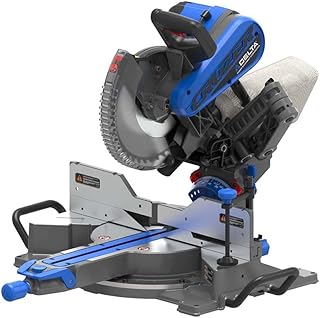
Delta 26-2310 10-Inch Dual Bevel Slider
A 10-inch blade with 16 inches of crosscut is an unusually smart trade: lighter head, cheaper blades, and more reach than most 12-inch machines. Well suited to shelving, casework panels, and anyone who values bench footprint over raw blade diameter.
DOVAMAN 12-Inch Dual-Bevel Compound Slider
The ambidextrous controls are more than a spec sheet line — left-handed users and awkward wall placements both benefit. With 4.2 x 13-inch capacity, nine detents, and a laser guide at a builder-grade price, it’s a sensible first slider for a home shop.
DOVAMAN 10-Inch Dual Bevel Slider, 2-Speed
Two speeds plus three included TCT blades make this the pick if your projects wander past wood into aluminum extrusion or PVC. The LED shadow line is a welcome inclusion at this tier, and 3.5 x 13.4-inch capacity covers most furniture stock.
Frequently Asked Questions
Is dual bevel worth the extra cost for occasional projects?
If you’re cutting trim, yes. The time and error savings show up on the first room of crown or base, and the difference in price between single and dual bevel has narrowed considerably.
Does a bigger blade mean a wider cut?
Not on a slider. Crosscut width comes from the rail travel, so a 10-inch sliding saw can easily outreach a 12-inch chop saw. Blade size mainly affects vertical capacity.
Should I replace the included blade?
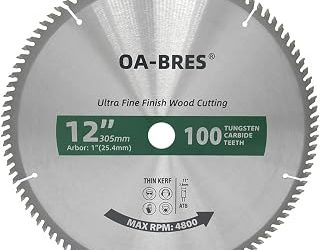
For furniture and visible trim, a dedicated 80–100 tooth fine-finish blade is the cheapest upgrade available. Save the stock blade for rough work.
Can I run one of these on a standard household circuit?
All of these are 15-amp corded tools designed for a standard 120V outlet. Avoid sharing the circuit with a shop vac and dust collector at the same time to prevent nuisance trips.
Final Thoughts
For most readers building furniture and finishing rooms, the DEWALT DWS780 remains the safest all-around investment thanks to its shadow-line accuracy and proven durability, while the Makita LS1219L earns its premium in tight shops where the rail-forward footprint pays for itself. If budget is the deciding factor, the DOVAMAN 12-inch dual-bevel delivers genuine trim capability for considerably less — and the Delta 26-2310 is the thinking person’s choice when crosscut width matters more than blade diameter.