Key takeaways
- Sustained CFM over peak PSI: Nearly every compressor advertises 150 PSI or more, which is irrelevant here. Look at CFM at 90 PSI and aim for 4.0 or higher if you want uninterrupted cleaning. Anything under 2.6 will stop and start constantly.
- Tank volume as a buffer: A larger tank does not create air, but it buys you working time between motor cycles. Six gallons is the practical floor for short passes; 8 to 30 gallons lets you finish an entire sofa without pausing.
- Noise level in living spaces: Standard pancake units hover around 78 to 80 dBA, which is unpleasant in a hallway or apartment. Ultra-quiet models near 60 dBA let you clean while others are home.
- Oil-free and moisture control: Oil-free pumps eliminate the risk of atomized oil misting onto fabric. Add an inline water separator regardless, since compressed air carries condensation that will stain light upholstery.
- Mobility and footprint: Consider where this lives when it is not working. Wheeled vertical tanks save floor area; aluminum tanks and low-weight builds matter if you carry the unit between rooms or up stairs.
What's inside
A Tornador gun is one of those tools that quietly changes how you maintain a home. Once you have used one on a linen sectional, a rattan chair back, or the pleated seams of a velvet ottoman, the old routine of brushing and vacuuming feels approximate at best. The catch is that the gun itself is only half the equation. Tornadors are air hogs: they run continuously rather than in bursts, and they want a steady 70 to 90 PSI while pulling roughly 3 to 4 CFM. Pair one with an undersized compressor and you get thirty seconds of beautiful vortex cleaning followed by two minutes of standing around listening to the motor catch up.
This guide is written for people cleaning interiors, not engine bays: upholstery, cane and woven surfaces, carved wood detail, radiator fins, plinth blocks, and the dust that settles in places no cloth reaches. Below are the compressors that actually sustain a Tornador, plus the guns and hose kits worth pairing with them. We have weighted duty cycle, recovery speed, and noise heavily, because most of this work happens indoors or in an attached garage where a screaming motor is a genuine problem.
As an Amazon Associate we earn from qualifying purchases.



How to Choose a/an Air Compressor For Tornador (2026)
- Sustained CFM over peak PSI: Nearly every compressor advertises 150 PSI or more, which is irrelevant here. Look at CFM at 90 PSI and aim for 4.0 or higher if you want uninterrupted cleaning. Anything under 2.6 will stop and start constantly.
- Tank volume as a buffer: A larger tank does not create air, but it buys you working time between motor cycles. Six gallons is the practical floor for short passes; 8 to 30 gallons lets you finish an entire sofa without pausing.
- Noise level in living spaces: Standard pancake units hover around 78 to 80 dBA, which is unpleasant in a hallway or apartment. Ultra-quiet models near 60 dBA let you clean while others are home.
- Oil-free and moisture control: Oil-free pumps eliminate the risk of atomized oil misting onto fabric. Add an inline water separator regardless, since compressed air carries condensation that will stain light upholstery.
- Mobility and footprint: Consider where this lives when it is not working. Wheeled vertical tanks save floor area; aluminum tanks and low-weight builds matter if you carry the unit between rooms or up stairs.
The Best Air Compressor For Tornador (2026)s Reviewed
Klutch 29-Gallon Vertical Compressor
With 5.1 CFM at 90 PSI and a 29-gallon reserve, this is the only unit here that never makes you wait, which matters when you are working across a full room of soft furnishings. The vertical footprint and large wheels keep it manageable in a garage corner, and the accessible tank drain makes moisture management a ten-second habit rather than a chore.
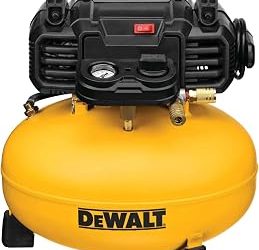
DEWALT 6-Gallon Pancake (DWFP55126)
At 2.6 SCFM at 90 PSI, this is honest entry-level Tornador support: excellent for spot-cleaning chair frames, vents, and cushion seams, less suited to marathon sessions. The high-efficiency motor starts reliably in cold spaces, and the maintenance-free pump means it tolerates long stretches of sitting idle between projects.
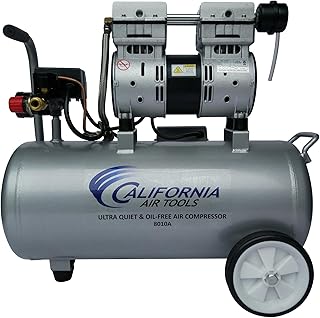
California Air Tools 8010A
Our pick for anyone cleaning inside the house. At roughly 60 dBA it registers closer to a conversation than a shop tool, and the 8-gallon aluminum tank resists rust while keeping the whole unit light enough to wheel between rooms. The 1.0 HP motor runs at low RPM, which is the real reason it lasts.
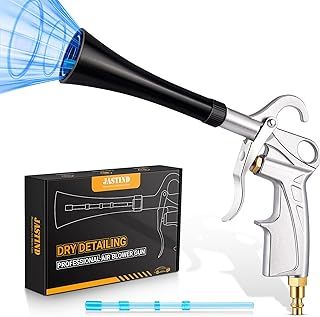
Tornado Car Cleaning Gun
A well-machined take on the classic vortex gun, with a brass 1/4″ quick plug and a metal body that survives being knocked around. The included extra blasting tube is genuinely useful for tufted upholstery and tight carved detail, and its 60 to 150 PSI window suits every compressor on this list.
5-Hose Detailing Gun Kit
The most complete starting point if you own a compressor already and want the whole workflow in one box. Five hose configurations let you reach behind fixed cabinetry and under bed frames, and the high-pressure dry cleaning setup handles both loose dust and worked-in grime.
Frequently Asked Questions
Will a portable 20V inflator run a Tornador?
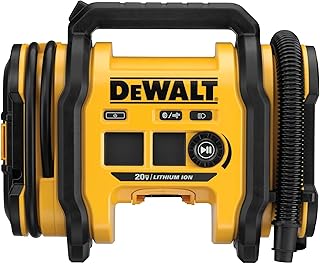
No. The DEWALT DCC020IB and similar cordless inflators are excellent for tires and furniture-moving dollies, but they have no meaningful tank and cannot sustain the airflow a Tornador demands.
How much CFM does a Tornador really need?
Plan on 3 to 4 CFM at 90 PSI for continuous use. Meeting that number is what separates smooth work from constant stopping.
Is it safe on delicate upholstery?
Generally yes, at lower pressure. Start around 60 to 70 PSI, keep the tube moving, and always test an inconspicuous area first on silk, antique linen, or aged leather.
Do I need a moisture trap?
Yes. An inline separator is inexpensive insurance against water spots on pale fabrics and is worth installing on day one.
Final Thoughts
If you want one compressor that never limits you, the Klutch 29-Gallon is the clear choice, with the airflow and reserve to clean an entire room without pause. For indoor work where noise is the deciding factor, the California Air Tools 8010A is the smarter buy, and pairing either with the Tornado Car Cleaning Gun gives you a setup that will keep upholstery, cane, and carved wood looking maintained rather than merely tidied.