Key takeaways
- Fence quality above all: A fence that drifts out of parallel will ruin every rip cut no matter how good the motor is. Look for a fence that locks square, tracks smoothly, and can be micro-adjusted; rack-and-pinion systems are the easiest for beginners to trust.
- Rip capacity you will actually use: Around 24 inches handles most furniture parts, but 30-plus inches lets you break down a full sheet of plywood for casework and built-ins without an outfeed helper.
- Stand and mobility: If the saw shares space with a car, a rolling or folding stand is not a luxury. Setup friction is the single biggest reason a new saw sits unused.
- Safety hardware included: Riving knife, anti-kickback pawls, blade guard, and a push stick should all be in the box. Kickback is the beginner’s real risk, and a riving knife is the most effective defense against it.
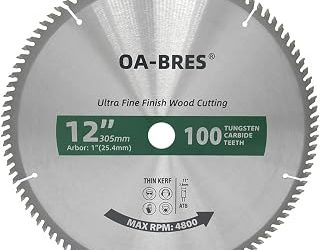
- Dust collection and blade upgrade path: A shrouded 2.5-inch dust port keeps an enclosed garage livable, and a standard 5/8-inch arbor means you can drop in a quality 40- or 60-tooth blade, which is the cheapest accuracy upgrade available.
What's inside
Most people who want to build their own furniture stall at the same place: the table saw. It is the one tool that turns a stack of rough boards into square, repeatable parts, and it is also the tool that carries the steepest learning curve and the widest price spread. Walk into the market as a beginner and you meet 15-amp motors, rip capacities quoted in fractions, rack-and-pinion fences, soft-start electronics, and a dozen no-name benchtop units that look nearly identical in photographs. The hard part is not spending money. The hard part is knowing which specifications actually change the quality of a finished shelf, cabinet door, or dining table leg.
This guide is written from the perspective of someone furnishing a home rather than running a production shop. The picks below are all 10-inch, 15-amp saws sized for a garage bay, a basement corner, or a driveway you clear on weekends. We look at fence accuracy, stand design, dust behavior, and how forgiving each saw is while you are still building muscle memory, then close with the buying criteria and the questions beginners ask most often.
As an Amazon Associate we earn from qualifying purchases.




How to Choose a Table Saw For Beginner Woodworker (2026)
- Fence quality above all: A fence that drifts out of parallel will ruin every rip cut no matter how good the motor is. Look for a fence that locks square, tracks smoothly, and can be micro-adjusted; rack-and-pinion systems are the easiest for beginners to trust.
- Rip capacity you will actually use: Around 24 inches handles most furniture parts, but 30-plus inches lets you break down a full sheet of plywood for casework and built-ins without an outfeed helper.
- Stand and mobility: If the saw shares space with a car, a rolling or folding stand is not a luxury. Setup friction is the single biggest reason a new saw sits unused.
- Safety hardware included: Riving knife, anti-kickback pawls, blade guard, and a push stick should all be in the box. Kickback is the beginner’s real risk, and a riving knife is the most effective defense against it.
- Dust collection and blade upgrade path: A shrouded 2.5-inch dust port keeps an enclosed garage livable, and a standard 5/8-inch arbor means you can drop in a quality 40- or 60-tooth blade, which is the cheapest accuracy upgrade available.
The Best Table Saw For Beginner Woodworker (2026)s Reviewed
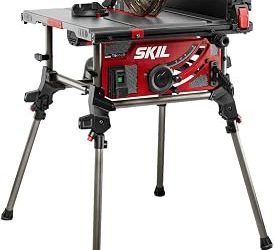
SKIL 15-Amp 10-Inch Jobsite Table Saw with Folding Stand (TS6307-00)
This is the value benchmark for a first real saw: a rack-and-pinion fence that stays square, a fold-flat stand, and a smart bevel-and-height mechanism that beginners can dial in without guesswork. It is the pick for anyone who wants dependable furniture-grade cuts without stepping into premium pricing.
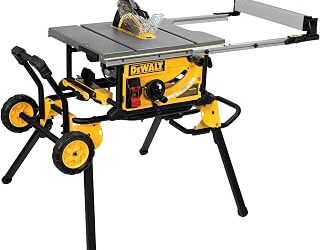
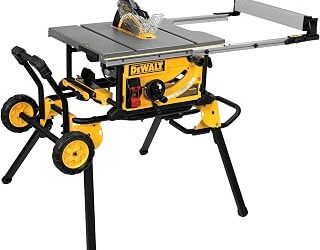
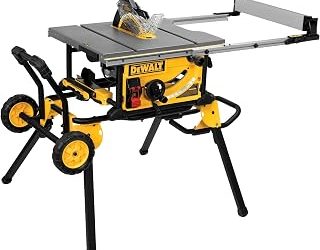
DEWALT DWE7491RS 10-Inch Table Saw with Rolling Stand
The 32-1/2-inch rip capacity and rolling scissor stand make this the saw to buy if plywood casework, wardrobes, or built-in shelving are on your list. Its fence is among the most repeatable in the portable class, and the machine is stiff enough that you will outgrow your skills long before you outgrow the tool.
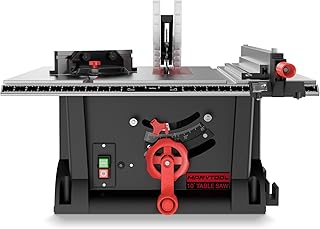
15-Amp Compact Benchtop Table Saw with 36T Blade
A tidy 4600 RPM benchtop unit that covers 90-degree crosscuts and 0-45-degree bevels while staying light enough to lift onto a workbench and stow between projects. Best suited to small parts, trim, and apartment-scale projects where footprint matters more than capacity.
10-Inch Multifunctional Table Saw with Stand and Push Stick (Grey)
The included stand and push stick make this a genuinely complete first purchase rather than a base unit that needs accessories before it earns its keep. Adjustable blade height plus full bevel range gives beginners room to practice grooves, rabbets, and mitered frames.
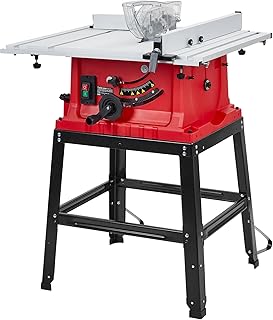
10-Inch Table Saw with 36 x 25-Inch Tabletop and Protective Cover
The generous tabletop is the standout here, since more surface area means better board support and cleaner cuts on longer stock. At 5000 RPM with adjustable depth and a protective cover, it suits mixed-material work where wood, plastic, and light metal all pass across the same table.
Frequently Asked Questions
Do I need a cabinet saw to build real furniture?
No. A well-tuned portable 10-inch saw with a quality blade will produce joinery-ready parts for tables, cabinets, and beds. Cabinet saws buy you mass, quieter operation, and better dust control, not fundamentally better cuts.
What blade should I buy first?
Replace the stock blade with a 40-tooth general-purpose carbide blade. It cuts hardwood and plywood cleanly and will improve edge quality more noticeably than any other upgrade at this price point.
How much space does a portable table saw really need?
Plan for roughly eight feet of clear length in front of and behind the blade for infeed and outfeed on longer boards, plus room to stand to the side of the blade path rather than directly behind it.
Is a benchtop saw safe enough for a complete beginner?
Yes, provided you keep the riving knife and guard installed, use a push stick, and never freehand a cut without the fence or miter gauge. Most beginner accidents come from removed safety hardware, not underpowered tools.
Final Thoughts
For most first-time woodworkers, the SKIL TS6307-00 hits the right balance of fence accuracy, portability, and price, making it the easiest saw to recommend without caveats. If sheet goods and built-in cabinetry are in your plans, the DEWALT DWE7491RS and its 32-1/2-inch rip capacity is worth the step up and will stay relevant for years. And if your space is tight or your projects are small, the 36 x 25-inch tabletop model gives you unusually good board support for a compact setup.