Key takeaways
- Pressure ceiling versus working pressure: Aim for a machine in the 1600 to 2100 PSI working range for paint. Higher-rated units are fine as long as you have wide-angle nozzles or an adjustable wand to dial the force down at the tip.
- Flow rate does the cleaning: GPM is what carries grit off the panel. Look for 1.2 GPM or better; anything less turns rinsing into a slow, streaky process and increases how much you touch the paint.
- Foam cannon readiness: A pre-wash foam soak is the single biggest reduction in swirl risk. Check that the unit ships with a cannon or accepts a standard quick-connect one without an adapter hunt.
- Nozzle set quality: You want 25 and 40 degree tips for bodywork and a narrower option for wheel wells and undercarriage. Skip zero-degree tips entirely near paint.
- Power source and storage footprint: Corded electric gives you unlimited runtime at low noise. Cordless earns its keep if you wash away from an outlet. Either way, check hose length and whether the cord and wand stow onboard.
What's inside
Car paint is a finish, not a surface. It behaves a lot like the lacquer on a mid-century sideboard: thin, layered, and unforgiving of anything abrasive. That is the tension most people run into when they start shopping for a pressure washer to detail with. The machines that sell hardest are built for stripping algae off pavers, and pointing that kind of force at a clear coat is how swirl marks, stripped wax, and chipped edges happen. Meanwhile the gentle end of the market often lacks the flow rate to actually lift road film, so you end up scrubbing by hand anyway.
What follows is a curated shortlist built around the numbers that matter for automotive work rather than the ones printed largest on the box. We looked at usable pressure, gallons per minute, foam cannon compatibility, nozzle range, and whether the unit is something you can reasonably store in a tidy garage or hall closet. Six machines made the cut across corded, cordless, and compact formats, so you can match the tool to your driveway, your water source, and how often you plan to use it.
As an Amazon Associate we earn from qualifying purchases.



How to Choose a Pressure Washer For Detailing Cars (2026)
- Pressure ceiling versus working pressure: Aim for a machine in the 1600 to 2100 PSI working range for paint. Higher-rated units are fine as long as you have wide-angle nozzles or an adjustable wand to dial the force down at the tip.
- Flow rate does the cleaning: GPM is what carries grit off the panel. Look for 1.2 GPM or better; anything less turns rinsing into a slow, streaky process and increases how much you touch the paint.
- Foam cannon readiness: A pre-wash foam soak is the single biggest reduction in swirl risk. Check that the unit ships with a cannon or accepts a standard quick-connect one without an adapter hunt.
- Nozzle set quality: You want 25 and 40 degree tips for bodywork and a narrower option for wheel wells and undercarriage. Skip zero-degree tips entirely near paint.
- Power source and storage footprint: Corded electric gives you unlimited runtime at low noise. Cordless earns its keep if you wash away from an outlet. Either way, check hose length and whether the cord and wand stow onboard.
The Best Pressure Washer For Detailing Cars (2026)s Reviewed
Sun Joe SPX3000
The reference point for value in electric washers, with a dual-tank soap system that lets you keep wheel cleaner and body shampoo loaded at once. Its five quick-connect tips cover everything from delicate rinsing to wheel arches, and the 2030 PSI PWMA-rated output is honest rather than inflated.
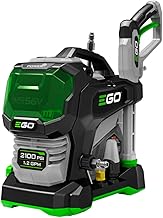
EGO Power+ HPW2100
The most genuinely convenient option here if you already own EGO batteries, since it draws water from a bucket or hose and needs no outlet at all. Output is tuned sensibly at 2100 PSI, and the brushless motor keeps noise low enough for early morning washes in a shared driveway.
Hiclean Electric Pressure Washer 2100 PSI
A compact, detailing-focused build that arrives with a foam cannon plus turbo and fan nozzles, so you are not buying accessories separately on day one. The small footprint suits apartment garages and anyone who values a machine that disappears onto a shelf between washes.
Westinghouse WPX3400e
The most capable unit on the list, pairing a brushless motor with 3400 max PSI and 2.0 GPM for fast rinsing and serious driveway work. Treat the wide-angle tips as your default for paint and this doubles as a whole-property cleaner without feeling compromised on cars.
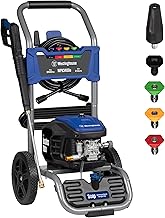
Westinghouse ePX3100v
A tidy, well-proportioned machine with a detachable foam cannon and a pro-style steel wand that feels considerably better in hand than the plastic norm at this tier. The 2100 PSI ceiling and built-in carry handle make it a natural fit for people who detail regularly and store in tight spaces.
Frequently Asked Questions
How much PSI is safe for car paint?
Between 1200 and 2100 PSI at the nozzle is the accepted comfort zone. Keep the tip 12 to 18 inches from the panel, use a 25 or 40 degree spray, and never hold a narrow jet on one spot.
Do I really need a foam cannon?
For paint preservation, yes. A thick pre-wash layer loosens road film chemically so your mitt glides instead of dragging grit, which is where most swirl damage originates.
Is cordless powerful enough for detailing?
Modern brushless cordless units handle a full car comfortably. The tradeoff is runtime, so plan on a charged spare battery if you are washing more than one vehicle.
Can I run these from a bucket instead of a spigot?
Some models support siphon or self-priming draw, notably in the cordless category. Verify before you buy, because most corded units expect steady garden hose pressure.
Final Thoughts
For most people the Sun Joe SPX3000 remains the smartest entry point, delivering real detailing capability and dual soap tanks at a price that leaves budget for good towels and shampoo. Step up to the Westinghouse WPX3400e if you want one machine for cars, siding, and hardscaping, or choose the EGO Power+ HPW2100 if freedom from cords and spigots matters more than raw output.