Key takeaways
- CFM at 90 PSI: Tank size only buys you time; airflow does the work. Brad and finish nailers are content around 1–2 CFM, while HVLP spray guns and ratchets want 4 CFM or more. Match the delivery rating to your thirstiest tool, not your smallest.
- Noise in dB: A 78–80 dB oil-free unit is conversational; older designs push past 90 dB and make an attached garage unusable. If your shop shares a wall with a bedroom or living space, treat quiet operation as a primary spec rather than a bonus.
- Vertical vs. horizontal tank: Vertical tanks claim roughly the footprint of a paint can and slide into corners, which suits tight garages. Horizontal tanks sit lower and roll more stably over thresholds and gravel. Choose by how you store it, not how it looks in photos.
- Oil-free vs. lubricated: Oil-free pumps skip maintenance and never risk oil mist near a fresh lacquer surface, which matters for furniture work. Lubricated pumps run cooler and last longer under heavy daily cycling, so they favor high-volume shops.
- Duty cycle and recovery: Check how long the pump can run continuously and how quickly it refills from cut-in to cut-out. Slow recovery is what interrupts a spray pass, and it shows up in the CFM figure long before the tank gauge tells you.
What's inside
Anyone who has restored a mid-century credenza, hung a gallery wall of solid-oak floating shelves, or refinished a set of spindle chairs knows the moment the project stalls: the finish coat needs consistent air, the brad nailer starts short-stroking, and the little pancake compressor in the corner is gasping between cycles. Ten-gallon tanks occupy a genuinely useful middle ground for home workshops. They hold enough reserve air to run a finish nailer or a small HVLP gun without constant recovery, yet they still roll through a garage door and tuck beside a workbench when the weekend ends.
This guide looks at the 10-gallon class through a home and furniture lens rather than a jobsite one: noise you can live with in an attached garage, footprint that respects a shared space, and CFM honest enough to support upholstery staplers, spray finishing, and tire duty. Below you will find the current standouts, the specs that actually matter in 2026, and a few notes on when to size up or go cordless instead.
As an Amazon Associate we earn from qualifying purchases.



How to Choose a 10 Gallon Air Compressor (2026)
- CFM at 90 PSI: Tank size only buys you time; airflow does the work. Brad and finish nailers are content around 1–2 CFM, while HVLP spray guns and ratchets want 4 CFM or more. Match the delivery rating to your thirstiest tool, not your smallest.
- Noise in dB: A 78–80 dB oil-free unit is conversational; older designs push past 90 dB and make an attached garage unusable. If your shop shares a wall with a bedroom or living space, treat quiet operation as a primary spec rather than a bonus.
- Vertical vs. horizontal tank: Vertical tanks claim roughly the footprint of a paint can and slide into corners, which suits tight garages. Horizontal tanks sit lower and roll more stably over thresholds and gravel. Choose by how you store it, not how it looks in photos.
- Oil-free vs. lubricated: Oil-free pumps skip maintenance and never risk oil mist near a fresh lacquer surface, which matters for furniture work. Lubricated pumps run cooler and last longer under heavy daily cycling, so they favor high-volume shops.
- Duty cycle and recovery: Check how long the pump can run continuously and how quickly it refills from cut-in to cut-out. Slow recovery is what interrupts a spray pass, and it shows up in the CFM figure long before the tank gauge tells you.
The Best 10 Gallon Air Compressor (2026)s Reviewed
Albott 10 Gallon Electric Air Compressor
The vertical wheeled tank and copper motor make this the sensible default for a crowded garage, offering 115 PSI max and enough reserve for tire inflation, brad nailing, and light pneumatic work. Oil-free operation keeps upkeep to draining the tank, though the lower pressure ceiling means it is better suited to trim and fastening than sustained spray.
Craftsman 10 Gallon (CMXECXA0331042)
At 4.0 CFM at 90 PSI and 150 PSI max, this is the most balanced 10-gallon pick for mixed furniture work, comfortably handling upholstery staplers, finish nailers, and small spray guns. The 120V oil-free motor and single-wheel design keep it approachable for anyone stepping up from a pancake unit.
VEVOR 10 Gallon Air Compressor
A 2 HP motor delivering 5.3 CFM at 90 PSI puts this among the strongest in the class, and the 78 dB rating makes it genuinely tolerable indoors. It is the one I would recommend for spray finishing cabinet doors or chair frames where airflow consistency shows up directly in the film quality.
Stark USA 3.5 HP 10 Gallon
The ultra-quiet horizontal tank with adjustable pressure regulation is aimed squarely at DIY and garage use, and the high stated airflow gives you headroom for larger tools. The lower center of gravity is a practical advantage if you frequently wheel it across a driveway or shop threshold.
Craftsman 26 Gallon Portable
When your project list has outgrown 10 gallons, this is the natural next step: 5.0 CFM at 90 PSI, 150 PSI max, and a 1,000-hour life cycle rating on an oil-free induction motor. Expect a real jump in footprint, so commit only if you have the wall space to spare.
Frequently Asked Questions
Is a 10-gallon compressor enough for spray finishing furniture?
For small pieces and touch-ups, yes, provided the unit delivers at least 4 CFM at 90 PSI. Full-size dressers or dining tables benefit from a larger tank so the pump is not cycling mid-pass, which can cause visible banding in the finish.
How loud is too loud for an attached garage?
Aim for 80 dB or below if the space adjoins living areas. Placing the compressor on a rubber mat and running a longer hose rather than moving the unit closer to your work also cuts perceived noise noticeably.
Do I still need a cordless inflator?
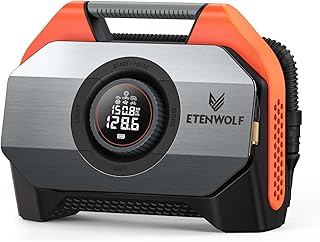
They serve different jobs. A cordless unit like the ETENWOLF VORTEX S6 handles roadside tires and inflatables away from an outlet, while a tank compressor supplies the sustained volume that pneumatic tools require.
What maintenance do oil-free models need?
Drain the tank after every session to prevent internal rust, keep the intake filter clean, and check fittings for leaks annually. There is no oil to change, which is the main reason oil-free dominates home shops.
Final Thoughts
For most home workshops, the Craftsman 10 Gallon is the most versatile choice, pairing usable airflow with a footprint that respects a shared garage. The VEVOR 10 Gallon is the pick if quiet operation and spray-ready CFM top your list, while the Albott vertical tank remains the tidiest option for anyone who mainly needs reliable air for tires, trim, and occasional pneumatic work.