Key takeaways
- Pump type first: Axial cam pumps on consumer machines are usually sealed or use a light non-detergent oil, while triplex crankcase pumps from CAT, General, and AR expect a dedicated pump oil with a specified change interval. Identify yours before buying anything.
- Non-detergent, always: Detergent additives in automotive oil are designed to suspend contaminants for a filter to catch. Pump crankcases have no filter, so those particles stay in circulation. Look for oil explicitly labeled non-detergent.
- Viscosity match: Most triplex pumps call for SAE 30 or a 15W-40 equivalent; some manufacturers specify their own branded grade. Check the crankcase decal or manual rather than guessing, and stay closer to the recommendation in cold climates.
- Volume versus frequency: A typical crankcase takes 14 to 21 ounces. A quart or liter bottle covers one fill plus a top-off, while a gallon makes sense only if you run several machines or service equipment regularly.
- Moisture and corrosion resistance: Pumps that sit between seasons collect condensation. Formulations with anti-wear and rust inhibitors, or non-misting synthetics, hold up better through long idle stretches than plain mineral oil.
What's inside
A pressure washer earns its keep on the unglamorous edges of a beautiful home: the bluestone patio, the powder-coated railings, the cedar siding that frames everything else. Yet the part that fails first is rarely the part anyone thinks about. Pump pistons and plungers run at high frequency under real load, and when the oil inside thins out, oxidizes, or picks up a little water, the wear happens quietly until the day pressure drops and a rebuild kit costs more than the machine.
The confusion is understandable. Motor oil sits on every shelf, pump oil does not, and the label on your machine may say nothing more specific than “non-detergent.” This guide sorts out what actually belongs in a pressure washer pump crankcase in 2026, which formulations suit axial versus triplex pumps, and which bottles are worth keeping on the shelf next to the machine. Below are the options we return to, followed by a short buying framework and answers to the questions that come up most.
As an Amazon Associate we earn from qualifying purchases.

How to Choose a/an Oil For Pressure Washer Pump (2026)
- Pump type first: Axial cam pumps on consumer machines are usually sealed or use a light non-detergent oil, while triplex crankcase pumps from CAT, General, and AR expect a dedicated pump oil with a specified change interval. Identify yours before buying anything.
- Non-detergent, always: Detergent additives in automotive oil are designed to suspend contaminants for a filter to catch. Pump crankcases have no filter, so those particles stay in circulation. Look for oil explicitly labeled non-detergent.
- Viscosity match: Most triplex pumps call for SAE 30 or a 15W-40 equivalent; some manufacturers specify their own branded grade. Check the crankcase decal or manual rather than guessing, and stay closer to the recommendation in cold climates.
- Volume versus frequency: A typical crankcase takes 14 to 21 ounces. A quart or liter bottle covers one fill plus a top-off, while a gallon makes sense only if you run several machines or service equipment regularly.
- Moisture and corrosion resistance: Pumps that sit between seasons collect condensation. Formulations with anti-wear and rust inhibitors, or non-misting synthetics, hold up better through long idle stretches than plain mineral oil.
The Best Oil For Pressure Washer Pump (2026)s Reviewed
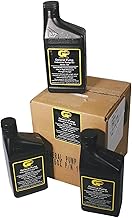
Stens Pressure Washer Pump Oil for General Pump 100214
This is the straightforward answer for anyone running a General triplex pump, since it is specified against the 100214 reference rather than approximated. The value here is removing doubt: correct viscosity, non-detergent, and sized sensibly for a single crankcase service.
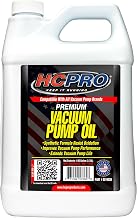
HCPRO HCVPO128 Super Premium Vacuum Pump Oil, 1 Gallon
A synthetic, non-misting formula in a full gallon, which makes it the pick for anyone maintaining multiple pumps or working across pressure washer and vacuum pump duty. The oxidation stability is its real advantage, holding viscosity through heat cycles that break down conventional mineral oil, though most single-machine owners will never finish the jug.
Valley Industries Premium Pump Oil, 1 Liter
A liter is close to the ideal quantity: one clean fill with enough left over to top off mid-season. Valley Industries has supplied the pressure washer aftermarket for years, and this formulation covers most standard triplex crankcases without fuss.
Pressure Washer Pump Oil, 21 Oz. (CAT Compatible)
Sized almost exactly to a common CAT crankcase capacity, which eliminates the half-used bottle problem and the temptation to overfill. Corrosion and wear inhibitors make it a sound choice for machines that hibernate through winter.
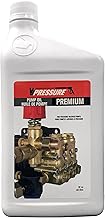
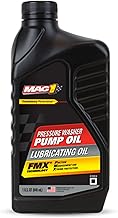
60694 Pressure Washer Pump Oil, 1 Quart
A quart of non-detergent pump oil at the price point most people expect, and a reasonable default when your machine’s manual asks for a generic pump oil rather than a branded grade. Keep one on the shelf as your routine service bottle.
Frequently Asked Questions
Can I use regular motor oil instead?
Not advisably. Detergent packages in automotive oil keep contaminants suspended, and with no filter in a pump crankcase those particles circulate through the bearings and plunger guides. Non-detergent pump oil is the correct specification.
How often should I change pump oil?
Most manufacturers call for an initial change after the first 50 hours, then every 200 to 500 hours or annually, whichever comes first. Homeowners typically hit the annual mark long before the hour count.
How do I know when the oil has gone bad?
Pull the dipstick or sight glass and look at color. Milky or cloudy oil means water intrusion, usually from a failing seal or condensation, and warrants a change plus a seal inspection. Dark, gritty oil means it is overdue.
Is synthetic worth the premium?
For machines under heavy or sustained use, yes: synthetic holds viscosity better under heat and resists oxidation during long storage. For occasional patio and siding work, a quality conventional pump oil changed on schedule performs comparably.
Final Thoughts
For most homeowners, the Valley Industries 1 Liter is the cleanest fit, giving you a correct fill with margin to spare. Owners of General triplex pumps should default to the Stens 100214-spec oil for exact compatibility, and anyone maintaining several machines or wanting maximum thermal stability will get more out of the HCPRO HCVPO128 gallon. Whichever you choose, the change interval matters more than the label.