Key takeaways
- Rip capacity: This is the number that decides which projects are possible. Anything under 24 inches means breaking down full plywood sheets by hand first. A 30-inch-plus capacity lets you rip a 4×8 sheet down the middle in one pass, which is the difference between building cabinets and avoiding them.
- Fence quality: A rack-and-pinion fence that tracks square every time is worth more than extra horsepower. Test it by locking the fence at both ends of the table and checking the measurement against the blade — if it drifts, every joint you cut will drift with it.
- Stand and mobility: If your shop is also where you park the car, a folding rolling stand isn’t a luxury. Look for stands that collapse without tools and roll over a door threshold, and be honest about whether you can lift the head unit alone.
- Motor and blade size: A 15-amp motor is the practical floor for hardwood and thick sheet goods. Ten-inch blades give you a deeper cut for 4x4s and stacked stock; 8-1/4-inch saws trade that depth for meaningful weight savings.
- Dust and safety hardware: Check for a functional dust port, a riving knife that’s quick to remove and reinstall, and a real push stick. A saw you can keep clean and guarded is one you’ll actually use correctly.
What's inside
Most DIY furniture projects don’t fail at the design stage. They fail at the cut. A floating shelf that reads crooked, a cabinet face frame that won’t sit flush, a mitered plant stand with a hairline gap at every joint — these are almost always symptoms of an imprecise rip, not a lack of taste. And for anyone building pieces meant to live in a real room, alongside real furniture, that gap between “handmade” and “homemade” comes down to whether your saw can hold a line over the length of a board.
A table saw is the single tool that changes that. The problem is that the DIY category is crowded with machines that look nearly identical in a listing photo and behave nothing alike in a garage. This guide focuses on what actually matters for home builders working in tight spaces: rip capacity that clears a plywood sheet, a fence that stays parallel, a stand you can wheel out of the way, and enough motor to get through hardwood without scorching the cut. Below are the models worth your money in 2026, plus the specs that separate a real workhorse from a weekend disappointment.
As an Amazon Associate we earn from qualifying purchases.



How to Choose a Table Saw For Diyer (2026)
- Rip capacity: This is the number that decides which projects are possible. Anything under 24 inches means breaking down full plywood sheets by hand first. A 30-inch-plus capacity lets you rip a 4×8 sheet down the middle in one pass, which is the difference between building cabinets and avoiding them.
- Fence quality: A rack-and-pinion fence that tracks square every time is worth more than extra horsepower. Test it by locking the fence at both ends of the table and checking the measurement against the blade — if it drifts, every joint you cut will drift with it.
- Stand and mobility: If your shop is also where you park the car, a folding rolling stand isn’t a luxury. Look for stands that collapse without tools and roll over a door threshold, and be honest about whether you can lift the head unit alone.
- Motor and blade size: A 15-amp motor is the practical floor for hardwood and thick sheet goods. Ten-inch blades give you a deeper cut for 4x4s and stacked stock; 8-1/4-inch saws trade that depth for meaningful weight savings.
- Dust and safety hardware: Check for a functional dust port, a riving knife that’s quick to remove and reinstall, and a real push stick. A saw you can keep clean and guarded is one you’ll actually use correctly.
The Best Table Saw For Diyer (2026)s Reviewed
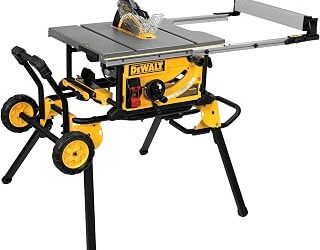
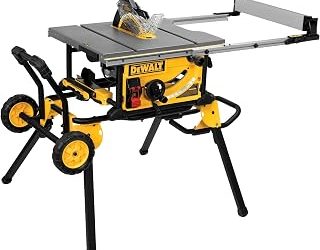
DEWALT DWE7491RS 10-Inch with Rolling Stand
This is the benchmark for home shops, and the 32-1/2-inch rip capacity is why — it handles full sheet goods without an outfeed gymnastics routine. The rack-and-pinion fence is genuinely repeatable, and the rolling stand folds down small enough to live against a garage wall between projects.
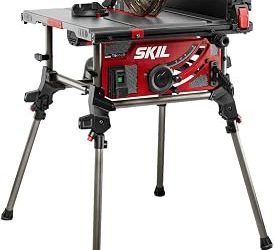
SKIL TS6307-00 Portable Jobsite Saw
SKIL’s 15-amp jobsite saw punches above its price, with a rack-and-pinion fence and a folding stand that sets up in seconds. The standout feature is the automatic blade-height retraction when water contacts the sensor area — a thoughtful safety layer at this tier.
DEWALT DWE7485 Compact 8-1/4 in.
The pick for small spaces and frequent moves. At 8-1/4 inches it gives up some cut depth, but it keeps a 24-1/2-inch rip capacity and DEWALT’s fence system in a package light enough to carry up basement stairs one-handed.
SKIL SPT99-11 Worm Drive with Stand
Worm drive gearing delivers more torque at the blade, so this one muscles through wet framing lumber and thick hardwood where direct-drive saws bog. It’s heavier and louder, but it’s the right call if your projects lean toward built-ins and structural work.
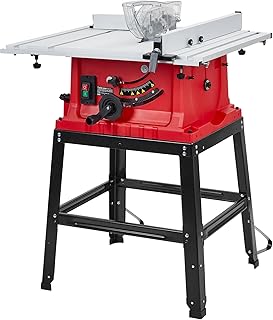
10-Inch 5000 RPM Saw with 36 x 25 Tabletop
The oversized 36 x 25-inch table is the draw here, giving broad panels real support during a cut. With 15 amps, 0–45° bevel and adjustable depth, it’s a sensible budget entry for a first shop, though the fence needs checking before critical work.
Frequently Asked Questions
Do I need a 10-inch saw, or is 8-1/4 enough?
For 3/4-inch plywood, 1x and 2x lumber, 8-1/4 inches is plenty. Choose 10 inches if you plan to cut 4×4 posts, thick slabs, or want the wider blade selection.
How much space does a portable table saw actually need?
Plan for roughly eight feet of clearance in front and behind the blade for infeed and outfeed on long rips. The saw’s footprint is the small part of the equation.
Can a DIY table saw cut plastic or aluminum?
Yes, with the correct blade and a slow, steady feed. Use a non-ferrous or high-tooth-count blade and confirm the manufacturer permits the material.
What upgrade makes the biggest difference?
A quality 40-tooth combination blade. Most stock blades are adequate for framing and mediocre for furniture-grade edges.
Final Thoughts
For most DIYers building furniture and built-ins at home, the DEWALT DWE7491RS is the safest investment — the rip capacity and fence accuracy justify the price on the first cabinet project alone. If space or budget is tighter, the SKIL TS6307-00 delivers most of that capability with a smart safety feature, while the compact DEWALT DWE7485 is the one to choose if your saw has to be carried and stowed after every session.