Key takeaways
- Measure bottle height, shelf openings and lift-out clearance before choosing a bar cart. Includes a practical fit worksheet.
What's inside
The bottle must come out as well as fit inside
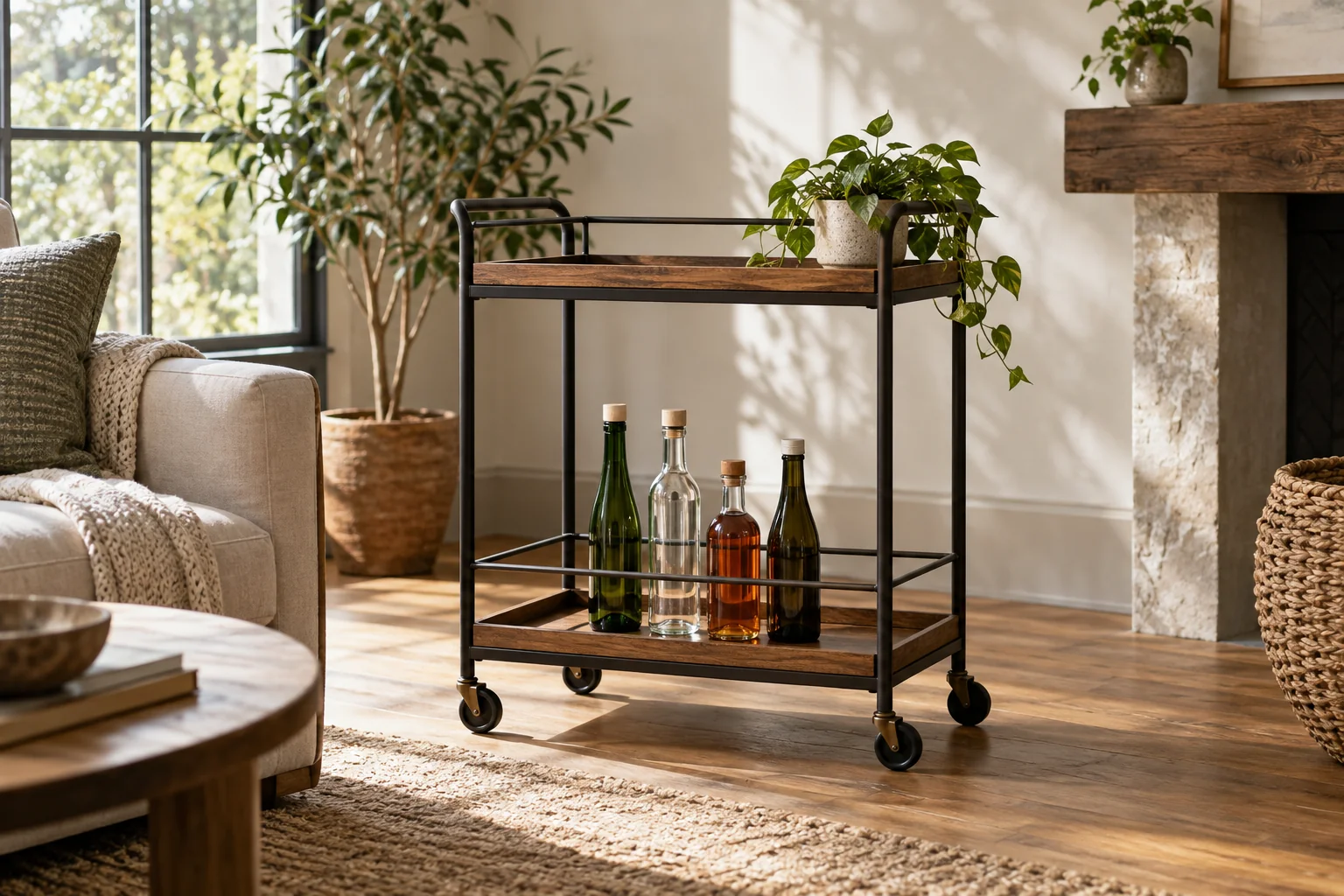
For a lower bar-cart shelf, measure the clear height from the shelf surface to the lowest obstruction above it. Compare that with the bottle’s closed height, including its stopper or pump. Then check the opening through which your hand and the bottle will travel. Overall cart height answers neither question.
A bottle can stand beneath an upper shelf yet be difficult to remove because a front rail requires it to rise first. A hanging glass rack can create a lower obstruction than the shelf itself. Plan around the tallest item you actually use, not a standard bottle size.
Separate furniture dimensions from usable space
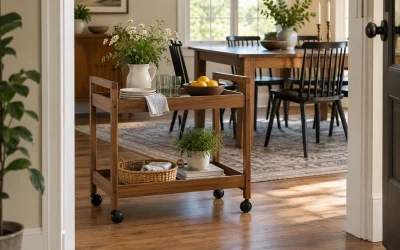
Two-tier furniture listings often describe their outside dimensions and construction. For instance, the IKEA STOCKHOLM 2025 side table on castors is a useful example of a wheeled, two-level design to inspect. Its existence does not establish bottle clearance for your collection. Obtain the relevant internal measurements for any candidate.
Draw a simple side view with the lower shelf, upper shelf underside and any rail. Mark the bottle upright on the lower shelf. Add a second outline showing the intended removal path. You are checking a movement, so one rectangle representing the bottle’s resting position is incomplete.
If a listing gives only overall dimensions, ask for three measurements: clear height where bottles stand, height and position of the front retaining rail, and usable shelf depth behind that rail. A photograph with a ruler can help clarify the endpoints, but it should accompany an explicit measurement.
Make a bottle and shelf worksheet
| Item | Record | Check |
|---|---|---|
| Tallest closed bottle | Height including stopper and widest diameter | Resting clearance and footprint |
| Shortest clear shelf height | Lowest rail, fitting or shelf above | Potential contact overhead |
| Front retaining rail | Height and opening arrangement | Whether removal requires lifting |
| Hand access | Space around the intended grip | Whether neighboring items obstruct use |
| Tray or liner | Thickness and any raised edge | Loss of vertical or horizontal room |
| Load information | Published shelf and total limits | Weight is checked independently |
Measure bottles while closed and in the configuration they will be stored. A decorative stopper can change the result. If you use a tray, include its base thickness rather than subtracting it later from a clearance that was already marginal.
A worked example of a misleading fit
Illustrative example: a capped bottle is 31 cm tall. The lower shelf has 34 cm of clear height, leaving 3 cm above the bottle at rest. The front rail is 5 cm high. If the proposed removal method requires lifting the bottle vertically by the full rail height before moving it forward, the available overhead space is insufficient for that method.
This is not a universal geometry rule for every cart. Some designs have an unobstructed side opening or a different approved access arrangement. The point is to document the actual path, rather than declaring success because 31 is less than 34.
Try the access question with an empty, unbreakable object of similar dimensions during a permitted showroom check. Do not tilt a stocked cart or force a glass bottle past a rail. If the only workable arrangement puts tall items on top, reassess the top shelf’s load guidance and the cart’s stability instructions.
Lay out the shelf from the front inward
Sketch the usable shelf width and depth. Place outlines for the largest bottle bases, a tray if used, and any fixed supports. Leave the grip area you personally need instead of treating every remaining square centimeter as a storage target.
Consider the order of access. A frequently used bottle behind two rows may require moving several items every time. Keeping the regular items toward the accessible side can matter more than maximizing count. Record capacity as the number of items in your workable arrangement, not a universal capacity claim.
Keep serving use separate from storage. A carafe with its lid removed, a shaker being opened and glasses being filled need a different working area. A cart that holds the closed collection may still be unsuitable as the only preparation surface.
Close the decision with weight and movement checks
Clearance does not verify load capacity. Check the selected cart’s shelf and overall ratings, and account for filled containers rather than empty display bottles. If no relevant rating is provided, request it instead of inferring strength from shelf thickness or appearance.
Read the manufacturer’s instructions for movement, castors and any locks. A retaining edge is not permission to roll fragile contents across thresholds. Plan a level storage position and a route that follows the actual furniture guidance.
Save the seller’s measurements beside a photograph of your tallest closed item and your shelf sketch. Your final result should say which items fit, how they are retrieved and what remains unverified. That is more useful than a generic promise that a cart accommodates wine or spirits.