Key takeaways
- Tooth count and your material: Roughly 60 to 80 teeth is the sweet spot for furniture-grade crosscuts in hardwood and plywood. Reach for 100 to 120 teeth only for veneered panels, thin stock, and delicate moldings, and drop to 24 to 40 teeth when you are breaking down framing lumber.
- Kerf thickness: Thin-kerf blades near 3/32″ remove less material and place less load on sliding saws, which helps underpowered motors hold speed. Full 1/8″ kerf plates resist deflection better on long bevel cuts and heavy timbers.
- Grind geometry: ATB (alternate top bevel) shears wood fibers cleanly for trim and casework. TCG (triple chip grind) is the right call for aluminum, laminate, and abrasive composites, where a knife-edge tooth would chip.
- Hook angle and stability: Miter-specific blades use a low or slightly negative hook so the blade does not self-feed and climb into the workpiece. Look for laser-cut expansion slots and a hardened, tensioned plate if you want cuts that stay square as the blade heats up.
- Arbor fit and rebuild value: Confirm the 5/8″ (16mm) arbor and check plate thickness before buying. Thicker carbide teeth on a quality steel body can be professionally sharpened several times, which makes a higher purchase price cheaper per cut over a few years.
What's inside
Anyone who has mitered a picture-frame corner in walnut and then watched a hairline gap open up under raking light knows the truth: the saw rarely deserves the blame. A well-tuned compound miter saw will happily produce splintered veneer, fuzzy end grain, and scorched white oak if the blade riding on the arbor is wrong for the job. Most saws ship with a general-purpose blade built to move lumber quickly, not to leave a glue-ready surface on a hardwood face frame or a crisp shadow line on painted trim.
This guide looks at ten-inch miter saw blades through a furniture-and-finish lens rather than a framing one. We weigh tooth count against feed speed, kerf thickness against motor strain, and grind geometry against the materials that actually turn up in a home workshop: solid hardwood, cabinet-grade plywood, primed MDF trim, and the occasional aluminum extrusion. Below you will find the current standouts, a short buying framework, and answers to the questions that come up most often once the sawdust settles.
As an Amazon Associate we earn from qualifying purchases.



How to Choose a 10 Miter Saw Blade (2026)
- Tooth count and your material: Roughly 60 to 80 teeth is the sweet spot for furniture-grade crosscuts in hardwood and plywood. Reach for 100 to 120 teeth only for veneered panels, thin stock, and delicate moldings, and drop to 24 to 40 teeth when you are breaking down framing lumber.
- Kerf thickness: Thin-kerf blades near 3/32″ remove less material and place less load on sliding saws, which helps underpowered motors hold speed. Full 1/8″ kerf plates resist deflection better on long bevel cuts and heavy timbers.
- Grind geometry: ATB (alternate top bevel) shears wood fibers cleanly for trim and casework. TCG (triple chip grind) is the right call for aluminum, laminate, and abrasive composites, where a knife-edge tooth would chip.
- Hook angle and stability: Miter-specific blades use a low or slightly negative hook so the blade does not self-feed and climb into the workpiece. Look for laser-cut expansion slots and a hardened, tensioned plate if you want cuts that stay square as the blade heats up.
- Arbor fit and rebuild value: Confirm the 5/8″ (16mm) arbor and check plate thickness before buying. Thicker carbide teeth on a quality steel body can be professionally sharpened several times, which makes a higher purchase price cheaper per cut over a few years.
The Best 10 Miter Saw Blade (2026)s Reviewed
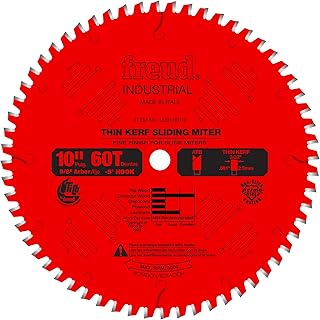
Freud LU91R010 10″ Thin Kerf Sliding Compound Blade
Purpose-built for sliding miter saws, this thin-kerf plate lets a mid-range motor glide through wide hardwood boards without bogging or leaving burn tracks. The tuned hook angle keeps the blade from grabbing at the start of a cut, which is exactly what you want when a mitered table apron has no margin for error.
WEN BL1080 10-Inch 80-Tooth Carbide-Tipped Blade
An easy recommendation for anyone assembling a first serious blade collection: 80 carbide teeth and a stable body deliver near-finish-ready edges on poplar, maple, and prefinished plywood. It rewards a patient feed rate, and at this tier the value is hard to argue with.
US1080-MTR 80T Miter Saw Blade
Made in the USA with tooth geometry optimized specifically for crosscuts and miters, this 1/8″ kerf blade holds a line beautifully on compound bevels in thicker stock. The heavier plate is the trade-off, so pair it with a saw that has power to spare.
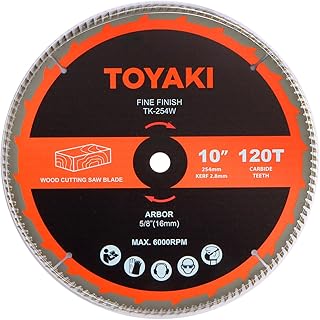
120-Tooth Fine-Finish Professional Blade
When veneer tear-out is the enemy, high tooth count wins. This 120-tooth blade leaves an almost sanded surface on birch ply and thin hardwood moldings, though it needs a slow, steady feed and frequent clearing to avoid heat buildup.
TCG Aluminum-Working 120-Tooth Blade
The triple chip grind makes this the specialist in the lineup, chewing cleanly through aluminum angle, T-track, and plastic laminate that would chip an ATB tooth. Furniture builders working with metal legs or extruded frames should keep one on the shelf.
Frequently Asked Questions
Does a higher tooth count always mean a better cut?
No. More teeth mean smaller gullets and less chip clearance, so pushing a 120-tooth blade through thick hardwood traps heat and can burn the cut. Match tooth count to material thickness instead of defaulting to the highest number.
Can I use a table saw blade in my miter saw?
Sometimes, but it is not ideal. Table saw blades often have an aggressive positive hook that causes a miter saw to self-feed and lurch downward. Choose a blade rated for miter or chop saw use whenever precision matters.
Is a multi-pack worth it over one premium blade?
If your projects swing between rough framing and fine casework, a set like the 32T/60T/80T 3-pack covers all three modes for less than one high-end blade. Dedicated single blades still outperform them on the finest finish work.
When should I replace or sharpen a blade?
Rising cut resistance, burn marks on familiar stock, and increased tear-out signal dull carbide. Quality blades can be resharpened several times; inexpensive thin-plate blades are usually cheaper to replace.
Final Thoughts
For most furniture and trim work, the Freud LU91R010 is the blade that quietly makes a sliding saw feel more accurate than it is, while the WEN BL1080 delivers the best balance of finish quality and price for a home shop. Add the US1080-MTR if you regularly cut thicker hardwood miters and want a resharpenable plate that stays dead square.