Key takeaways
- Tooth count drives the tradeoff: 24–40 teeth clear waste fast for ripping thick hardwood; 60–80 teeth leave a near-finished surface on crosscuts, plywood, and melamine. High tooth counts in deep rips generate heat and burn, so match the blade to the operation rather than chasing the biggest number.
- Kerf width and saw power: Thin-kerf blades around .098″ remove less material and let underpowered saws (1.75 HP and below) cut without bogging. Full-kerf blades run truer in a 3 HP cabinet saw and tolerate more abuse, but demand the torque to back them up.
- Grind geometry matters more than branding: ATB (alternate top bevel) gives clean crosscuts, flat-top (FTG) rips efficiently, and TCG (triple chip) survives laminates and composites. A combination blade blends ATB and raker teeth to handle both directions competently.
- Carbide grade and body construction: Micrograin carbide holds an edge through more linear feet and takes sharpening better. Look for laser-cut expansion slots, a tensioned plate, and anti-friction coating; these control runout and pitch buildup far more than tooth count does.
- Arbor and RPM confirmation: Nearly every 10-inch blade uses a 5/8″ arbor, but verify max RPM against your saw’s rating and check that the blade’s plate thickness clears your riving knife and splitter.
What's inside
The blade that shipped with your table saw was never meant to be the last one you own. It was meant to prove the machine turns. That gap becomes obvious the first time you rip a length of white oak for a floating shelf and pull out a board with scorch lines down the edge, or crosscut plywood for a cabinet carcass and watch the veneer splinter along the shoulder. No amount of sanding fully recovers a torn edge, and on furniture that lives in a finished room, the cut quality is the joinery, the reveal, and the finish all at once.
A 10-inch blade is the standard fitment for the vast majority of contractor and cabinet saws, which means the upgrade path is unusually well stocked and unusually confusing. This guide sorts the field by the work you’re actually doing: fast ripping in solid stock, glue-line crosscuts, splinter-free sheet goods, and the general-purpose middle ground where most weekend builds live. Below are the blades worth putting on the arbor in 2026, plus the specs that separate a genuine improvement from a repackaged stock blade.
As an Amazon Associate we earn from qualifying purchases.


How to Choose a 10in Table Saw Blade (2026)
- Tooth count drives the tradeoff: 24–40 teeth clear waste fast for ripping thick hardwood; 60–80 teeth leave a near-finished surface on crosscuts, plywood, and melamine. High tooth counts in deep rips generate heat and burn, so match the blade to the operation rather than chasing the biggest number.
- Kerf width and saw power: Thin-kerf blades around .098″ remove less material and let underpowered saws (1.75 HP and below) cut without bogging. Full-kerf blades run truer in a 3 HP cabinet saw and tolerate more abuse, but demand the torque to back them up.
- Grind geometry matters more than branding: ATB (alternate top bevel) gives clean crosscuts, flat-top (FTG) rips efficiently, and TCG (triple chip) survives laminates and composites. A combination blade blends ATB and raker teeth to handle both directions competently.
- Carbide grade and body construction: Micrograin carbide holds an edge through more linear feet and takes sharpening better. Look for laser-cut expansion slots, a tensioned plate, and anti-friction coating; these control runout and pitch buildup far more than tooth count does.
- Arbor and RPM confirmation: Nearly every 10-inch blade uses a 5/8″ arbor, but verify max RPM against your saw’s rating and check that the blade’s plate thickness clears your riving knife and splitter.
The Best 10in Table Saw Blade (2026)s Reviewed
Diablo D1050X Combination Blade, 50T
The most useful single blade for a one-saw shop: 50 ATB teeth with a thin .098″ kerf and 15° hook angle rip 4/4 hardwood without stalling, then crosscut cleanly enough for exposed furniture edges. The Perma-Shield coating genuinely reduces pitch buildup and drag, which keeps cuts consistent well into a long session.
DEWALT DWA11040, 40T Fine Finish
A dependable general-purpose blade with tough, well-seated carbide that shrugs off the occasional hidden brad or dense knot. At 40 teeth it leans slightly toward ripping and mixed construction work, making it the right default for face frames, shop furniture, and job-site stock.
WEN BL1080, 80T Ultra-Fine Finish
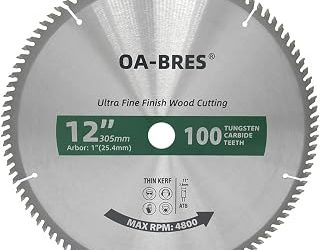
Eighty teeth and a stable plate deliver the glue-line crosscuts and chip-free plywood edges that finish work demands, and it moves between the miter saw and table saw without complaint. Keep it for shallow crosscuts and sheet goods only; asking it to rip thick hardwood invites heat and burn marks.
FOXBC 80-Tooth Ultra Finish Blade
A value-priced finishing blade that punches above its cost on veneered plywood, poplar, and pine trim, leaving edges that need little more than a light pass with a block plane. Carbide longevity trails the premium names, but as a dedicated crosscut blade in a hobby shop the economics are hard to argue with.
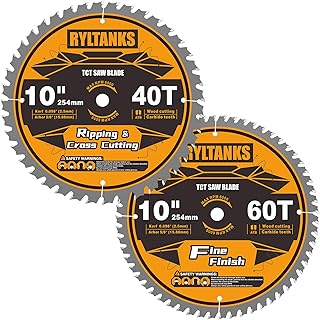
32T / 60T / 80T Blade 3-Pack
The most efficient way to build a complete blade rotation from zero: framing, fine finish, and ultra-fine finish in one purchase, so you stop compromising with a single all-rounder. Individually these are mid-tier blades, but having the correct geometry on the arbor beats a better blade doing the wrong job.
Frequently Asked Questions
How many teeth do I need for cutting plywood?
Sixty teeth is the practical minimum for clean veneer, and 80 teeth is better if the edge will be visible. Pair a high-tooth blade with a zero-clearance insert and scoring pass for genuinely tear-out-free results.
Is a thin-kerf blade worth it?
On any saw under 2 HP, yes. Thin kerf reduces the load on the motor and wastes less expensive hardwood, though it flexes more, so use a stabilizer or slow your feed on deep cuts.
Should I sharpen or replace a dull blade?
Premium blades with thick carbide are worth professional sharpening two or three times, typically at a fraction of replacement cost. Budget blades with thin carbide are usually cheaper to replace outright.
Can I use a table saw blade on my miter saw?
Often yes, provided the diameter, arbor, and max RPM match, but check the hook angle. Positive hook angles designed for table saws can grab aggressively on a sliding miter saw, so favor low or negative hook blades there.
Final Thoughts
If you buy one blade, make it the Diablo D1050X: it’s the rare combination blade that rips and crosscuts well enough to leave mounted for weeks at a time. Add the WEN BL1080 for cabinet doors, drawer fronts, and any cut that meets a finish, and keep the DEWALT DWA11040 on hand for reclaimed or questionable stock where you’d rather not risk your best edge.