Key takeaways
- Tooth count: Blades with 80 to 100 teeth generally produce cleaner crosscuts in trim, plywood, and furniture parts, while 40-tooth designs cut faster and handle broader tasks.
- Tooth geometry: ATB teeth are a strong all-around choice for clean wood cuts; specialized grinds can improve finish quality but may be less versatile.
- Kerf: A thin-kerf blade removes less material, which can make cuts feel quicker and reduce waste, provided it suits your saw and remains stable during use.
- Arbor fit: Confirm that the blade’s arbor size matches your miter saw. A 1-inch arbor is common on many 12-inch models, but compatibility should never be assumed.
- Project match: Pick a fine-finish blade for visible furniture components and a general-purpose or combination blade when you need both speed and flexibility.
What's inside
Choosing a 12-inch miter saw blade can feel less like shopping and more like decoding a wall of nearly identical specifications. Tooth count, kerf, carbide quality, and the difference between a crosscut blade and a general-purpose blade all affect whether your furniture parts emerge silky-smooth or marked by splintering and tear-out.
This guide focuses on the blades that make the most sense for modern home projects, from trim and built-ins to hardwood shelving and dimensional lumber. We look at finish quality, versatility, cutting style, and value so you can match the blade to the work—not simply choose the highest tooth count.
As an Amazon Associate we earn from qualifying purchases.



How to Choose a 12 Blade For Miter Saw (2026)
- Tooth count: Blades with 80 to 100 teeth generally produce cleaner crosscuts in trim, plywood, and furniture parts, while 40-tooth designs cut faster and handle broader tasks.
- Tooth geometry: ATB teeth are a strong all-around choice for clean wood cuts; specialized grinds can improve finish quality but may be less versatile.
- Kerf: A thin-kerf blade removes less material, which can make cuts feel quicker and reduce waste, provided it suits your saw and remains stable during use.
- Arbor fit: Confirm that the blade’s arbor size matches your miter saw. A 1-inch arbor is common on many 12-inch models, but compatibility should never be assumed.
- Project match: Pick a fine-finish blade for visible furniture components and a general-purpose or combination blade when you need both speed and flexibility.
The Best 12 Blade For Miter Saw (2026)s Reviewed
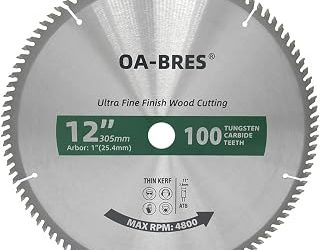
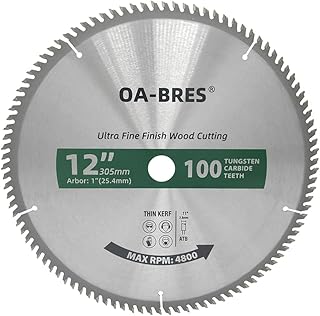
12-Inch 100-Tooth ATB TCT Ultra Fine Finish Blade
This 100-tooth ATB TCT blade is aimed squarely at detail-conscious work, offering the dense tooth pattern needed for clean trim, molding, plywood, and furniture panels. Its 1-inch arbor makes it a practical choice for compatible 12-inch miter and table saws, though its fine finish focus means it is better suited to controlled crosscuts than fast stock removal.
FOXBC 12-Inch 100-Tooth Ultimate Finish Blade
The FOXBC 100-tooth blade is a strong option when the cut edge will remain visible or receive a clear finish. It favors polished crosscuts over speed, making it especially appealing for cabinet components, hardwood edging, and carefully assembled home furnishings.
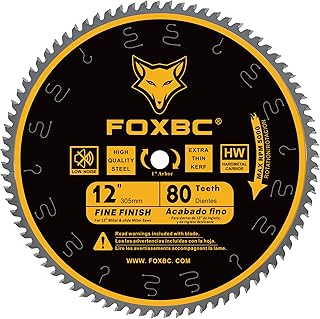
FOXBC 12-Inch 80-Tooth Fine Finish Blade
With 80 teeth, this FOXBC model occupies a useful middle ground between ultra-fine finishing and everyday productivity. It should suit makers who regularly switch between trim, shelving, and furniture parts and want a clean edge without moving all the way to a slower 100-tooth blade.
DEWALT 12-Inch 100-Tooth Fine Finish Blade
The DEWALT DWA112100 pairs a high tooth count with ultra-sharp carbide for precise, presentation-ready wood cuts. It is a sensible pick for visible joinery and finish carpentry, particularly when consistent results and a familiar professional brand matter as much as raw versatility.
ANGELSWORD 12-Inch 40T and 60T Two-Pack
This ANGELSWORD two-pack is built around flexibility: the 40-tooth blade is suited to faster ripping and general cutting, while the 60-tooth option leans toward cleaner finishing. It is a practical setup for a home workshop that handles both rough sizing and more polished crosscuts without requiring one blade to do everything.
Frequently Asked Questions
Is a 100-tooth blade best for every miter saw project?
No. A 100-tooth blade can deliver an exceptionally clean edge, but it usually cuts more slowly and is not the ideal choice for ripping large amounts of stock. For mixed work, an 80-tooth or combination blade may be more efficient.
Can a miter saw blade be used on a table saw?
Some blades are labeled for both miter and table saw use, but always follow the manufacturer’s specifications. Confirm the blade’s arbor, kerf, tooth design, and recommended application before changing tools.
When should I choose a 40-tooth blade?
A 40-tooth blade is useful when speed, general-purpose cutting, or occasional ripping matters more than a flawless finish. It can be a smart workshop companion for construction lumber and hidden cuts.
How often should a miter saw blade be replaced?
Replace or sharpen a blade when cuts become noticeably rough, burning appears, feed pressure increases, or the blade begins wandering. Cleaning pitch and resin first can restore performance, but damaged or heavily worn carbide requires professional attention or replacement.
Final Thoughts
For the cleanest furniture-grade crosscuts, the DEWALT DWA112100 and the FOXBC 100-tooth blade are compelling choices. If you want a more adaptable setup, the FOXBC 80-tooth blade or ANGELSWORD two-pack offers a better balance between finish quality, speed, and everyday workshop flexibility.