Key takeaways
- Tooth count: For finish work on a 12-inch blade, 80 teeth is the practical floor and 100 teeth is the sweet spot. More teeth mean smaller bites per tooth and a cleaner exit, though you’ll need to feed slower to avoid burning. Anything under 60 teeth belongs in the framing pile.
- Grind geometry: Look for ATB (alternate top bevel) on crosscuts. The angled tips act like knives, severing wood fibers at the surface rather than pushing through them, which is exactly what keeps veneer and painted trim from splintering.
- Arbor and kerf: Confirm a 1-inch arbor for most 12-inch miter saws, and check kerf width if you care about material yield. Thin-kerf blades remove less stock and load the motor less, but a thicker plate resists deflection on wide bevel cuts.
- Carbide quality: The tip material determines how many linear feet you get before the edge dulls. Micro-grain carbide holds a keener edge in hardwood and MDF, and a blade that can be professionally sharpened twice is cheaper over its life than two disposable ones.
- Plate and dampening: Laser-cut expansion slots and anti-vibration features aren’t marketing. They keep the plate flat as it heats, which translates directly into square cuts and quieter operation on long miters.
What's inside
There’s a specific kind of disappointment that hits when you pull a freshly cut board off the miter saw and find the edge fuzzed with torn fibers, or worse, a whisper of tear-out along the veneer face of a plywood panel you’d been saving. Nine times out of ten the saw isn’t at fault. The blade is. Most miter saws ship with a general-purpose blade built for framing speed, not for the glass-smooth shoulders a mitered picture frame or a waterfall-edge console demands. If your joints are showing hairline gaps and your trim needs sanding before it needs glue, you’re asking a rough-cut tool to do finish work.
This guide focuses on 12-inch blades engineered specifically for fine cutting: high tooth counts, tight kerfs, and carbide geometry that slices hardwood, melamine, and prefinished stock instead of chewing through it. We’ve weighed tooth configuration, plate stability, arbor compatibility, and long-term value across a range of budgets, from two-pack workhorses for a busy shop to single premium blades reserved for the final pass on visible surfaces. Whether you’re building casegoods, installing crown, or trimming out a built-in, there’s a blade below that will change what comes off your saw.
As an Amazon Associate we earn from qualifying purchases.



How to Choose a 12 Miter Saw Blade For Fine Cuts (2026)
- Tooth count: For finish work on a 12-inch blade, 80 teeth is the practical floor and 100 teeth is the sweet spot. More teeth mean smaller bites per tooth and a cleaner exit, though you’ll need to feed slower to avoid burning. Anything under 60 teeth belongs in the framing pile.
- Grind geometry: Look for ATB (alternate top bevel) on crosscuts. The angled tips act like knives, severing wood fibers at the surface rather than pushing through them, which is exactly what keeps veneer and painted trim from splintering.
- Arbor and kerf: Confirm a 1-inch arbor for most 12-inch miter saws, and check kerf width if you care about material yield. Thin-kerf blades remove less stock and load the motor less, but a thicker plate resists deflection on wide bevel cuts.
- Carbide quality: The tip material determines how many linear feet you get before the edge dulls. Micro-grain carbide holds a keener edge in hardwood and MDF, and a blade that can be professionally sharpened twice is cheaper over its life than two disposable ones.
- Plate and dampening: Laser-cut expansion slots and anti-vibration features aren’t marketing. They keep the plate flat as it heats, which translates directly into square cuts and quieter operation on long miters.
The Best 12 Miter Saw Blade For Fine Cuts (2026)s Reviewed
ANGELSWORD 12-Inch 100T Ultra Fine Finish, 2 Pack
Two 100-tooth blades at a price most brands charge for one makes this the obvious pick for anyone cutting a lot of trim and hating the moment a good blade goes dull mid-project. Cut quality on poplar, oak, and prefinished MDF is genuinely furniture-grade, and having a spare on the shelf means you never talk yourself into finishing a job with a tired edge.
DEWALT DWA112100 12-Inch 100 Tooth Fine Finish
This is the blade to reach for when the cut will be seen and stained. DEWALT’s tooth grind and plate tensioning deliver consistently square, burnish-free shoulders on hardwood, and the carbide holds up long enough to justify the premium over budget alternatives.
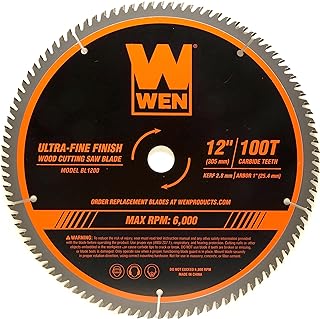
WEN BL1200 12-Inch 100-Tooth Carbide-Tipped
WEN’s ultra-fine option punches above its price with a stable plate and clean ATB grind that handles melamine and plywood without chipping the face. It’s a smart middle path for hobbyists who want finish-level results without committing to a professional-tier spend.
WEN BL1280 12-Inch 80-Tooth Fine Finish
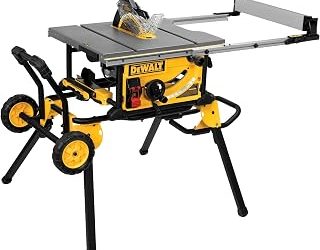
Eighty teeth is the versatile choice, still clean enough for visible joinery but faster feeding and less prone to burning in dense hardwood than a 100-tooth blade. It also crosses over to a table saw nicely, which makes it a sensible single-blade solution for a compact shop.
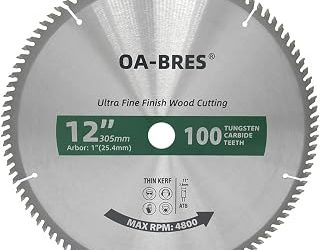
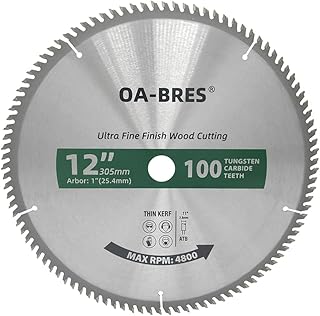
12-Inch 100-Tooth ATB TCT with 1-Inch Arbor
A straightforward, well-executed 100-tooth ATB blade that fits both miter and table saws on a standard 1-inch arbor. The finish it leaves on softwood trim and cabinet-grade ply is smooth enough to go straight to finish with minimal sanding.
Frequently Asked Questions
Does a higher tooth count always mean a better cut?
For crosscuts in finish material, generally yes. But high tooth counts clear less sawdust per rotation, so pushing them too fast builds heat and leaves burn marks. Slow your feed and let the blade work.
Can I use these blades on a table saw?
Many 12-inch fine-finish blades are rated for both, provided the arbor matches and your saw accepts the diameter. Check the manufacturer’s rating rather than assuming, and never exceed the blade’s stated maximum RPM.
How often should I replace or sharpen a fine-cut blade?
Judge by results, not calendar. When you see fuzzy edges, increased feed resistance, or scorching on clean stock, the carbide is done. Quality blades are worth sending out for sharpening; economy blades usually aren’t.
Do I really need a dedicated finish blade?
If you build furniture or install trim, yes. Keep a 40-tooth blade for rough stock breakdown and swap to a 100-tooth for final cuts. A combination two-pack like the ANGELSWORD 40T/60T set covers both roles if you’d rather not buy separately.
Final Thoughts
For most builders, the ANGELSWORD 100T two-pack delivers the best value in fine cutting, giving you a spare blade and finish-quality results for less than a single premium option. If you want proven consistency on visible hardwood joinery, the DEWALT DWA112100 remains the reference standard, while the WEN BL1200 sits comfortably in between for shops that want clean cuts without overspending.