Key takeaways
- CFM at 90 PSI: This single number matters more than horsepower or tank size. Match it to your thirstiest tool, then add roughly 30 percent of headroom. Brad nailers ask for under 1 CFM; sanders and spray guns can demand 6 to 10.
- Power source: Electric models run clean and quiet enough for an attached garage. Gas engines deliver far more output and go anywhere, but they cannot be run indoors under any circumstances.
- Orientation: Vertical tanks claim about four square feet of floor and suit tight, finished spaces. Horizontal tanks roll like a wheelbarrow and stay stable on uneven ground, which is why job-site units favor them.
- Oil-lubricated versus oil-free: Oil-lubed pumps run cooler, quieter, and last considerably longer, at the cost of periodic oil changes. Oil-free is lower maintenance but louder and shorter-lived.
- Voltage and circuit reality: Confirm what your outlet can supply before you buy. A 230V unit needs a dedicated line, and 120V models on a shared 15-amp circuit will trip breakers under sustained load.
What's inside
The garage has quietly become the most functional room in the house. It is where cabinet doors get sprayed, where reclaimed oak gets nailed into a headboard, where bike tires and air mattresses and patio cushions all get topped off before guests arrive. A 30-gallon compressor sits right at the hinge point of that shift: large enough to keep a nailer or an HVLP gun running without stuttering, small enough that it still rolls into a corner behind the shelving unit. Most buyers get stuck here, caught between undersized pancake units that cycle constantly and 60-gallon stationary towers that demand a dedicated circuit and a permanent footprint.
This guide sorts the 30-gallon field by how you actually intend to use it. We look at electric verticals for finish work and indoor projects, gas-driven horizontals for job sites and outbuildings with no reliable power, and the CFM thresholds that separate a compressor that keeps up from one that leaves you waiting. Below you will find the current picks, followed by a short buying framework and answers to the questions that come up most.
As an Amazon Associate we earn from qualifying purchases.


How to Choose a 30-Gallon Air Compressor (2026)
- CFM at 90 PSI: This single number matters more than horsepower or tank size. Match it to your thirstiest tool, then add roughly 30 percent of headroom. Brad nailers ask for under 1 CFM; sanders and spray guns can demand 6 to 10.
- Power source: Electric models run clean and quiet enough for an attached garage. Gas engines deliver far more output and go anywhere, but they cannot be run indoors under any circumstances.
- Orientation: Vertical tanks claim about four square feet of floor and suit tight, finished spaces. Horizontal tanks roll like a wheelbarrow and stay stable on uneven ground, which is why job-site units favor them.
- Oil-lubricated versus oil-free: Oil-lubed pumps run cooler, quieter, and last considerably longer, at the cost of periodic oil changes. Oil-free is lower maintenance but louder and shorter-lived.
- Voltage and circuit reality: Confirm what your outlet can supply before you buy. A 230V unit needs a dedicated line, and 120V models on a shared 15-amp circuit will trip breakers under sustained load.
The Best 30-Gallon Air Compressors Reviewed (2026)
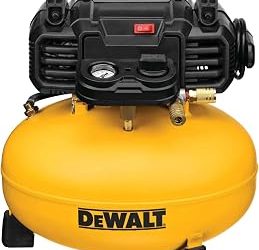
DEWALT 30 Gallon Portable, 175 PSI
The most sensible default for a home workshop: an oil-lubricated pump in a vertical footprint, with 175 max PSI giving you meaningfully longer runtime between cycles than the 125 PSI crowd. It handles framing nailers, impact wrenches, and inflation duty without complaint, and DEWALT’s parts availability means it stays serviceable for years.
Campbell Hausfeld VT6104 30-Gallon Horizontal
A two-cylinder single-stage pump pushing 10.2 CFM at 90 PSI puts this in genuine semi-pro territory, enough to keep a DA sander or spray gun fed continuously. The catch is the 230V requirement, so treat it as a permanent shop fixture rather than something you move around.
VEVOR 30 Gallon 2HP Electric
At 5.3 SCFM and standard 120V power, this is the accessible entry point for anyone who mostly does tire inflation, trim nailing, and occasional light paint work. It will not sustain a sander, but for intermittent tasks in a garage without special wiring it is a practical, well-priced choice.
Albott 13HP Gas, 30 Gallon Horizontal
A 420cc Loncin engine, three-cylinder cast iron pump, and 180 PSI ceiling make this a serious outdoor workhorse for detached shops, fencing, and remote projects. The cast iron pump is the detail worth noting here, since it signals a unit built for repeated heavy cycles rather than weekend use.
VEVOR 15HP Gas Powered, 30 Gallon
With 33 CFM at 115 PSI, this is the highest-output pick in the group and the only one that will comfortably run multiple air tools at once. It is overkill for residential garages, but for construction crews or anyone running jackhammers and large sanders off a portable rig, the capacity earns its keep.
Frequently Asked Questions
Is 30 gallons enough for spray painting furniture?
Yes, provided the CFM rating clears your gun’s requirement. HVLP guns typically need 6 to 12 CFM at 90 PSI, so a higher-output model like the Campbell Hausfeld is a safer match than an entry-level 5.3 SCFM unit.
Can I add a second tank instead of upgrading?
You can. Pairing an ASME-coded 30-gallon receiver tank rated to 200 PSI with your existing pump extends stored air and reduces cycling, which is a cost-effective fix when your pump has adequate CFM but the tank empties too fast.
How loud are these in an attached garage?
Expect roughly 75 to 90 decibels from electric oil-lubricated models, comparable to a shop vac. Rubber anti-vibration pads and a bit of distance from shared walls make a noticeable difference.
What maintenance do they actually need?
Drain the tank of condensation after every session to prevent internal rust, check pump oil monthly, and clean or replace the intake filter a couple of times a year. That routine is the difference between five years of service and fifteen.
Final Thoughts
For most homes, the DEWALT 30 Gallon strikes the right balance of runtime, footprint, and standard-outlet convenience. Step up to the Campbell Hausfeld VT6104 if you have 230V service and plan to run sanders or spray equipment for extended stretches, and choose the Albott 13HP gas unit when your projects happen well beyond the reach of an extension cord.