Key takeaways
- Duty rating: Type IA handles 300 pounds and Type IAA handles 375, and that figure includes your body, tools, and whatever you’re carrying up. If you’re hauling a 40-pound light fixture or a gallon of paint, size up rather than sit at the ceiling of the rating.
- Fiberglass vs. aluminum: Fiberglass doesn’t conduct electricity, which makes it the correct choice for anything near a junction box, fixture, or panel. Aluminum wins on weight if your work is strictly furniture assembly, shelving, and storage.
- Step design: Deep, ribbed steps let you stand comfortably for twenty minutes of trim painting. A platform top does the same thing better, giving you a stable footing plus a shelf for a caulk gun or driver.
- Weight and storage: A ladder you can carry one-handed up a staircase gets used. Anything above 30 pounds tends to live wherever it was last set down, so check the folded profile against your closet or utility-room clearance.
- Foot and rail construction: Look for wide slip-resistant boots and internal bracing at the rail joints. On hardwood or tile, non-marring feet are the difference between a clean job and a repair.
What's inside
A six-foot ladder occupies an awkward middle ground in most homes. It’s the height you actually need for crown molding, pendant fixtures, gallery-wall hanging, and the top shelf of a pantry — yet it’s also the size most people buy badly, grabbing whatever’s stacked nearest the hardware-store exit. The result is a ladder that flexes underfoot on the fourth step, refuses to stand level on a plank floor, or weighs enough that you leave it in the garage and drag over a dining chair instead.
This guide looks at six-foot ladders the way we’d assess any piece of functional furniture: how it behaves in a finished room, how it stores, what it does to your walls and floors, and whether the build quality justifies keeping it for fifteen years. Below you’ll find our current picks across fiberglass, aluminum, and platform-top designs, followed by a short framework for matching duty rating and step style to the work you actually do.
As an Amazon Associate we earn from qualifying purchases.


How to Choose a 6-Foot Ladder (2026)
- Duty rating: Type IA handles 300 pounds and Type IAA handles 375, and that figure includes your body, tools, and whatever you’re carrying up. If you’re hauling a 40-pound light fixture or a gallon of paint, size up rather than sit at the ceiling of the rating.
- Fiberglass vs. aluminum: Fiberglass doesn’t conduct electricity, which makes it the correct choice for anything near a junction box, fixture, or panel. Aluminum wins on weight if your work is strictly furniture assembly, shelving, and storage.
- Step design: Deep, ribbed steps let you stand comfortably for twenty minutes of trim painting. A platform top does the same thing better, giving you a stable footing plus a shelf for a caulk gun or driver.
- Weight and storage: A ladder you can carry one-handed up a staircase gets used. Anything above 30 pounds tends to live wherever it was last set down, so check the folded profile against your closet or utility-room clearance.
- Foot and rail construction: Look for wide slip-resistant boots and internal bracing at the rail joints. On hardwood or tile, non-marring feet are the difference between a clean job and a repair.
The Best 6-Foot Ladder (2026)s Reviewed
Louisville FS1406HD Fiberglass Step Ladder
The 375-pound Type IAA rating and heavily braced rails make this the ladder to buy if you’re routinely working with tools and materials in hand. It’s the most confident-feeling six-footer here, with almost no lateral sway at full standing height.
Little Giant Flip-N-Lite 6-ft Aluminum Stepladder
Genuinely light enough to move between rooms without planning ahead, with unusually wide anti-slip steps and a small top platform that keeps your stance square. Skip it for electrical work, but for hanging art, curtain rods, and shelving it’s the one that stays out of the garage.
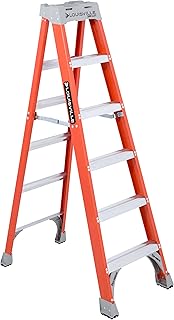
Louisville FS1506 Fiberglass Step Ladder
The sensible default: Type IA fiberglass at a fair price, with the rail rigidity Louisville is known for. Ideal for a household that wants one safe, non-conductive ladder for everything from smoke detectors to seasonal storage.
6-Foot Fiberglass Platform Step Ladder, 500-Pound Capacity
The generous platform turns extended overhead work into something you can actually sustain, and the 500-pound capacity leaves real margin for heavy fixtures. Heavier to move than the others, so plan on a dedicated storage spot.
Louisville FM1406HD Twin Front Step Ladder
Twin-front construction means both sides are climbable, which is invaluable for two-person installs and for setting up in the middle of a room where a leaning face has nowhere to go. Also the most stable choice on uneven surfaces like patio pavers.
Frequently Asked Questions
How high can I actually reach on a six-foot ladder?
Most people reach roughly 10 feet comfortably, which covers standard eight- and nine-foot ceilings. Never stand on the top cap of a conventional step ladder to extend that.
Is fiberglass worth the extra weight?
Yes, if you’ll ever be near wiring. Fiberglass rails don’t conduct, and the added stiffness also reduces flex on the upper steps.
Will a ladder mark my hardwood floors?
Quality ladders ship with rubber or composite boots that won’t scuff, but grit trapped underneath will. Wipe the feet before bringing any ladder indoors.
Do I need a platform ladder?
Only if you stand in one place for long stretches — painting, drywall finishing, cabinet installs. For quick tasks, a standard step ladder is lighter and easier to store.
Final Thoughts
For most homes, the Louisville FS1406HD is the ladder to own: non-conductive, heavily rated, and built to outlast several renovations. Choose the Little Giant Flip-N-Lite if portability decides whether a ladder gets used at all, or the FM1406HD twin front if you frequently work mid-room or alongside a second person.