Key takeaways
- Crosscut capacity at 90°: This is the number that decides whether the saw works for you. A compact 7-1/4 slider typically handles a nominal 2×8 flat, sometimes a 2×10. If your project list includes stair treads, wide shelving, or 12-inch-deep case sides, size up rather than fight the limit.
- Single vs. dual bevel: Most saws in this class bevel left only. That’s fine — you flip the workpiece. Dual bevel saves time on crown and large baseboard runs, but on a compact saw it’s rarely worth the price jump unless you trim houses for a living.
- Rail design and wall clearance: Traditional rear rails need six to ten inches behind the saw. Compact or forward-rail systems let the machine sit nearly flush to a wall, which matters enormously on a crowded bench or a small garage shelf.
- Cutline visibility: LED shadow lines cast the blade’s actual silhouette onto the work, so accuracy doesn’t depend on laser calibration. Projected lasers work too, but they drift and need occasional adjustment. Either beats squinting.
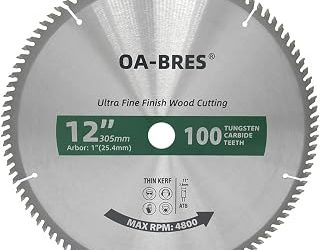
- Blade availability and cost: 7-1/4 blades are the cheapest common size, since they share the circular-saw arbor market. Budget for a 40- to 60-tooth finish blade immediately — the included blade is a framing blade in nearly every case, and swapping it transforms cut quality.
What's inside
Shopping for a 7-1/4-inch sliding miter saw sounds like it should be simple, and then you start reading listings. Half the results are 10- and 12-inch machines. The other half are cordless platforms that assume you already own the batteries. Meanwhile the corded compact category — the one that actually makes sense for a spare bedroom, a garage bench, or a hallway you’re trimming out over a weekend — sits quietly in the middle, under-marketed and genuinely useful. These saws crosscut a 2×8, miter baseboard cleanly, weigh little enough to carry one-handed, and never make you think about charge state.
This guide sorts the category honestly. Below you’ll find the corded 7-1/4 sliders worth your bench space, plus two adjacent options — a full-size 12-inch corded saw and a cordless 7-1/4 — included because buyers in this bracket almost always end up comparing against them. You’ll get a short buying framework, straight reviews with the tradeoffs named, and answers to the questions that come up once the saw is out of the box.
As an Amazon Associate we earn from qualifying purchases.



How to Choose a 7-1/4 Sliding Miter Saw Corded (2026)
- Crosscut capacity at 90°: This is the number that decides whether the saw works for you. A compact 7-1/4 slider typically handles a nominal 2×8 flat, sometimes a 2×10. If your project list includes stair treads, wide shelving, or 12-inch-deep case sides, size up rather than fight the limit.
- Single vs. dual bevel: Most saws in this class bevel left only. That’s fine — you flip the workpiece. Dual bevel saves time on crown and large baseboard runs, but on a compact saw it’s rarely worth the price jump unless you trim houses for a living.
- Rail design and wall clearance: Traditional rear rails need six to ten inches behind the saw. Compact or forward-rail systems let the machine sit nearly flush to a wall, which matters enormously on a crowded bench or a small garage shelf.
- Cutline visibility: LED shadow lines cast the blade’s actual silhouette onto the work, so accuracy doesn’t depend on laser calibration. Projected lasers work too, but they drift and need occasional adjustment. Either beats squinting.
- Blade availability and cost: 7-1/4 blades are the cheapest common size, since they share the circular-saw arbor market. Budget for a 40- to 60-tooth finish blade immediately — the included blade is a framing blade in nearly every case, and swapping it transforms cut quality.
The Best 7-1/4 Sliding Miter Saw Corded (2026)s Reviewed
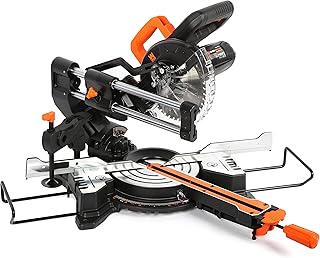
SKIL 10 Amp 7-1/4″ Single Bevel Miter Saw (MS6306-00)
The compact rail system is the headline here: the saw sits close to a wall without losing slide travel, which is a real gain in a tight shop. Pair that with the LED shadow line — no calibration, just a crisp blade silhouette on your mark — and it’s the most thoughtfully designed option in the class. Note the stand sells separately.
WEN MM0713 9.5-Amp 7.25-Inch Compact Sliding Compound Miter Saw
The value pick, and not in a compromised way. The 9.5-amp motor and LED cutline guide cover the essentials for trim, shelving, and light framing, and the compact footprint makes it easy to store vertically between projects. Swap the stock blade for a finish blade and the cut quality jumps a full tier.
TSS702 for RYOBI 10 Amp Corded 7-1/4 in. Compound Sliding Miter Saw
A straightforward 10-amp corded slider that hits the practical middle of the category — enough power for repeated 2x material, light enough to move between a bench and a sawhorse setup. Sensible for anyone already invested in the RYOBI ecosystem who wants corded consistency.
DEWALT 12-Inch Miter Saw, 15-Amp, Single Bevel (DWS715)
Included as the deliberate step up. It’s a 12-inch non-slider, so it trades slide travel for sheer blade diameter and a 15-amp motor, and it cuts wider stock than any 7-1/4 in this list. Heavier and hungrier for bench space — worth it if capacity is your constraint rather than footprint.
DEWALT 20V MAX 7-1/4-Inch Miter Saw (DCS361B)
Same blade size, no cord. Genuinely liberating for deck work, punch lists, and anywhere an extension cord is a nuisance, with the usual caveat: it’s a bare tool, so factor in battery and charger. If you’re already on the 20V MAX platform, this is the obvious cross-shop.
Frequently Asked Questions
Can a 7-1/4 sliding miter saw cut a 2×6 or 2×8?
Yes on 2×6 comfortably, and most models handle a nominal 2×8 flat at 90°. Capacity narrows as you introduce miter or bevel angles, so check the manufacturer’s chart for the specific cuts your project needs rather than the headline number.
Is corded still worth it in 2026?
For a saw that lives on a bench, absolutely. Corded gives you consistent power at the end of a long cut list, no batteries to manage, and a lower entry price since you’re not buying into a platform.
Do I need the matching stand?
Not immediately, but support matters more than the stand brand. Any stable surface with infeed and outfeed support at blade height will produce square cuts. A dedicated stand mainly buys portability and setup speed.
What blade should I buy for trim work?
A 7-1/4 blade with 40 to 60 teeth and a thin kerf. The 24-tooth blade in the box is built for framing speed and will leave tearout on painted MDF and hardwood moldings.
Final Thoughts
For most home shops, the SKIL MS6306-00 is the pick — the compact rail system and LED shadow line solve the two problems that actually cause frustration in a small space. The WEN MM0713 is the smarter buy on a tighter budget and gives up very little that a good finish blade won’t recover. If your project list keeps outgrowing 7-1/4 capacity, skip sideways to the DEWALT DWS715 and accept the extra bench space as the cost of never being limited by width again.