Key takeaways
- Fit before features: Confirm your saw’s table depth, front and rear rail mounting hole pattern, and trunnion clearance. Delta T3 rails are engineered around specific series saws, while clamp-on extenders like the BOW XTENDER ride your existing fence body and are far more forgiving about compatibility.
- Deflection under load: Push hard on the outfeed end of the fence face. Anything you can visibly move by hand will move under a sheet of maple. Extruded aluminum with internal webbing, or steel tube rails, is what keeps the face honest across its full travel.
- Lock repeatability: A good cam or over-center lock clamps the front rail without cocking the fence body. Set 12 inches, cut, move away, come back — if you land on the same number and the same kerf, the system is worth keeping.
- T-slots and accessory life: Slots on the fence face and top let you mount featherboards, stop blocks, and sacrificial subfences without drilling. Count them. Eight slots on the O’SKOOL system means you rarely have to choose between hold-down pressure and a flip stop.
- Rip capacity you’ll actually use: A 52-inch fence lets you break down full sheets solo, but it needs the floor space and an extension table to support the cut. For furniture work in a two-car garage, 30 to 46 inches is usually the smarter footprint.
What's inside
The furniture that reads as effortless — a waterfall-edged console, a run of drawer fronts with hairline gaps — is almost always the product of one unglamorous variable: whether the rip fence stayed parallel to the blade. A fence that drifts a few thousandths over 30 inches turns a panel into a wedge, and that wedge shows up later as a case that racks, a miter that gaps, or a top that never quite sits flat. Most stock fences on contractor and jobsite saws flex under hand pressure, lose their setting when the lever drops, and carry a cursor that stopped telling the truth a year ago.
An aftermarket fence is the highest-leverage upgrade in a small shop, cheaper than a new saw and often more transformative. Below are the systems worth your money in 2026, spanning full rail-and-tube replacements for cabinet and contractor saws, extension kits that bolt onto what you already own, and portable options for jobsite platforms. We look at rigidity, repeatability, capacity, and how gracefully each one handles thin rips and edge jointing.
As an Amazon Associate we earn from qualifying purchases.


How to Choose an Aftermarket Table Saw Fence System (2026)
- Fit before features: Confirm your saw’s table depth, front and rear rail mounting hole pattern, and trunnion clearance. Delta T3 rails are engineered around specific series saws, while clamp-on extenders like the BOW XTENDER ride your existing fence body and are far more forgiving about compatibility.
- Deflection under load: Push hard on the outfeed end of the fence face. Anything you can visibly move by hand will move under a sheet of maple. Extruded aluminum with internal webbing, or steel tube rails, is what keeps the face honest across its full travel.
- Lock repeatability: A good cam or over-center lock clamps the front rail without cocking the fence body. Set 12 inches, cut, move away, come back — if you land on the same number and the same kerf, the system is worth keeping.
- T-slots and accessory life: Slots on the fence face and top let you mount featherboards, stop blocks, and sacrificial subfences without drilling. Count them. Eight slots on the O’SKOOL system means you rarely have to choose between hold-down pressure and a flip stop.
- Rip capacity you’ll actually use: A 52-inch fence lets you break down full sheets solo, but it needs the floor space and an extension table to support the cut. For furniture work in a two-car garage, 30 to 46 inches is usually the smarter footprint.
The Best Aftermarket Table Saw Fence Systems for 2026, Reviewed
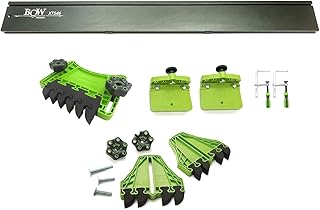
BOW Products Ultimate Table Saw XTENDER & Safety Kit
This is the most complete package here: a 46-inch XT XTENDER fence that clamps over your existing fence, plus XT1 support feeds, T-track clamps, and both FeatherPRO and FencePRO featherboards. It effectively converts a mediocre stock fence into a tall, T-slotted work surface with real hold-down capability, and you can strip it back off in seconds.
Delta 36-T30T3 T3 Fence System, 30 in.
The T3 is the reference point for cast-iron contractor and hybrid saws — steel rails, a low-effort cam lock, and a magnified cursor that holds calibration through a season of hard use. Thirty inches of rip is the sweet spot for casework and solid-wood furniture without surrendering half your shop to rail overhang.
O’SKOOL 46-Inch Table Saw Rip Fence System
The standout feature is genuine versatility: high, low, and L-fence modes let you set up for thin ripping and edge jointing without building shop-made jigs. With eight T-slots and included featherboards, it’s the best choice for anyone who mills their own stock and wants one fence to cover narrow rips, tall panels, and jointing passes.
Peachtree Uni Style Table Saw Fence with Sacrificial Face
A traditional Unifence-style extruded body that slides fore and aft and flips from tall to low — invaluable when you want the fence to stop short of the blade for solid-wood rips. The sacrificial face is the practical touch, letting you cut dadoes and rabbets right up against it without ruining the fence itself.
BOW Products Ultimate Jobsite Saw XTENDER & Safety Kit
Same 46-inch XT XTENDER concept, packaged with the FP5 portable saw featherboard for the shallower tables and thinner fences found on jobsite saws. If you’re building furniture on a compact saw, this closes most of the accuracy gap without a new machine.
Frequently Asked Questions
Will an aftermarket fence fit my saw?
Rail-based systems like the Delta T3 are matched to specific saw series, so check the model listing carefully. Clamp-on extenders are broadly universal because they attach to your existing fence body rather than the table.
How do I align a new fence to the blade?
Set the fence against a known-flat reference, then measure from the same tooth at the front and rear of the blade after rotating it forward. Adjust the fence body’s set screws until both readings match, then calibrate the cursor last.
Do I need 52 inches of rip capacity?
Only if you regularly break down full sheet goods alone. The Delta 52-inch T3 for 5000 Series saws is excellent for plywood-heavy work, but it demands infeed and outfeed room most home shops don’t have.
Are featherboards really necessary?
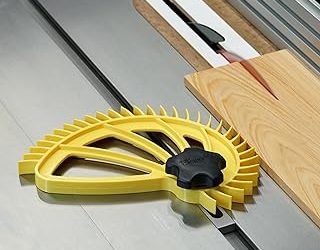
They improve both safety and cut quality by holding stock tight to the fence and table, which reduces burning and drift. Kits that bundle them, like the BOW packages, save you buying them piecemeal later.
Final Thoughts
For cast-iron saws, the Delta T3 remains the most trustworthy long-term investment; for maximum versatility across thin rips and edge jointing, the O’SKOOL 46-inch system does the most work for the money; and if you’d rather upgrade what you already own, the BOW Ultimate XTENDER kit is the fastest route to furniture-grade accuracy.