Key takeaways
- SCFM at 90 PSI: This single number decides what you can run. Brad nailers and staplers sip air; HVLP spray guns and DA sanders drink it. Look for 10 SCFM minimum if finishing is part of your workflow, and add roughly 30 percent headroom over your thirstiest tool.
- Oil-lubricated vs. oil-free: Oiled pumps run cooler, quieter, and last longer under sustained load, at the cost of periodic oil changes and a mildly oily air stream that demands good filtration before a spray gun. Oil-free trades service life for zero maintenance and cleaner output.
- Electrical reality: Nearly every unit here is 230V single-phase, often shipped without a plug. Budget for a dedicated 20 to 30 amp circuit and a licensed electrician. Confirm the required breaker size before purchase, not after delivery.
- Noise and placement: Expect 75 to 85 dB. In a finished basement adjacent to living space, that is intrusive. Plan for a rubber isolation pad, a corner away from shared walls, and ideally a plumbed hard line so the machine can live where it is least disruptive.
- Serviceability: Check that the drain valve is reachable without crawling, that the belt guard opens with hand tools, and that pressure switches and check valves are common replaceable parts. A compressor is a twenty-year purchase only if you can maintain it.
What's inside
Anyone who has tried to spray a clean lacquer finish on a walnut sideboard, or drive four hundred upholstery staples into a slipper chair frame, knows the moment the air runs out. A small pancake tank stutters, the gun spits, and suddenly there is orange peel across a panel you spent a weekend milling. The fix is not a better spray gun. It is a tank large enough that the motor stops dictating your pace, and that threshold sits right around sixty gallons.
This guide looks at 60-gallon vertical compressors through the lens of a working home studio: the kind of garage bay or basement shop where furniture actually gets built, refinished, and reupholstered. We compare the current single-stage contenders on real duty cycle, footprint, noise, and wiring reality, then break down the specs that matter before you commit floorspace and a 230V circuit to something that weighs three hundred pounds.
As an Amazon Associate we earn from qualifying purchases.


How to Choose a/an Air Compressor 60 Gallon (2026)
- SCFM at 90 PSI: This single number decides what you can run. Brad nailers and staplers sip air; HVLP spray guns and DA sanders drink it. Look for 10 SCFM minimum if finishing is part of your workflow, and add roughly 30 percent headroom over your thirstiest tool.
- Oil-lubricated vs. oil-free: Oiled pumps run cooler, quieter, and last longer under sustained load, at the cost of periodic oil changes and a mildly oily air stream that demands good filtration before a spray gun. Oil-free trades service life for zero maintenance and cleaner output.
- Electrical reality: Nearly every unit here is 230V single-phase, often shipped without a plug. Budget for a dedicated 20 to 30 amp circuit and a licensed electrician. Confirm the required breaker size before purchase, not after delivery.
- Noise and placement: Expect 75 to 85 dB. In a finished basement adjacent to living space, that is intrusive. Plan for a rubber isolation pad, a corner away from shared walls, and ideally a plumbed hard line so the machine can live where it is least disruptive.
- Serviceability: Check that the drain valve is reachable without crawling, that the belt guard opens with hand tools, and that pressure switches and check valves are common replaceable parts. A compressor is a twenty-year purchase only if you can maintain it.
The Best Air Compressor 60 Gallon (2026)s Reviewed
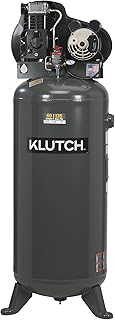
Klutch 60-Gallon Vertical, Single-Stage 3.7 HP
The Klutch earns its place on genuinely thoughtful access: the drain, filter, and belt are all where a person with a wrench would want them, which matters more over a decade than any spec sheet line. Output is steady and unglamorous, well matched to a shop running sanders and spray equipment in alternating sessions.
Campbell Hausfeld 60 Gallon Vertical, 175 PSI
That 175 PSI ceiling is the differentiator here, since higher stored pressure means more usable air between motor cycles and better performance from tools with narrow operating windows. A sensible, long-lived pick for a mixed-use garage where reliability outranks novelty.
VEVOR 60 Gallon Heavy-Duty, 5 HP Oil-Lubricated
At 12 SCFM this is the strongest performer on the list, and the oil-lubricated pump handles continuous sanding or production spray work without heat soak. Fit and finish are more industrial than refined, and it ships without a plug, so treat professional installation as part of the price.
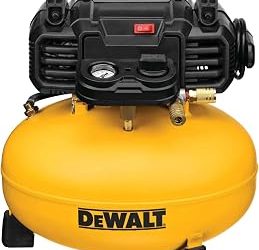
DEWALT 60 Gallon Vertical, 3.7 HP
DEWALT’s stationary unit is the safest choice for buyers who value support networks and parts availability as much as raw airflow. The 155 PSI maximum is modest against the field, but recovery is predictable and the build quality is consistent across units.
VEVOR 60 Gallon Heavy-Duty, 4 HP Oil-Free
The oil-free version suits shops where finish contamination is the primary worry and maintenance time is scarce. Expect a louder, hotter-running pump and a shorter service life than its oiled sibling, which is a fair trade for weekend-scale use.
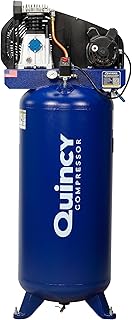
Quincy Q13160VQ Single-Stage, 3.5 HP
Quincy builds pumps meant to be rebuilt rather than replaced, and the Q13160VQ is the quietest, most refined machine here. It costs more per SCFM than the VEVOR units, and for a shop attached to living space that premium is money well spent.
Frequently Asked Questions
Is 60 gallons overkill for furniture work?
Not if you spray or sand. Continuous-draw tools will outrun a 30-gallon tank within a minute, forcing you to work in stops and starts, which is exactly how finish defects happen. Sixty gallons buys uninterrupted passes.
Can I run one on a standard household outlet?
No. These are 230V machines drawing well beyond what a 120V circuit supplies. Factor in a dedicated circuit, appropriate breaker, and professional installation.
Do I need a moisture trap for spray finishing?
Yes, without exception. Compressed air carries condensed water, and on an oiled pump it carries trace oil as well. A desiccant dryer plus inline filter close to the gun is the difference between glass-smooth topcoats and fisheye.
How loud is a 60-gallon compressor in a home shop?
Loud enough to warrant hearing protection and unpopular with anyone upstairs. Isolation pads, hard-piped air lines, and placing the unit against an exterior wall all help meaningfully.
Final Thoughts
For most home furniture makers, the Quincy Q13160VQ is the compressor worth saving for: quiet, rebuildable, and pleasant to live beside. If throughput is the priority and installation is already handled, the VEVOR 5 HP oil-lubricated delivers the most air per dollar on this list, while the Klutch 60-Gallon splits the difference with strong output and the friendliest maintenance layout of the group.