Key takeaways
- Noise level: Detailing is slow, deliberate work, often with music on. Anything in the 60–70 dBA range lets you hold a conversation; a standard oil-lubricated direct-drive unit at 85–90 dBA does not. This is the single spec most people underweight and later regret.
- Oil-free vs. oiled: Oil-free pumps can’t mist lubricant into your air line, which matters enormously when you’re blowing off a freshly polished panel or feeding a paint-adjacent tool. They wear faster, but for detailing duty cycles that tradeoff is easy.
- CFM over PSI: Blow guns and air blowers are volume-hungry, not pressure-hungry. Look for sustained CFM at 40 PSI rather than chasing a big max-PSI number. Small inflators post impressive PSI figures and still can’t run a blow gun for more than a few seconds.
- Tank size and recovery: Four to eight gallons is the sweet spot for drying and inflation. Larger tanks mean fewer cycles mid-job; twin-tank designs keep the same capacity in a narrower, easier-to-tuck silhouette.
- Where it will live: Aluminum tanks and wheels make a stationary unit genuinely portable. Cordless and 12V inflators need no home at all, which is often the deciding factor in a garage where floor space is already spoken for.
What's inside
Anyone who cares about how a car looks tends to care about how the space around it looks too. The garage has quietly become an extension of the home’s interior language — epoxy floors, slatwall storage, warm overhead lighting — and then a compressor lands in the corner, roaring like a shop vac in a cathedral. Detailing makes that tension obvious. You need moving air for blowing water out of mirror housings, lug seats, badge gaps and door jambs, and for pushing a small pressure pot or blow gun. What you don’t need is a machine that shakes the drywall, weeps oil onto a floor you just coated, or takes up the footprint of a bar cart.
This guide looks at compressors through that lens: sound, size, cleanliness of the air, and whether the thing earns its spot in a space you actually enjoy standing in. Some of these are quiet stationary tanks built for driveway and two-car-garage detailing sessions. Others are cordless or 12V inflators that live in a drawer and handle tire pressure, seat-cushion top-ups and quick drying passes. Below, six options worth considering, then a breakdown of the specs that matter and honest notes on where each one fits.
As an Amazon Associate we earn from qualifying purchases.


How to Choose an Air Compressor For Auto Detailing (2026)
- Noise level: Detailing is slow, deliberate work, often with music on. Anything in the 60–70 dBA range lets you hold a conversation; a standard oil-lubricated direct-drive unit at 85–90 dBA does not. This is the single spec most people underweight and later regret.
- Oil-free vs. oiled: Oil-free pumps can’t mist lubricant into your air line, which matters enormously when you’re blowing off a freshly polished panel or feeding a paint-adjacent tool. They wear faster, but for detailing duty cycles that tradeoff is easy.
- CFM over PSI: Blow guns and air blowers are volume-hungry, not pressure-hungry. Look for sustained CFM at 40 PSI rather than chasing a big max-PSI number. Small inflators post impressive PSI figures and still can’t run a blow gun for more than a few seconds.
- Tank size and recovery: Four to eight gallons is the sweet spot for drying and inflation. Larger tanks mean fewer cycles mid-job; twin-tank designs keep the same capacity in a narrower, easier-to-tuck silhouette.
- Where it will live: Aluminum tanks and wheels make a stationary unit genuinely portable. Cordless and 12V inflators need no home at all, which is often the deciding factor in a garage where floor space is already spoken for.
The Best Air Compressor For Auto Detailing (2026)s Reviewed
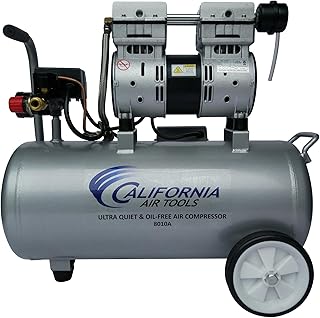
California Air Tools 8010A
At roughly 60 dBA with an oil-free pump and an eight-gallon aluminum tank, this is the closest thing to a purpose-built detailing compressor at a sane price. The aluminum tank won’t develop rust scale that ends up in your air line, and the wheeled frame means you can roll it to the driveway and back without recruiting help.
California Air Tools CAT-4610AC
Same quiet oil-free pump, less tank, noticeably smaller footprint. The twin-tank layout keeps it slim enough to live against a wall or under a bench, making it the better pick for single-bay garages or anyone who mostly blows out crevices and trim rather than running tools continuously.
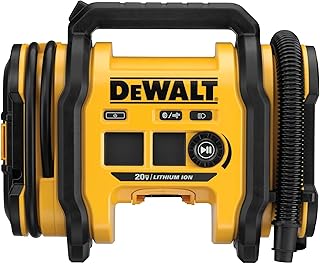
DEWALT DCC020IB Tire Inflator
A tool-only 20V MAX inflator that’s ideal if you already own the battery platform. Automatic shut-off at your target pressure and an LED work light make it genuinely useful for setting tire pressure before a photo session, though it’s an inflator, not a source of working air.
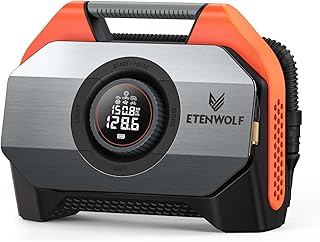
ETENWOLF VORTEX S6
The standout among cordless inflators: dual cylinders, a 19200mAh pack, and a 100% duty cycle rating, so it doesn’t need cooling breaks halfway through a set of truck tires. The LED backlight is more thoughtful than most, and it handles inflatables without the strain smaller pumps show.
AstroAI Dual-Power Inflator
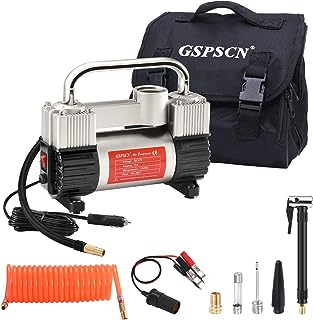
Dual 12V DC and 120V AC operation makes this the flexible choice — plug into the garage wall at home, into the cigarette lighter on the road. Dual metal motors and a clear digital gauge give it real speed for something this compact, and it’s the easiest of the bunch to justify keeping in the trunk.
Frequently Asked Questions
Can I dry a whole car with a portable inflator?
No. Inflators deliver high pressure at very low volume, which is fine for tires but won’t sustain a blow gun. For water removal you want a tank compressor or a dedicated car dryer.
How much CFM do I need for a blow gun?
Most detailing blow guns want 3–5 CFM at 40 PSI to run steadily. A one-horsepower quiet compressor with a 4.6- to 8-gallon tank covers that with short recovery pauses.
Do I need a water separator?
Yes, if air ever touches paint. Compressed air carries condensation, and an inline filter or desiccant dryer is inexpensive insurance against water spotting on a freshly finished panel.
Is an oil-free compressor durable enough?
For intermittent detailing use, comfortably so. The quiet California Air Tools pumps are rated for long service lives, and replacement pump kits are available when they eventually wear.
Final Thoughts
If you want one machine to build a detailing setup around, the California Air Tools 8010A is the pick — quiet enough for a finished garage, clean enough for paintwork, and large enough to keep working. Tight on space, the CAT-4610AC gives up little beyond tank capacity. And for tire pressure and inflatables without dedicating any floor space at all, the ETENWOLF VORTEX S6 is the most capable cordless option here.