Key takeaways
- CFM at 90 PSI: This is the number that matters. A single framing nailer wants roughly 2.2 to 2.5 SCFM in steady use; two guns pushes you toward 4 SCFM. Ignore peak PSI claims and read the delivered airflow spec.
- Tank size and shape: Six gallons is the practical floor for sustained framing. Pancakes sit flat and stable, twin stacks give you volume in a narrower footprint, and trolley tanks trade weight for genuine endurance.
- Recovery time: A fast pump with a small tank often outperforms a slow pump with a large one. Look for how quickly the unit cycles back to cut-out pressure, not just how long it lasts before kicking on.
- Noise and neighbors: Framing inside a finished home, an apartment building, or a shared workshop changes the calculus. Anything under 80 dB is tolerable all day; ultra-quiet models near 60 dB are a different experience entirely.
- Oil-free versus oil-lubricated: Oil-free pumps are lighter, need no maintenance, and tolerate cold starts. Oil-lubricated cast-iron pumps run cooler, quieter, and last considerably longer if you are framing weekly rather than once a season.
What's inside
Framing is the least glamorous stage of any build, and the most consequential. Every wall that will eventually hold a floating shelf, a plaster finish, or a run of cabinetry starts with a nailer driving 3-inch sinkers into doubled studs. That is where most air setups quietly fail. A framing gun consumes far more air per shot than a brad nailer, and a compressor that keeps up beautifully with trim work will stall halfway down a wall, leaving you standing around waiting on a pressure gauge instead of building.
The fix is not simply buying bigger. It is matching recovery rate, tank volume, and portability to the way you actually work, whether that means a single-story remodel in an occupied home or a full framing crew running two guns at once. Below are six compressors worth considering in 2026, plus the specifications that genuinely predict performance on site and the ones that are mostly marketing.
As an Amazon Associate we earn from qualifying purchases.



How to Choose a Air Compressor For Framing Gun (2026)
- CFM at 90 PSI: This is the number that matters. A single framing nailer wants roughly 2.2 to 2.5 SCFM in steady use; two guns pushes you toward 4 SCFM. Ignore peak PSI claims and read the delivered airflow spec.
- Tank size and shape: Six gallons is the practical floor for sustained framing. Pancakes sit flat and stable, twin stacks give you volume in a narrower footprint, and trolley tanks trade weight for genuine endurance.
- Recovery time: A fast pump with a small tank often outperforms a slow pump with a large one. Look for how quickly the unit cycles back to cut-out pressure, not just how long it lasts before kicking on.
- Noise and neighbors: Framing inside a finished home, an apartment building, or a shared workshop changes the calculus. Anything under 80 dB is tolerable all day; ultra-quiet models near 60 dB are a different experience entirely.
- Oil-free versus oil-lubricated: Oil-free pumps are lighter, need no maintenance, and tolerate cold starts. Oil-lubricated cast-iron pumps run cooler, quieter, and last considerably longer if you are framing weekly rather than once a season.
The Best Air Compressor For Framing Gun (2026)s Reviewed
Metabo HPT EC914S 6-Gallon Pancake
At 4 CFM, this is the rare pancake with enough headroom to feed two framing nailers without collapsing, and the 200 PSI tank stores meaningfully more usable air than the standard 150 PSI competition. It is the most sensible single purchase for anyone framing walls and then switching to roofing or siding on the same job.
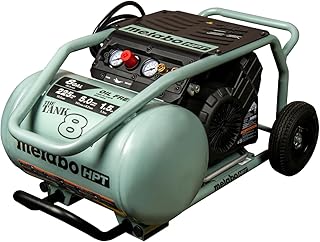
Metabo HPT EC1315S 8-Gallon Trolley
The 225 PSI rating and larger tank make this the endurance option, and the rubber tires mean you roll it rather than carry it. Choose it when the work stays in one place for days and you are tired of hearing the motor cycle.
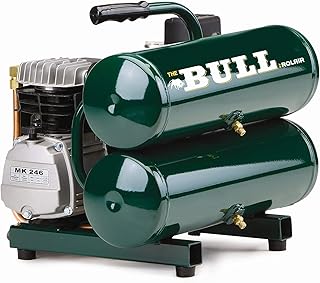
Rolair FC2002 Twin Stack
A cast-iron, oil-lubricated pump in a compact twin-stack frame, this is the contractor-grade choice that will still be running when the plastic-shrouded units have been replaced twice. Overload protection with manual reset is a small detail that saves a job day.
DEWALT DWFP55126 6-Gallon Pancake
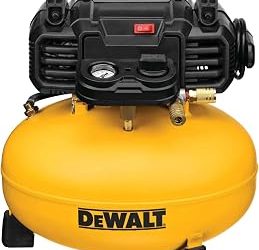
Reliable, widely serviced, and genuinely light at the handle, it delivers 2.6 SCFM at 90 PSI, which comfortably runs one framing gun with a bit of margin. Best for renovation work where one person is on the trigger.
BOSTITCH BTFP02012-WPK 6-Gallon Kit
The quietest of the mainstream pancakes and the easiest entry point, arriving with hose and fittings so nothing stalls on day one. Treat it as a one-gun compressor and it will not disappoint you.
Frequently Asked Questions
Can a small 1-gallon compressor run a framing nailer?
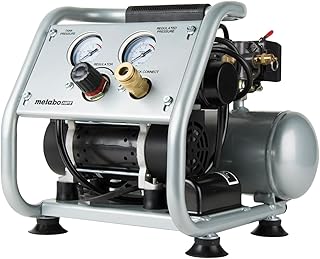
Not effectively. Something like the Metabo HPT EC28M is excellent for brad and finish work, and its 59 dB operation is remarkable indoors, but a framing gun will outrun a 1-gallon tank within a few shots.
What PSI should I set for framing?
Most framing nailers are happiest between 90 and 120 PSI depending on lumber density and nail length. Start at 100, drive a test nail into scrap, and adjust until heads sit flush.
Do I need a bigger hose?
Yes, more often than people expect. A 3/8-inch hose delivers noticeably more air than 1/4-inch over long runs, and hose diameter is the cheapest performance upgrade available.
Can two people share one compressor?
Only with roughly 4 CFM or better and a splitter, which is why the EC914S and the Rolair stand out here. Below that threshold, both operators end up waiting.
Final Thoughts
For most readers framing a renovation or an addition, the Metabo HPT EC914S offers the best balance of airflow, portability, and price. Step up to the EC1315S trolley if the job stays put and you want to stop thinking about recovery time, or to the Rolair FC2002 if this compressor needs to earn its keep for the next decade.