Key takeaways
- CFM at 90 PSI: Impact wrenches typically demand 4–6 CFM at 90 PSI. A compressor rated below this threshold will starve the tool mid-bolt, forcing constant recovery pauses that kill momentum.
- Tank Capacity: Larger tanks (6+ gallons) provide a steadier air buffer for sustained work. Compact 1–2 gallon units suit intermittent trim nailing but will run almost continuously under impact load.
- Max PSI Rating: Higher peak pressure—200 PSI versus 165 PSI—translates to more usable air per fill cycle. For impact tools specifically, 180+ PSI gives you meaningful headroom.
- Noise Output: Oil-free compressors in residential settings should stay under 70 dBA. Anything above that becomes genuinely disruptive in attached garages or shared living spaces.
- Portability vs. Stationary Use: Consider whether the compressor lives on a job site or stays fixed in your garage. Wheels and carry handles matter for the former; raw output matters more for the latter.
What's inside
Choosing an air compressor for impact wrenches, framing nailers, and other pneumatic tools is one of those decisions that seems simple until you’re standing in your garage reading conflicting specs on six different boxes. The wrong pick leaves you waiting between trigger pulls, or worse, running a machine that rattles the drywall while the kids are doing homework upstairs. Getting this right the first time means smoother projects and a workshop that actually works with your home instead of against it.
This 2026 roundup cuts through the noise—literally and figuratively. We evaluated portability, sustained CFM output, tank pressure, and noise levels across six leading models to find the compressors that hold up under real workshop conditions. Whether you’re torquing lug bolts on a weekend or running a framing nailer across a whole subfloor, the picks below are matched to specific use cases so you can buy once and move on.
As an Amazon Associate we earn from qualifying purchases.



How to Choose an Air Compressor For Impact Tools (2026)
- CFM at 90 PSI: Impact wrenches typically demand 4–6 CFM at 90 PSI. A compressor rated below this threshold will starve the tool mid-bolt, forcing constant recovery pauses that kill momentum.
- Tank Capacity: Larger tanks (6+ gallons) provide a steadier air buffer for sustained work. Compact 1–2 gallon units suit intermittent trim nailing but will run almost continuously under impact load.
- Max PSI Rating: Higher peak pressure—200 PSI versus 165 PSI—translates to more usable air per fill cycle. For impact tools specifically, 180+ PSI gives you meaningful headroom.
- Noise Output: Oil-free compressors in residential settings should stay under 70 dBA. Anything above that becomes genuinely disruptive in attached garages or shared living spaces.
- Portability vs. Stationary Use: Consider whether the compressor lives on a job site or stays fixed in your garage. Wheels and carry handles matter for the former; raw output matters more for the latter.
The Best Air Compressor For Impact Tools (2026) Reviews
Metabo HPT 6-Gallon Pancake (EC914S)
Delivering 4 CFM at 90 PSI with a 200 PSI max, this unit pushes enough air to run multiple framing nailers simultaneously—a claim few pancake compressors can back up. It is the most capable all-rounder in this roundup for serious impact and nailing work, and the pancake footprint keeps it from dominating your workspace floor.
DEWALT 6-Gallon Pancake (DWFP55126)
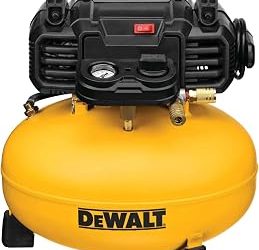
At 165 PSI with 2.6 SCFM at 90 PSI, this model sits comfortably in the mid-range. It handles finish nailers and brad guns with ease, though sustained impact wrench use will push its recovery cycle. The oil-free pump means zero maintenance headaches, making it a strong pick for the homeowner who wants reliability without upkeep.
DEWALT 200-PSI Quiet Compressor (DWFP55130)
Engineered specifically for trim work and finished spaces, this unit earns its place through volume discipline. The reduced noise profile makes it the best option for indoor renovation where you’re working adjacent to occupied rooms. Its 200 PSI rating also gives it surprising punch relative to its size.
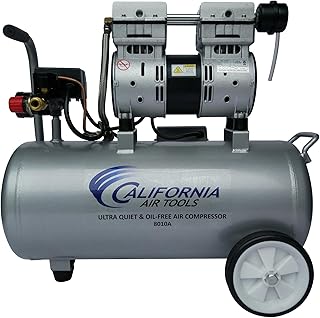
California Air Tools 8010A (8 Gallon)
The 8-gallon aluminum tank and wheeled frame make this the most job-site-friendly option tested. At 60 dBA, it runs quieter than a normal conversation while delivering steady airflow through extended use. It is particularly well-suited for impact wrench work where you need consistent pressure without constant tank cycling.
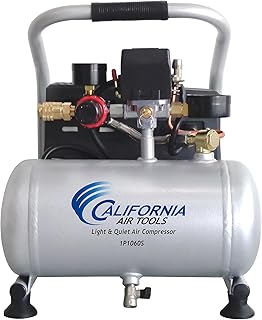
California Air Tools CAT-1P1060S (1 Gallon)
At just 56 dBA and under five pounds, this ultra-quiet unit solves a specific problem: light-duty pneumatic work in noise-sensitive environments. It will not keep up with impact tools under sustained load, but for occasional trim brads or upholstery stapling inside a finished room, it is unmatched in portability and silence.
Frequently Asked Questions
Can I use a pancake compressor with an impact wrench?
Yes, but only if the compressor delivers adequate CFM at 90 PSI—typically 4 CFM minimum for a standard ½-inch impact wrench. Lower-output pancake units will cycle constantly and lose effectiveness. The Metabo HPT EC914S is the strongest pancake candidate in this roundup for impact tool pairing.
What is the difference between CFM and SCFM?
CFM measures actual airflow at a given pressure, while SCFM standardizes that measurement to specific temperature and atmospheric conditions for easier comparison. For practical purchasing decisions, focus on CFM at 90 PSI—the number that directly reflects what your tools will receive during operation.
How loud is too loud for a home garage compressor?
Anything above 75 dBA becomes noticeably intrusive in an attached garage. Units in the 55–65 dBA range—like the California Air Tools models tested here—allow extended use without disturbing household members. Wall insulation and garage placement help, but the compressor’s native noise floor is the deciding factor.
Do oil-free compressors last as long as oil-lubricated models?
Modern oil-free pumps have narrowed the gap significantly. For home workshop use, an oil-free compressor will typically outlast the frequency at which most homeowners upgrade their tools. The trade-off is slightly higher operating noise, which is offset by zero maintenance and no oil change logistics.
Final Thoughts
For most homeowners tackling impact tool projects, the Metabo HPT EC914S strikes the best balance of output and versatility. The DEWALT DWFP55130 earns a nod for anyone prioritizing quiet indoor operation, and the California Air Tools 8010A remains the top choice for sustained outdoor or job-site use where volume and airflow both matter. Any of these three will hold up across years of real projects without becoming the bottleneck in your workshop.