Key takeaways
- CFM over PSI: Nearly every compressor sold today produces more pressure than a nailer needs. Airflow at 90 PSI is the number that determines whether the tool keeps firing or waits on the motor. Roughly 2 CFM covers a brad or finish nailer; framing nailers and multi-tool setups want 4 CFM or better.
- Tank size shapes your rhythm: One gallon is plenty for intermittent trim work and recovers quickly. Six gallons buys you longer stretches between motor cycles, which matters on sheathing, siding, and roofing. Beyond that, you are buying shop capacity rather than portability.
- Decibels are a livability spec: A traditional pancake compressor lands near 80 dB and dominates a room. Models in the 59 to 70 dB range let you hold a conversation and work in an occupied house without negotiating.
- Weight and how you carry it: Consider whether the unit travels up stairs, rides in a trunk, or lives in one corner of a garage. Vertical tanks save floor space; sub-30-pound units save your back on remodel jobs that move room to room.
- Fittings and maintenance: Oil-free pumps skip the upkeep and start cold without complaint. A universal quick coupler is a small feature with outsized value when you swap between a nailer, a blow gun, and an inflator all afternoon.
What's inside
Anyone who has installed baseboards in a finished room knows the particular frustration of a compressor that fights you. It stalls halfway through a run of crown molding, or it screams loud enough that you schedule the work around your family’s naps. Nail guns are undemanding tools by nature — a brad nailer needs a short, sharp puff of air and nothing more. The compressor behind it is where most people overspend, under-plan, or end up with a machine that does not match the way they actually work.
This guide sorts compressors by the job in front of you: quiet single-gallon units for trim carpentry inside a lived-in house, six-gallon pancakes that keep pace with framing and roofing nailers, tank-free cordless pumps for punch-list work, and a larger vertical tank for shop setups that run more than one tool. Below you will find our picks for 2026, plus the specs that genuinely change your experience and the ones that are mostly marketing.
As an Amazon Associate we earn from qualifying purchases.


How to Choose a/an Air Compressor For Nail Guns (2026)
- CFM over PSI: Nearly every compressor sold today produces more pressure than a nailer needs. Airflow at 90 PSI is the number that determines whether the tool keeps firing or waits on the motor. Roughly 2 CFM covers a brad or finish nailer; framing nailers and multi-tool setups want 4 CFM or better.
- Tank size shapes your rhythm: One gallon is plenty for intermittent trim work and recovers quickly. Six gallons buys you longer stretches between motor cycles, which matters on sheathing, siding, and roofing. Beyond that, you are buying shop capacity rather than portability.
- Decibels are a livability spec: A traditional pancake compressor lands near 80 dB and dominates a room. Models in the 59 to 70 dB range let you hold a conversation and work in an occupied house without negotiating.
- Weight and how you carry it: Consider whether the unit travels up stairs, rides in a trunk, or lives in one corner of a garage. Vertical tanks save floor space; sub-30-pound units save your back on remodel jobs that move room to room.
- Fittings and maintenance: Oil-free pumps skip the upkeep and start cold without complaint. A universal quick coupler is a small feature with outsized value when you swap between a nailer, a blow gun, and an inflator all afternoon.
The Best Air Compressor For Nail Guns (2026)s Reviewed
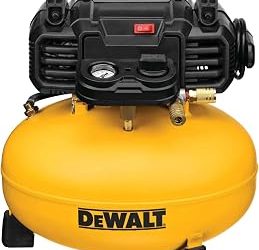
Metabo HPT EC914S Pancake Compressor, 6 Gallon
At 200 PSI and 4 CFM, this is the pick when a nail gun is only the beginning — it has genuine headroom to run two framing or roofing nailers at once without leaving anyone standing around waiting for pressure. It is the conventional job-site choice done properly: durable, quick to recover, and priced for people who will actually use the capacity.
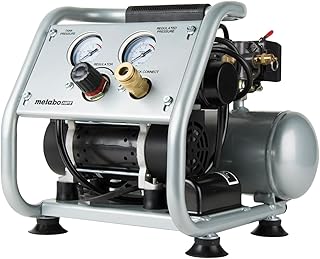
Metabo HPT EC28M Quiet Compressor, 1 Gallon
At 59 dB, this is the quietest unit in our lineup and the one we recommend most often for interior trim, cabinetry, and built-ins. Oil-free, genuinely light, and fitted with a universal quick coupler that makes tool changes a two-second affair rather than a search for the right adapter.
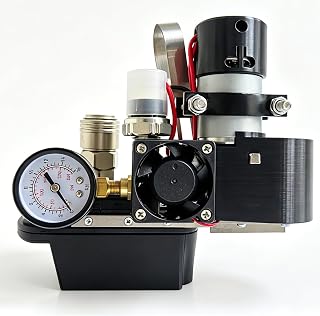
Cordless Tank-Free Mini Compressor (Miwoqi 18V)
Running on 18V batteries with no tank at all, this pump delivers air on demand wherever you set it down — no cord, no compressor hum echoing through the house. It suits trim touch-ups, furniture assembly, and punch-list work far better than sustained production nailing, but for that narrow use it removes a real headache.
14.5 Gallon Ultra Quiet Vertical Compressor
With 8.75 CFM, 115 PSI, and a 70 dB rating, this is the shop anchor: enough airflow for multiple pneumatic tools and a vertical footprint that reclaims garage floor space. Oil-free operation keeps maintenance minimal for a machine of this size.
1 Gallon Ultra Quiet Portable, 60 dB
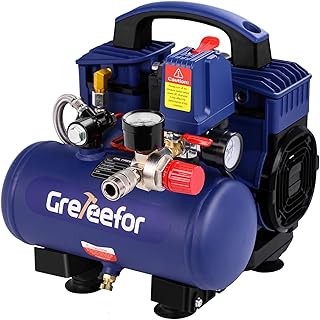
A 13-second fill time and 60 dB operation make this an easy companion for weekend projects, from finish nailing to tire inflation. The 1.5HP oil-free pump punches above its footprint, and the violet finish is a small, welcome break from safety-orange job-site convention.
Frequently Asked Questions
What size compressor do I need for a brad nailer?
A one-gallon tank with roughly 2 CFM at 90 PSI handles brad and finish nailers comfortably. Trim nailing is intermittent by nature, so recovery speed matters more than raw capacity.
Can one compressor run two nail guns?
Yes, provided the CFM rating supports it. The 4 CFM output of a six-gallon pancake like the EC914S is designed for exactly that; a one-gallon unit will fall behind quickly with two operators.
Are quiet compressors actually worth the premium?
If you work in a finished or occupied home, yes. Dropping from 80 dB to 59 dB changes the machine from an event you plan around to background noise you stop noticing.
Do I need to drain the tank?
Drain condensation after each use, regardless of model. It is a thirty-second habit that prevents interior rust and protects your air quality.
Final Thoughts
For most people furnishing and finishing a home, the Metabo HPT EC28M is the right answer — quiet enough for indoor work, light enough to carry, and matched to the trim and cabinetry nailers you will actually reach for. Step up to the Metabo HPT EC914S if framing, siding, or two-tool days are in your future, and consider the 14.5 gallon vertical unit if you are building out a permanent shop where floor space and sustained airflow both matter.