Key takeaways
- CFM Output: Spray guns demand sustained airflow, typically between 8–15 CFM at 40 PSI. A compressor that stalls mid-pass will leave visible texture differences in your finish.
- Tank Capacity: Larger tanks (13–20 gallons) buffer pressure fluctuations so your gun receives consistent airflow during long, sweeping strokes across body panels.
- Noise Level: Workshop compressors can hit 85+ dB, which matters if you work in a shared garage or a residential neighborhood with noise limits. Quieter units around 66–70 dB make extended sessions far more tolerable.
- Portability: Weigh whether you need a unit that rolls easily between bays or one that stays put. Wheels, handle design, and dry weight all affect how practical daily movement actually is.
- Maintenance Style: Oil-free models eliminate routine oil changes and reduce the risk of oil contamination in your paint. They’re the standard choice for anyone prioritizing clean, low-effort operation.
What's inside
Choosing the right air compressor for automotive painting can feel surprisingly overwhelming, especially when you’re standing between a wall of specs—CFM ratings, tank sizes, noise levels, and pressure limits—that all seem to compete for your attention. The wrong pick doesn’t just cost you money; it leads to uneven paint coverage, frustrating downtime between coats, and equipment that lives in the garage collecting dust after one bad experience.
This guide breaks down six compressors across a range of budgets and project scales, from compact tire inflators to full-size rolling tanks. Whether you’re touching up a fender or doing a full respray on a weekend restoration, the options below give you honest context on what each unit actually handles well—and where it falls short.
As an Amazon Associate we earn from qualifying purchases.



How to Choose an Air Compressor For Painting Cars (2026)
- CFM Output: Spray guns demand sustained airflow, typically between 8–15 CFM at 40 PSI. A compressor that stalls mid-pass will leave visible texture differences in your finish.
- Tank Capacity: Larger tanks (13–20 gallons) buffer pressure fluctuations so your gun receives consistent airflow during long, sweeping strokes across body panels.
- Noise Level: Workshop compressors can hit 85+ dB, which matters if you work in a shared garage or a residential neighborhood with noise limits. Quieter units around 66–70 dB make extended sessions far more tolerable.
- Portability: Weigh whether you need a unit that rolls easily between bays or one that stays put. Wheels, handle design, and dry weight all affect how practical daily movement actually is.
- Maintenance Style: Oil-free models eliminate routine oil changes and reduce the risk of oil contamination in your paint. They’re the standard choice for anyone prioritizing clean, low-effort operation.
The Best Air Compressor For Painting Cars (2026) Reviewed
VEVOR 13-Gallon Air Compressor
The VEVOR hits a practical sweet spot for hobbyist painters. Its 13-gallon tank and 4.6 SCFM at 90 PSI deliver enough sustained flow for HVLP guns on a single vehicle, while the 66 dB noise floor is noticeably gentler on your ears than most units in this class. It rolls on solid wheels and the thickened steel body feels built to last.
California Air Tools CAT-4610AC
Where portability meets quiet operation, the CAT-4610AC stands out. This twin-tank aluminum unit is genuinely lightweight for a 1-horsepower compressor, making it easy to carry between workstations. It’s better suited for smaller touch-up jobs and detail work than full-panel spraying, but its ultra-quiet motor is hard to beat for extended use in a home garage.
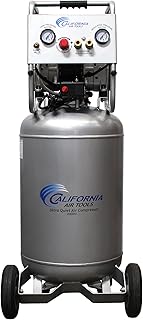
California Air Tools 20020AD
For larger projects, the 20-gallon 20020AD gives you the tank capacity to sustain longer passes without pressure dips. The automatic drain valve is a genuinely useful feature—it purges condensation without you having to remember. At 70 dB it stays reasonable, and the wheeled design offsets the added size for a unit of this capacity.
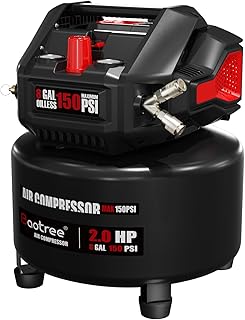
Baotree 8 Gallon Portable Air Compressor
The Baotree is a solid mid-range option with a 2HP motor pushing 2.8 SCFM at 90 PSI. It handles spray painting and woodworking without complaint, and the 8-gallon tank keeps the footprint manageable in tighter workspaces. The max 150 PSI rating gives you headroom for tools beyond the spray gun as well.
8 Gallon Ultra Quiet Air Compressor (1.5HP)
At 1.5 HP and 70 dB, this budget-friendly unit prioritizes a calm work environment over raw power. The 4.52 CFM rating is respectable for lighter automotive painting tasks and detail work. It won’t power a high-demand spray gun through a full car, but for spot repairs and smaller panels, the quiet operation and oil-free design make it a practical pick.
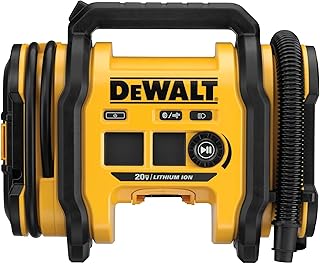
DEWALT DCC020IB Tire Inflator
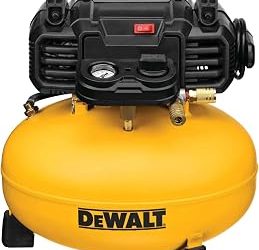
The DEWALT is a different animal—it’s a cordless tire inflator rather than a true painting compressor, so it’s best reserved for inflating tires and powering small pneumatic accessories. The 20V MAX battery platform and automatic shut-off add real convenience, but it doesn’t produce the sustained CFM needed for spray gun work. Think of it as a complementary tool rather than your primary painting compressor.
Frequently Asked Questions
What CFM do I need for painting a car with an HVLP spray gun?
Most HVLP guns require 8–15 CFM at 40 PSI depending on the nozzle size. For a full vehicle respray, look for a compressor delivering at least 12 CFM to avoid pressure drops between coats. Smaller touch-up guns may run comfortably on 6–8 CFM.
Can I use a portable compressor for painting a full car?
You can, but the larger the tank, the smoother your results. Portable units under 10 gallons work for spot repairs and smaller panels. For an entire vehicle, a 13–20 gallon tank keeps airflow consistent enough to maintain an even finish across wide surfaces.
Are oil-free compressors better for automotive painting?
For most home painters, yes. Oil-free compressors eliminate the risk of oil vapor contaminating your paint finish, and they require virtually no maintenance beyond occasional filter cleaning. They’re the default recommendation for clean, hassle-free operation.
How loud are these compressors in a residential garage?
Noise ranges widely. Units like the California Air Tools and VEVOR models operate between 66–70 dB, which is comparable to a running dishwasher. Traditional units can exceed 85 dB, which is disruptive enough to require hearing protection and potentially annoy neighbors.
Final Thoughts
For most home automotive painters, the VEVOR 13-Gallon offers the best balance of airflow, noise control, and value. If tank capacity and long-session endurance matter most, step up to the California Air Tools 20020AD. And for quiet, lightweight work on smaller jobs, the CAT-4610AC is hard to ignore.