Key takeaways
- CFM before horsepower: Sustained volume is what moves abrasive. Find your nozzle’s CFM requirement at your working pressure, then add roughly 30% headroom. Horsepower ratings alone tell you very little.
- Duty cycle: Blasting is continuous demand, not intermittent. Rotary screw compressors run at 100% duty cycle; most piston units are designed to rest between cycles and will overheat if pushed.
- Tank size as a buffer, not a solution: A large receiver smooths pressure dips and buys you a few extra seconds, but it cannot compensate for a pump that produces less air than your gun consumes.
- Moisture management: Damp air clumps abrasive and clogs nozzles instantly. Budget for a refrigerated dryer or at minimum a water trap and inline filter, especially in humid workshops.
- Power and placement: Confirm your service before you buy. Larger units need 230V or 480V three-phase, and rotary screws want ventilation and clearance that a tight garage corner may not offer.
What's inside
Stripping a cast-iron table base back to bare metal, or knocking decades of paint off a salvaged school chair, sounds like a weekend job until the air runs out. Sandblasting is one of the few shop tasks where the tool is almost irrelevant and the air supply is everything. A siphon gun that needs 12 CFM will sputter and stall on a compressor rated for 6, and no amount of technique fixes that. The result is patchy etching, wasted abrasive, and a finish that looks worse than what you started with.
This guide is written for people restoring furniture and architectural salvage, not for production body shops, though we cover both ends of the range. Below you will find compressors that can actually sustain a blasting cycle, plus the guns and cabinets that pair with them. We look at duty cycle, moisture control, and the honest CFM math you need before buying, so the machine you choose matches the work sitting in your garage.
As an Amazon Associate we earn from qualifying purchases.




How to Choose a/an Air Compressor For Sand Blasting (2026)
- CFM before horsepower: Sustained volume is what moves abrasive. Find your nozzle’s CFM requirement at your working pressure, then add roughly 30% headroom. Horsepower ratings alone tell you very little.
- Duty cycle: Blasting is continuous demand, not intermittent. Rotary screw compressors run at 100% duty cycle; most piston units are designed to rest between cycles and will overheat if pushed.
- Tank size as a buffer, not a solution: A large receiver smooths pressure dips and buys you a few extra seconds, but it cannot compensate for a pump that produces less air than your gun consumes.
- Moisture management: Damp air clumps abrasive and clogs nozzles instantly. Budget for a refrigerated dryer or at minimum a water trap and inline filter, especially in humid workshops.
- Power and placement: Confirm your service before you buy. Larger units need 230V or 480V three-phase, and rotary screws want ventilation and clearance that a tight garage corner may not offer.
The Best Air Compressor For Sand Blasting (2026)s Reviewed
40HP VSD Rotary Screw Air Compressor, 185 CFM at 125 PSI
This is genuine industrial capacity, and the variable speed drive is what makes it interesting: output modulates to demand instead of cycling, which cuts energy waste on long blasting sessions. It requires 480V three-phase service, so treat it as a commercial fabrication or restoration-shop purchase rather than a home upgrade.
7.5KW 10HP Rotary Screw with 80-Gallon Tank and Air Dryer
The most practical serious option here. At 35 CFM with an integrated ASME tank and dryer, it delivers continuous, dry air in a single footprint, which removes the guesswork of assembling a system piecemeal. For a small studio doing regular metal furniture restoration, this is the sweet spot between capability and complexity.
Light-Duty Air Sandblaster Gun Kit
A metal-body gun with both siphon and gravity feed options plus a ceramic nozzle, aimed at spot work: chair legs, hardware, hinges, small glass etching projects. It needs a compressor behind it, and the gravity cup is the more forgiving setup if your air supply is modest.
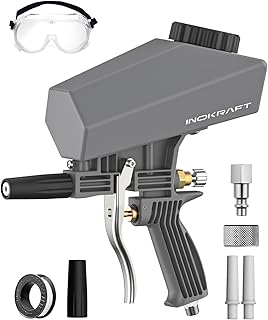
Inokraft Portable Sand Blaster Gun Kit
Built to run on 60 to 120 PSI, this leak-proof kit handles aluminum oxide and soda without the seal failures that plague cheap siphon guns. Soda compatibility matters if you are working on wood or delicate finishes where you want paint gone but the substrate untouched.
40-Gallon Bench Top Sandblasting Cabinet
Containment changes everything. This heavy-duty steel cabinet includes a gun and four nozzles, runs on 6 to 25 CFM, and lets you recycle abrasive instead of losing it to the driveway. If you blast more than twice a year, a cabinet pays for itself in media alone.
Frequently Asked Questions
What is the minimum CFM for sandblasting?
Small pencil and siphon guns can work from roughly 6 to 8 CFM, but expect slow progress. Pressure-pot and cabinet setups generally want 10 to 25 CFM sustained, depending on nozzle diameter.
Can I sandblast with a standard pancake compressor?
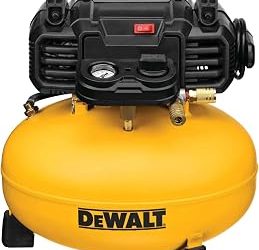
Only for very brief touch-ups, and even then the unit will run constantly. Pancake and hot dog compressors are not built for continuous demand and will overheat before you finish a chair frame.
Do I need a dedicated air dryer?
If you blast regularly, yes. Compressed air carries condensate that turns abrasive into paste inside your gun. A water trap helps for occasional work; a refrigerated dryer is the reliable fix.
Is a cabinet worth it for furniture restoration?
For anything that fits inside, absolutely. Cabinets control dust, protect your lungs and your workspace, and let you reuse media across dozens of projects.
Final Thoughts
For most home restorers, the 7.5KW 10HP rotary screw with integrated dryer is the compressor worth stretching for, since it solves volume and moisture in one purchase. Pair it with the 40-Gallon Bench Top Sandblasting Cabinet to contain dust and recycle abrasive, and keep the Inokraft Portable Sand Blaster Gun on hand for oversized pieces that will never fit in a cabinet. Step up to the 40HP VSD unit only if you are running a shop rather than a garage.