Key takeaways
- Match TPI to material thickness: Aim for three teeth in the cut at all times. Thick hardwood and resaw work want low tooth counts (3–8 TPI) for chip clearance; thin metal, tubing, and sheet stock need 14–24 TPI to avoid stripping teeth.
- Width controls the radius: Wide blades track straight and resist deflection, so a 3/4″ or 1″ blade is the right call for resawing. Drop to 3/8″ or narrower when you need to follow the tight curves on a cabriole leg or chair crest.
- Bimetal over carbon steel for longevity: Bimetal blades bond a high-speed-steel edge to a flexible backer, which means they hold sharpness far longer and shrug off the occasional hidden brad or screw. The higher up-front cost usually works out cheaper per cut.
- Confirm your exact blade length: Band saw blades are made to specific loop lengths — 93″, 111.25″, 44-7/8″, 30-9/16″ — and there is no adjusting. Check your saw’s manual or measure your current blade before ordering.
- Consider tooth set and rake: Wavy set spreads tooth deflection across the edge and excels on thin or variable material. Raker set with positive rake bites aggressively and clears chips fast, which is what you want in deep wood cuts.
What's inside
Every furniture project that involves a curve, a taper, or a bookmatched panel eventually runs into the same bottleneck: the blade. A band saw itself is a fairly simple machine, and most of what people blame on the tool — wandering cuts, barrel-shaped resaw faces, burn marks down a length of white oak, a scream of metal-on-metal when trimming a steel leg — traces back to the wrong tooth count, the wrong width, or a blade that has quietly gone dull over the last dozen cuts. Blades are consumables, and treating them like permanent parts is the fastest way to make a good saw feel mediocre.
This guide covers the blades worth stocking in 2026 for the kind of work that happens in a home furniture shop: resawing and curve cutting on a stationary saw, plus the portable band saw blades that handle the metal side of modern builds — hairpin legs, brass rod, square tubing, and threaded stock. Each pick below is matched to a specific job rather than sold as a do-everything option, because that blade does not exist.
As an Amazon Associate we earn from qualifying purchases.


How to Choose a Band Saw Blade (2026)
- Match TPI to material thickness: Aim for three teeth in the cut at all times. Thick hardwood and resaw work want low tooth counts (3–8 TPI) for chip clearance; thin metal, tubing, and sheet stock need 14–24 TPI to avoid stripping teeth.
- Width controls the radius: Wide blades track straight and resist deflection, so a 3/4″ or 1″ blade is the right call for resawing. Drop to 3/8″ or narrower when you need to follow the tight curves on a cabriole leg or chair crest.
- Bimetal over carbon steel for longevity: Bimetal blades bond a high-speed-steel edge to a flexible backer, which means they hold sharpness far longer and shrug off the occasional hidden brad or screw. The higher up-front cost usually works out cheaper per cut.
- Confirm your exact blade length: Band saw blades are made to specific loop lengths — 93″, 111.25″, 44-7/8″, 30-9/16″ — and there is no adjusting. Check your saw’s manual or measure your current blade before ordering.
- Consider tooth set and rake: Wavy set spreads tooth deflection across the edge and excels on thin or variable material. Raker set with positive rake bites aggressively and clears chips fast, which is what you want in deep wood cuts.
The Best Band Saw Blades (2026) Reviewed
Lenox Classic Tuff Tooth 93″ x 3/4″, 18 TPI
A 3/4″ bimetal blade with 18 TPI and a wavy set is built for clean, controlled cuts in thinner stock and non-ferrous material rather than deep resawing. On a 14″ saw it tracks with very little drift, which makes it a reliable choice for trimming brass and aluminum accents to length without the ragged edges a coarse blade leaves behind.
FOXBC 44-7/8″ Portable Bandsaw Blades, 14 TPI (5-Pack)
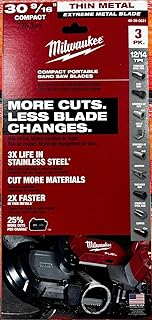
These fit the common Milwaukee and DeWalt portable saws and land at a price that lets you swap blades the moment cutting slows instead of pushing a tired one. At 14 TPI they are well suited to conduit, angle iron, and the round or square tubing that shows up in mixed-material tables and shelving.
Lenox Classic Pro Vari-Raker 111.25″ x 1″, 5–8 TPI
This is the resaw blade. The full 1″ width resists bowing under feed pressure and the variable 5–8 TPI raker pattern clears chips aggressively while damping the harmonics that cause chatter, so bookmatched panels come off the saw flat enough to need only a light pass of cleanup.
Lenox Diemaster 2 93″ x 3/8″, 14–18 TPI
At 3/8″ wide this blade turns a tight enough radius for chair components and shaped aprons, and the variable 14–18 TPI keeps the cut surface smooth on both hardwood and thin metal. It is the most versatile blade on this list for a saw that switches tasks often.
LENOX Portable Band Saw Blades, 44-7/8″ x 1/2″, 14 TPI (5-Pack)
Lenox’s own portable-saw blades cut faster and last noticeably longer than budget alternatives, which matters if you are working through a batch of steel legs or stretchers. Worth the premium for anyone whose portable saw earns its keep weekly rather than occasionally.
Frequently Asked Questions
How often should I replace a band saw blade?
By feel, not by schedule. When you find yourself pushing harder, seeing burn marks, or fighting drift that tension adjustment does not fix, the blade is done. Bimetal blades in a hobby shop often last months; a hard week of resawing can finish one.
Can I cut wood and metal with the same blade?
Technically yes, practically no. Metal dulls teeth quickly and leaves a residue that mars wood, and the correct blade speeds differ substantially. Keep dedicated blades and label them.
Why does my resaw cut drift off vertical?
Usually blade drift from uneven set or insufficient tension, not a misaligned fence. Test-cut a scrap along a marked line, note the angle your saw naturally wants, and set your fence to match — or fit a wider blade.
Do variable-tooth blades really help?
Yes. Varying the tooth spacing breaks up the vibration pattern that produces noise and washboard surfaces, which is why variable-pitch blades cut quieter and leave a better finish in the same material.
Final Thoughts
If you buy one blade this year, make it the Lenox Classic Pro Vari-Raker for resawing — it is the piece that unlocks veneer and bookmatched panel work on a home saw. Pair it with the Lenox Diemaster 2 in 3/8″ for curves and general cutting, and keep a five-pack of the LENOX portable blades on the shelf if metal legs and tubing are part of your vocabulary.