Key takeaways
- Pressure vs. finish: Anything from 1000 to 1500 PSI handles furniture, siding, bikes, and cars without stripping sealant or etching softwood. Reserve 2000 PSI and above for concrete, brick, and driveway work, and keep it well away from stained teak or composite decking.
- Battery platform: If you already own DeWalt, EGO, Greenworks, or Ryobi tools, buying a bare unit on that platform is the cheaper and less cluttered choice. If you are starting fresh, look for kits that include two packs so you can rotate rather than wait.
- Water source flexibility: Self-priming models that draw from a bucket, rain barrel, or lake are what make cordless worth it. Hose-fed-only designs give up half the advantage.
- Nozzle range and controls: A multi-position tip covering mist through pencil jet, plus a soap setting, covers nearly every surface in a garden. Variable pressure levels and an LCD readout help you dial down before you test a finish the hard way.
- Storage footprint: Handheld and folding units live in a drawer or entry cabinet. Wheeled kits need real garage space, so factor that in before you commit to a full-size machine.
What's inside
Outdoor rooms have quietly become the most photographed part of the modern home, and also the least forgiving. A teak dining set, a run of porcelain pavers, a powder-coated pergola leg: all of it collects pollen, tannin bleed, and grey film faster than anything indoors. The trouble is that keeping it presentable usually means dragging out a corded machine, hunting for a GFCI outlet, and coiling fifty feet of hose across a space you just styled. Most people simply stop bothering, and the patio slowly drifts out of step with the interior it was meant to extend.
Battery pressure washers solve the logistics problem, but the category is uneven. Some are genuinely capable cleaning tools; others are glorified spray bottles with a lithium cell attached. This guide sorts them by what they actually do well, covers the specs that matter when you are cleaning finished surfaces rather than a mud-caked truck, and points you toward the right power level for the job instead of the highest number on the box.
As an Amazon Associate we earn from qualifying purchases.




How to Choose a Battery Pressure Washer (2026)
- Pressure vs. finish: Anything from 1000 to 1500 PSI handles furniture, siding, bikes, and cars without stripping sealant or etching softwood. Reserve 2000 PSI and above for concrete, brick, and driveway work, and keep it well away from stained teak or composite decking.
- Battery platform: If you already own DeWalt, EGO, Greenworks, or Ryobi tools, buying a bare unit on that platform is the cheaper and less cluttered choice. If you are starting fresh, look for kits that include two packs so you can rotate rather than wait.
- Water source flexibility: Self-priming models that draw from a bucket, rain barrel, or lake are what make cordless worth it. Hose-fed-only designs give up half the advantage.
- Nozzle range and controls: A multi-position tip covering mist through pencil jet, plus a soap setting, covers nearly every surface in a garden. Variable pressure levels and an LCD readout help you dial down before you test a finish the hard way.
- Storage footprint: Handheld and folding units live in a drawer or entry cabinet. Wheeled kits need real garage space, so factor that in before you commit to a full-size machine.
The Best Battery Pressure Washers (2026) Reviewed
EGO POWER+ 3200 PSI Pressure Washer Kit (HPW3204-2)
This is the one unit here that genuinely replaces a gas machine: 3200 PSI is enough for driveways, retaining walls, and years of grime on stucco, with no cord and no fumes. It is overkill for furniture and priced accordingly, but if you maintain a large hardscaped property it is the most credible cordless option on the market.
6-in-1 Cordless Pressure Washer, 1300 PSI
At 1300 PSI with two 4.0Ah packs included, this hits the sweet spot for garden and vehicle work, and the pair of batteries means you can finish a car and a patio set in one session. The six-mode nozzle covers everything from a wide rinse to a focused jet, and it draws happily from a bucket.
Foldable Portable Battery Washer with LCD Display
The folding body and LCD pressure readout make this the most travel-friendly pick, and the three power levels give you real control on delicate finishes. Ideal for campers, balconies, and anyone whose storage is a hall closet rather than a garage.
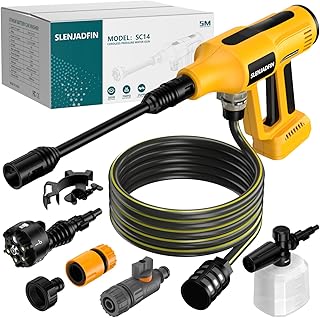
SLENJADFIN Cordless Washer for DeWalt 20V
A brushless tool-only unit that runs on DeWalt 20V packs, so the cost of entry is low if that platform is already in your workshop. Four pressure levels and a 6-in-1 nozzle make it a sensible everyday choice for fences, wheel arches, and stone paths.
Greenworks 2100 PSI Electric Pressure Washer
Corded rather than cordless, but worth knowing about: 2100 PSI at 1.2 GPM gives you sustained pressure with no runtime ceiling, which cordless still cannot match on long jobs. Keep it as the workhorse and use a battery unit for quick touch-ups.
Frequently Asked Questions
Is a battery pressure washer strong enough for a patio?
For sealed pavers, tile, and composite decking, yes: 1000 to 1500 PSI lifts pollen and surface algae well. Deeply stained concrete or unsealed brick needs 2000 PSI or more, which means a high-output cordless unit like the EGO or a corded machine.
How long does a battery last per charge?
Expect roughly 15 to 30 minutes of trigger time from a 4.0Ah pack on a handheld unit, less at maximum pressure. Working in short bursts stretches this considerably, and a second battery effectively removes the limit.
Can I use one on teak, rattan, or powder-coated furniture?
With care. Use the widest fan setting, the lowest pressure level, and stay at least a foot back. Test on an underside first, since concentrated jets will raise grain on softwood and can lift ageing powder coat at the edges.
Do I need a garden hose?
Not with self-priming models, which draw from a bucket or barrel. Accessories such as the GDHXW high-pressure gun with extension wand are for existing corded machines, so check the fitting standard before buying add-ons.
Final Thoughts
For most homes, the 1300 PSI 6-in-1 cordless washer with its two included batteries is the right balance of capability, portability, and price, and it will keep an outdoor room looking curated with minimal effort. Step up to the EGO POWER+ HPW3204-2 if you have serious hardscaping to maintain, and keep the Greenworks 2100 PSI on hand as the corded backup for jobs that outlast a battery.